
Last updated October 9, 2026
Non-destructive entry first, always - and we re-key Schlage, Kwikset, and Baldwin locks on the spot while you watch
You get a price before we start. It does not change when we arrive. No surprises.
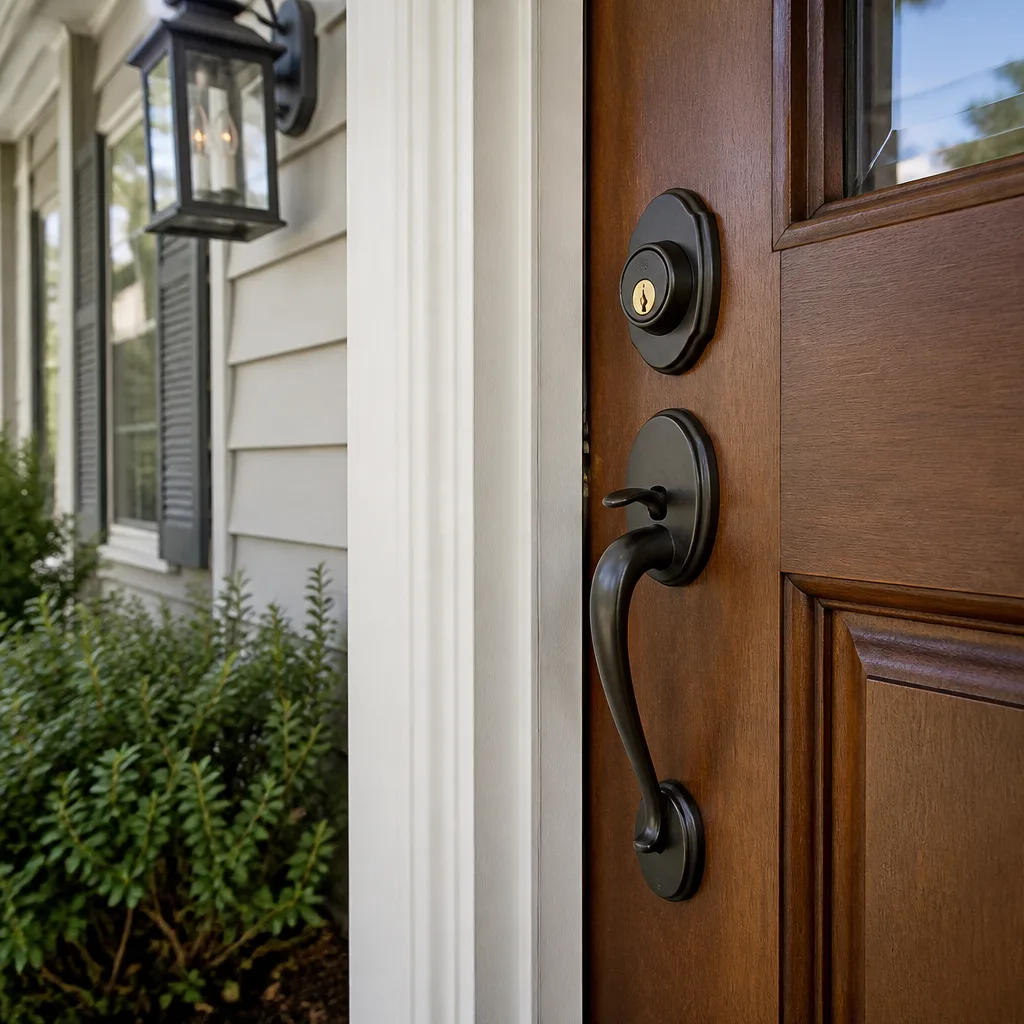
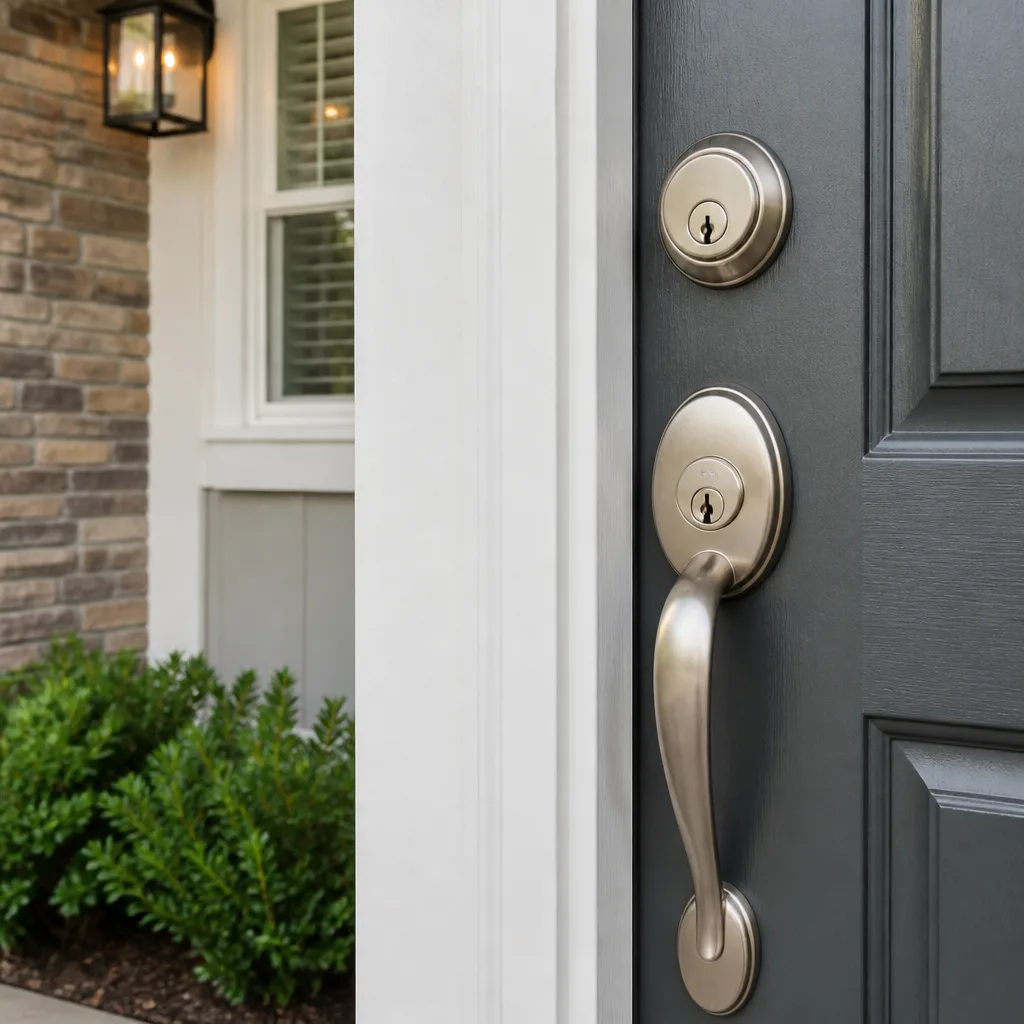
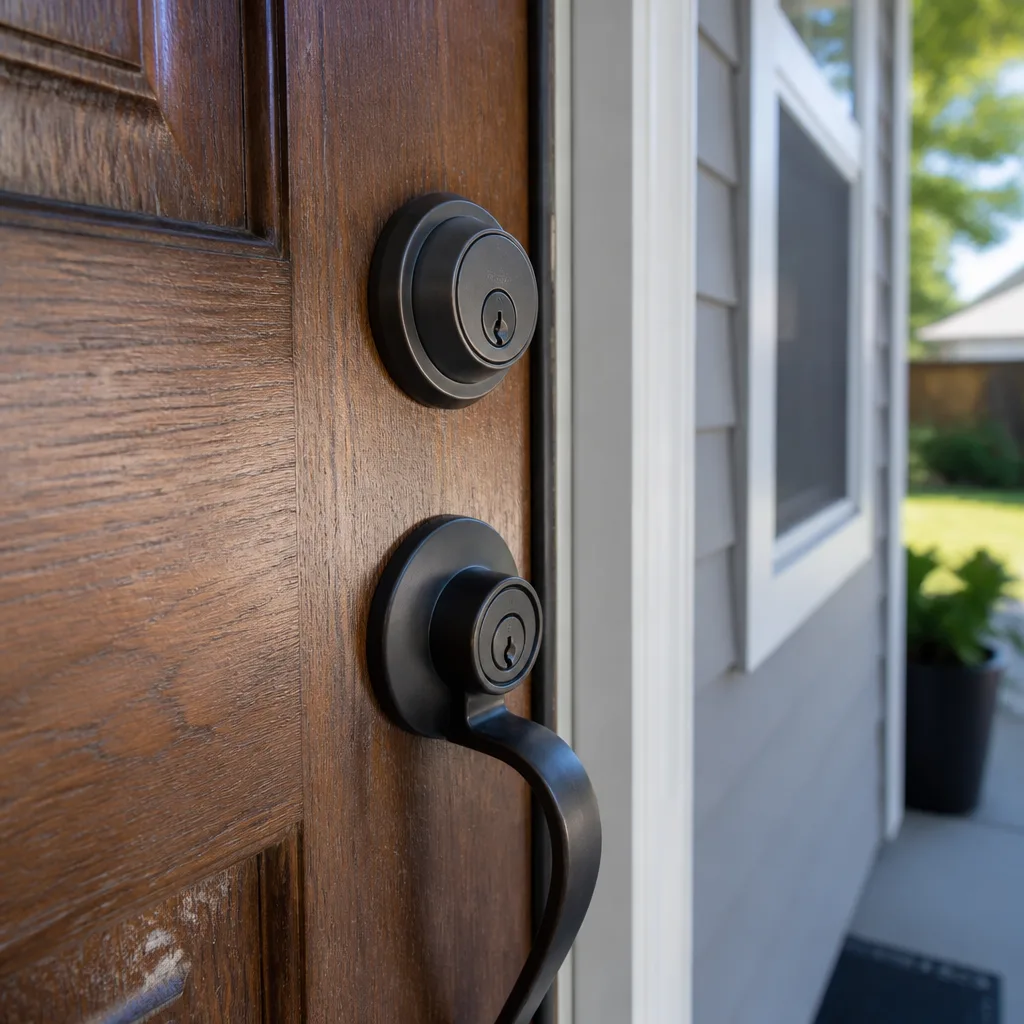
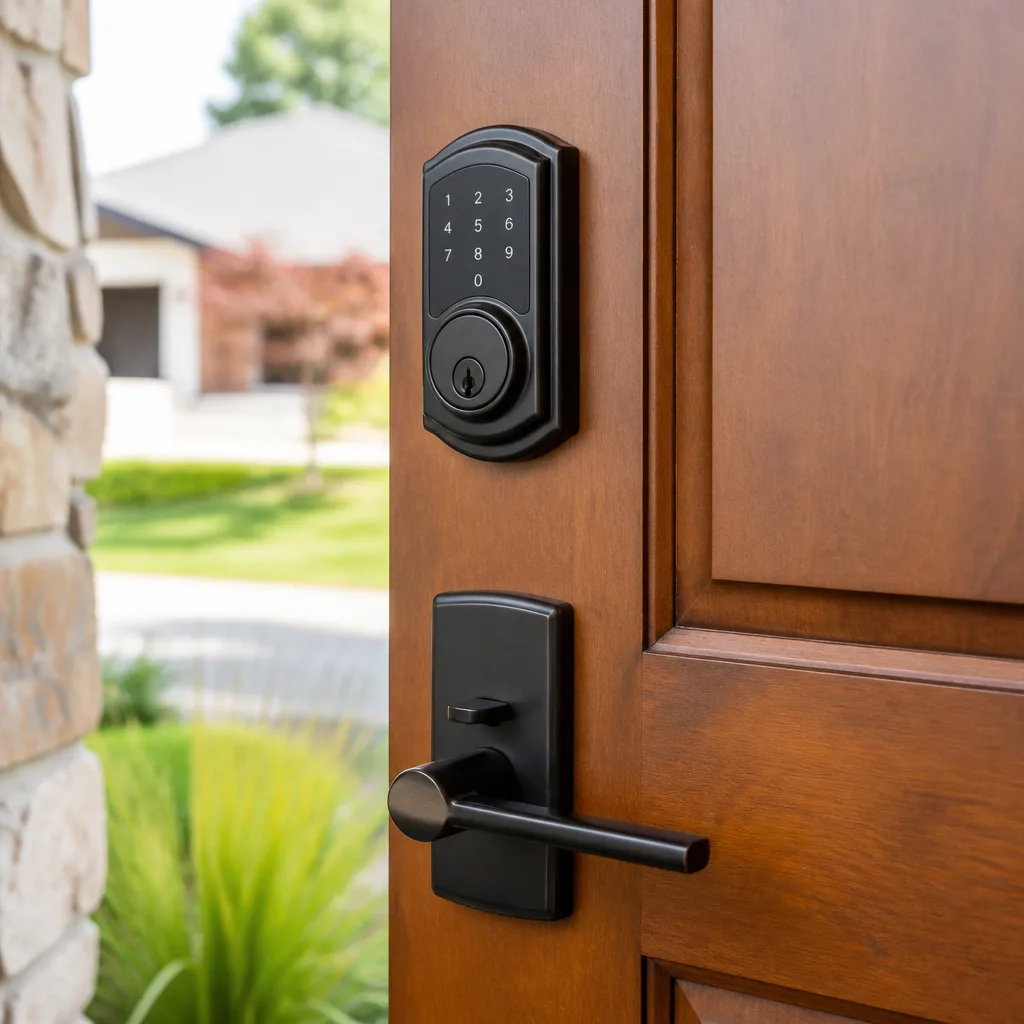
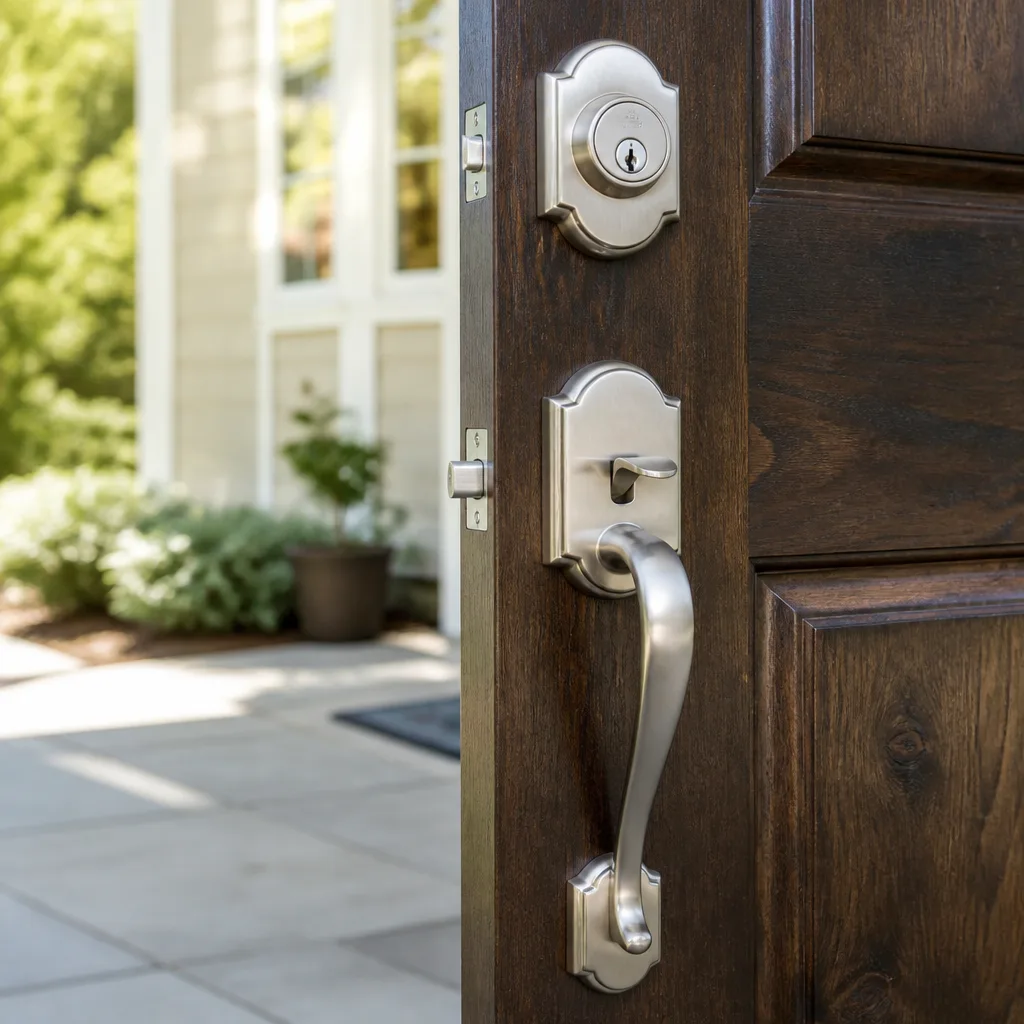
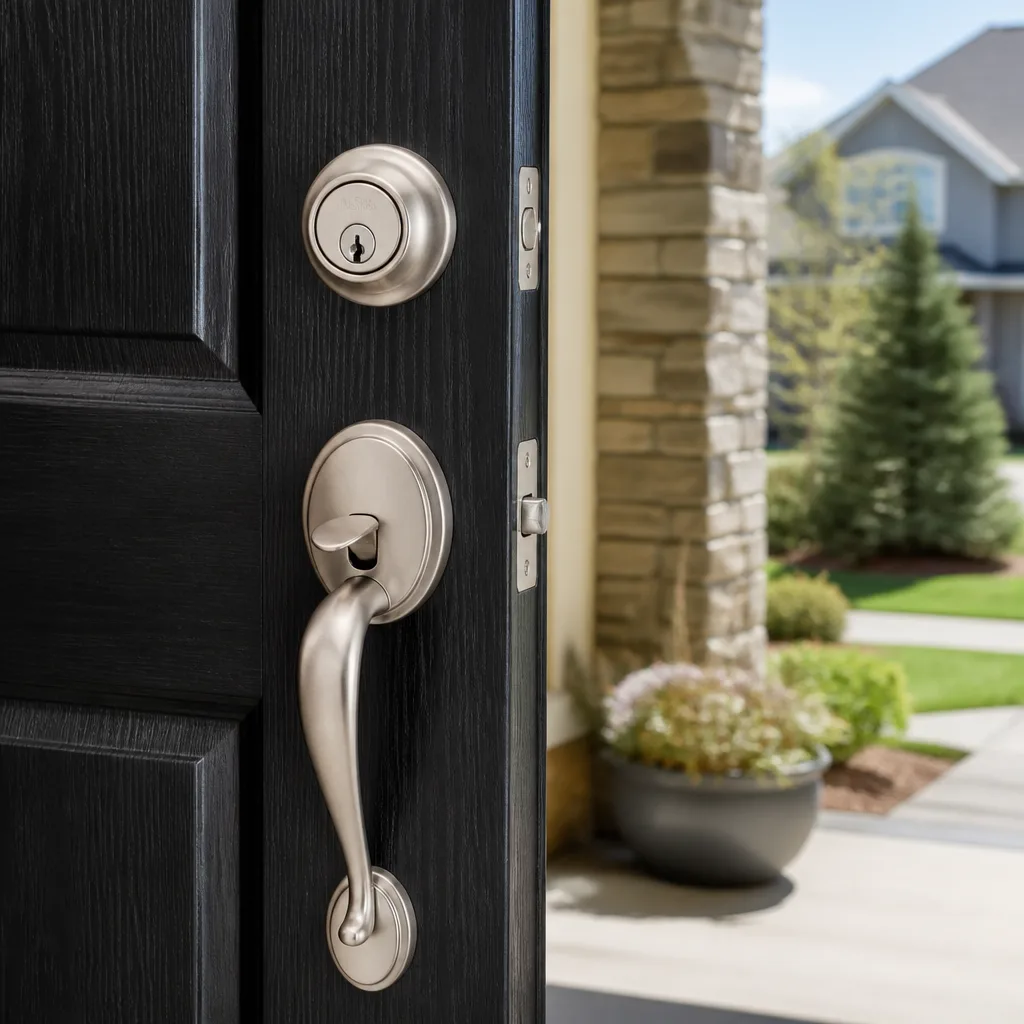
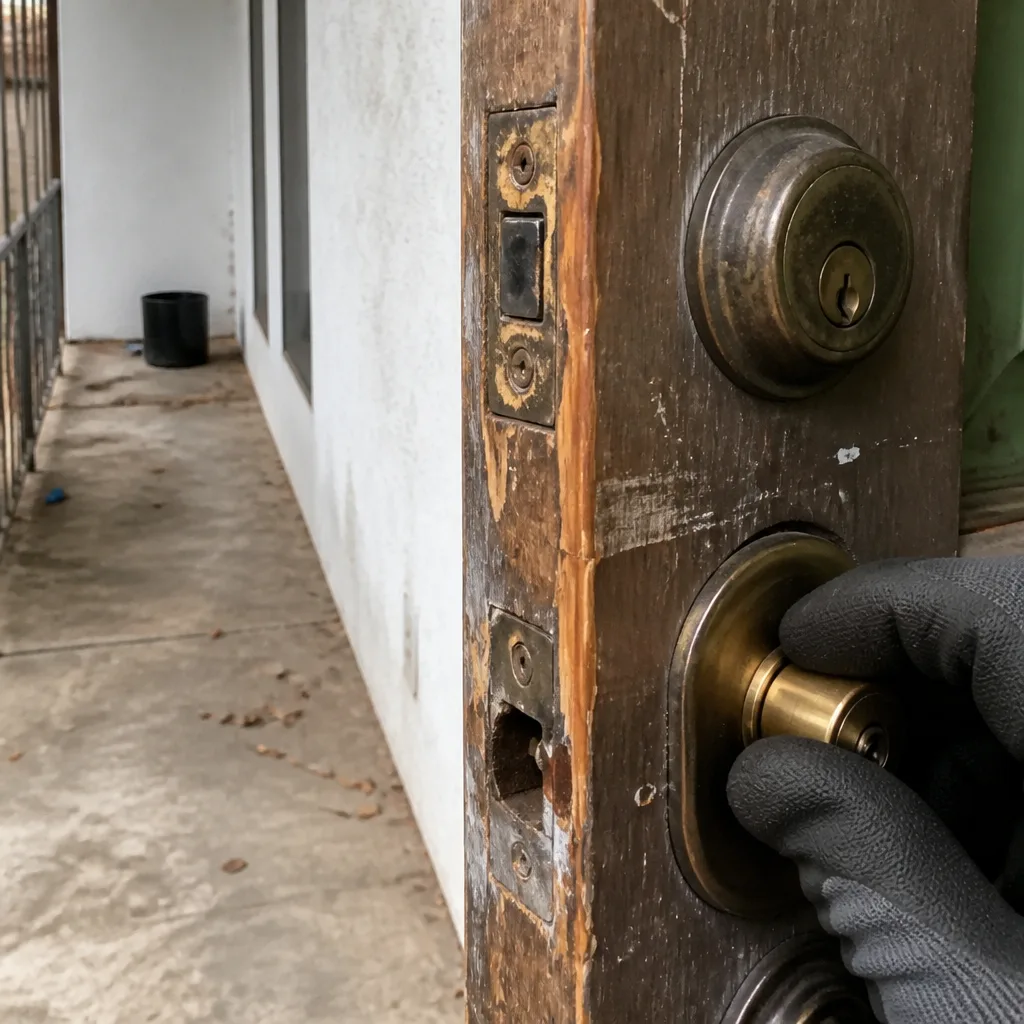 Before
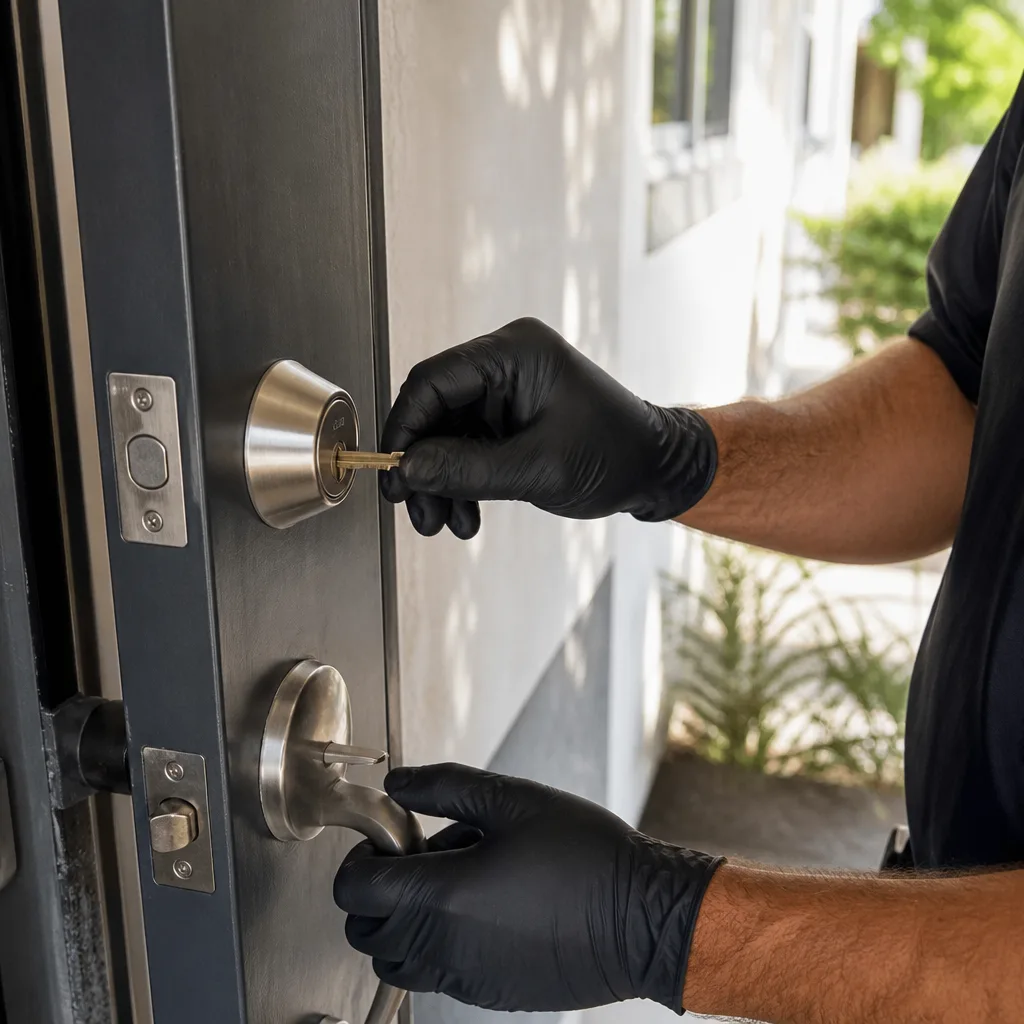 After
AfterDIY vs Professional Rekey Locks: What’s Safe to Do Yourself
Kwikset’s own SmartKey rekey tool has a documented failure mode: the reset step can be performed on a plug that isn’t fully seated, producing a cylinder that accepts the new key and the old key simultaneously, with no visible indication anything went wrong. That is not an edge case buried in a forum thread from 2011. It is a gear-tolerance reality that shows up in Los Angeles apartments, condos, and single-family homes every month. This guide draws the line at competence, not gatekeeping. We’ll show you which locks are genuinely reasonable to rekey yourself, which ones are not, what a professional rekey actually includes that a $15 kit does not, and why the front door deadbolt is the wrong place to learn the procedure.
Quick Answer
You can safely rekey a standard Kwikset or Schlage residential knob or deadbolt yourself if you buy the correct kit, follow the torque sequence exactly, and test the lock before rehanging it. You should not attempt DIY rekeying on high-security cylinders from Medeco, Mul-T-Lock, Abloy, or Sargent, or on any primary entry door where a failed rekey leaves your home’s security status unknown. The honest middle ground: rekey interior doors and secondary locks yourself, and call a professional for the front door deadbolt. See our breakdown on DIY vs Professional Residential Locksmith: What’s Safe to Do Yourself for a deeper comparison.
Table of Contents
- What Does Rekeying Actually Mean?
- Locks Where DIY Is Genuinely Reasonable
- Locks Where DIY Is Inadvisable Regardless of Skill
- The Hidden Cost of a DIY Error
- What a Professional Rekey Includes That a Kit Doesn’t
- How to Rekey a Standard Kwikset or Schlage Lock
- Los Angeles-Specific Rekey Considerations
- Common Mistakes to Avoid
- When to Call a Professional
- Frequently Asked Questions
- The Bottom Line
What Does Rekeying Actually Mean?
Rekeying means changing the internal pins inside a lock cylinder so the old key no longer works, without replacing the hardware itself. The lock body, the deadbolt, the strike plate, the trim ring – all of it stays. Only the pin stack inside the cylinder changes. In plain terms: the lock is rebuilt internally to match a different key.
Here’s how it works. A standard pin-tumbler lock has five or six chambers drilled into the plug, which is the part that rotates when you turn the key. Each chamber holds a driver pin and a key pin. The key pin rests on the cuts of the key. When the right key is inserted, the key pins align at the shear line, the plug rotates, and the lock opens. When you rekey, you replace the key pins with pins of different heights so only the new key aligns them correctly. The driver pins stay the same.
The process is learnable. Rekey kits are sold openly at hardware stores and online for $15 to $40. The tools are simple: a plug follower, a set of color-coded pins, a pair of tweezers, and a new key. The mechanics are not mysterious. What separates a clean rekey from a security gap is not dexterity – it is verification. A professional checks pin depth, key cut alignment, and plug seating before the lock goes back on the door. A DIY rekey that skips verification can leave a cylinder that opens with the new key, the old key, and sometimes a blank key, with no visible sign of trouble until someone other than you tries the door.
At Ridley Locksmith & Security home, we explain rekeying the same way to every Los Angeles customer: it is not replacing the lock, it is reprogramming the one you have. The phrase matters because it tells you what you are paying for. You are paying for the internal geometry of a mechanical device to be rebuilt to a new key code, verified, and documented.
Locks Where DIY Is Genuinely Reasonable
Standard Kwikset and Schlage residential knobs and deadbolts are the two lines where a careful homeowner with the correct kit can produce a reliable rekey. These locks use conventional pin-tumbler cylinders with published keyways and widely available pin kits. The tolerances are forgiving enough that a methodical rekey works, and the failure mode – a cylinder that binds or a pin that catches – is usually detectable with a simple test: insert the key, turn it, remove the key, insert the old key, and confirm the old key no longer operates the plug.
Here is the list of situations where DIY rekeying is genuinely low-stakes:
- Interior bedroom or bathroom locks. A hallway door that locks for privacy, not security. If the rekey fails, you are out a doorknob, not a security boundary.
- Secondary storage locks. A shed padlock with a removable cylinder, a garage side door that is not the primary entry, a mailbox lock. Low exposure, easy to replace if the rekey goes sideways.
- Duplicate brand locks you are practicing on. If you have an old Schlage knob sitting in a drawer, rekey it there first. Learn the torque sequence on a lock that is not mounted to anything.
- Kwikset SmartKey locks using the official Kwikset rekey tool. The SmartKey system is designed for homeowner rekeying – but read the warning in the opening of this guide again. The reset step must be done with the plug fully seated, or you get the dual-key failure mode. Follow the printed instructions exactly, not a video from memory.
The common thread: a DIY rekey is reasonable when the consequence of an undetected error is inconvenience, not intrusion. An interior doorknob that fails to rekey is a nuisance. A front door deadbolt that fails silently is a security hole.
We should also say plainly that some hardware marketed as “rekeyable by the homeowner” deserves more caution than the box suggests. Schlage and Kwikset both make entry-level lines where the rekey process is genuinely straightforward, and both make higher-grade lines where pin tolerances tighten. If the deadbolt has a visible keyway with a sidebar (a horizontal groove along the side of the key), you are not dealing with a standard pin-tumbler rekey, regardless of brand name.
Locks Where DIY Is Inadvisable Regardless of Skill
High-security cylinders from Medeco, Mul-T-Lock, Abloy, and Sargent do not rekey with a hardware-store kit. These locks use sidebars, rotating pins, telescoping pins, or restricted keyways that require brand-specific tooling and pin tolerances measured in thousandths of an inch. The rekey kits sold for Kwikset and Schlage will not work on them. Attempting a rekey with improvised tools on a Medeco cylinder is not a skill issue – it is a tooling issue. You do not have the pins, you do not have the follower geometry, and you do not have the key card that authorizes new key cuts from the manufacturer.
Here is what makes high-security cylinders different:
- Sidebar mechanisms. Medeco and Mul-T-Lock cylinders use a sidebar that engages a groove along the side of the plug. The key pins and the sidebar must align simultaneously. Standard rekey kits do not address the sidebar at all.
- Restricted keyways. Abloy and Sargent high-security lines use key blanks that are not available to the public. The key blank itself is controlled. Even if you rekey the cylinder to a new key code, you cannot legally obtain the key blanks to cut new keys.
- Telescoping or rotating pins. Mul-T-Lock pins telescope; Medeco pins rotate. These are not five simple key pins of different heights. They are multi-part assemblies that require brandspecific insertion sequences and verification tools.
- Factory documentation. High-security locks are sold with key control cards that track key serial numbers and authorize duplicates. A DIY rekey voids the chain of custody and can make future key duplication impossible without replacing the entire cylinder.
In Los Angeles, these locks show up most often on commercial storefronts, luxury residential properties, and buildings where a previous owner or tenant installed them for insurance or building-code reasons. If you are not sure what is on your door, pull the key out and look at the name stamped on the head. If it says Medeco, Mul-T-Lock, Abloy, or Sargent, do not open the cylinder. Call a locksmith who is certified on that line.
Our technicians at Ridley Locksmith & Security are trained on the full spectrum from everyday Schlage, Kwikset, Yale, and Baldwin hardware to high-security lines including Medeco, Mul-T-Lock, Abloy, and Sargent. That is not a marketing claim. It is a tooling inventory and a knowledge base. High-security rekeying requires both.
The Hidden Cost of a DIY Error
The hidden cost of a DIY error is not the locksmith call. It is the window of time between discovering the error and getting it corrected, during which the door’s security status is unknown. That window can be hours, days, or months – and in some cases, the error is never discovered at all, because the homeowner tests the new key, it works, and they assume the old key is dead. It may not be.
Consider the failure modes that a careful DIY rekey can still produce:
- A pin dropped and the cylinder still operates. Drop a key pin during reassembly, and the lock may still open with the new key because the remaining pins hold the plug. But the missing pin makes the cylinder easier to pick and can allow a jiggle key or bump key to open it in seconds.
- A driver pin left below the shear line. This produces a cylinder that opens with the new key sometimes, and jams other times. It can also let the old key work intermittently. The lock operates unreliably, and the owner blames the key, not the pin stack.
- A key cut that does not match the pin stack. Hardware-store key cutting machines drift. If the new key is cut even a few thousandths off, the rekey may work in the cylinder on the workbench but bind once the deadbolt is mounted and under spring tension from the door alignment.
- Plug installed rotated 180 degrees. The plug goes back in upside down, the key enters, the pins align, and the lock opens – but the keyway faces the wrong direction or the cam is in the wrong orientation, leaving the deadbolt nonfunctional from one side.
Each of these failures is silent at the moment of installation. The lock feels fine. The new key turns. Then a week later, the old key works, or the lock jams, or a bump key opens it in five seconds. The cost is not the $95 service call. The cost is that for seven days, your primary entry door was functionally unlocked to someone with the old key and you did not know it.
For a Los Angeles homeowner, that window matters. This is a city of renters and turnover, roommates, ex-partners, housekeepers, dog walkers, and contractors who have held a key at some point. A rekey is often the only thing standing between a former keyholder and your front door. If the rekey fails silently, the entire purpose of the job is voided.
What a Professional Rekey Includes That a Kit Doesn’t
A professional rekey includes four things that a $15 DIY kit does not: plug inspection, driver pin depth verification with a follower tool, key cut verification against the lock’s bitting code, and a documented record of the key count. None of these are optional in a security context. They are the difference between “the new key works” and “the old key is provably dead and the new key is provably correct.”
Here is what happens during a professional rekey at Ridley Locksmith & Security:
- Plug inspection. The cylinder is disassembled and the plug is inspected for wear, scoring, or debris. A worn plug can chew up new pins in months. A professional identifies this before the rekey, not after the lock fails.
- Driver pin depth verification with a follower tool. The follower holds the driver pins in place while the plug is out. A professional verifies every chamber depth against the new key before reassembly. This step catches the dropped-pin and wrong-pin-depth errors that DIY rekeys miss.
- Key cut verification against the bitting code. The new key is measured against the lock’s bitting code, not just visually compared to the old key. Key cutting machines drift. A professional verifies the cuts in thousandths, not by eyeballing.
- Documented key count. After the rekey, the customer receives a written record of how many keys exist and which key codes are in circulation. This matters for insurance, for landlord tenant disputes, and for future rekeys – you know what is out there.
That documented record is part of what we call The Garrison Standard. Every technician who works under the Ridley name operates to a written code that covers everything from pin depth tolerances to customer communication. Every job carries a written price before work begins and a written guarantee covering the repair for one full year. If the rekey fails inside that window, we return at no charge. That is the 365-Day Done Right Promise, and it is not a verbal assurance. It is a document.
We also do not send unknown crews to your door. Every residential and commercial call gets a background-checked, uniformed technician who is employed by Ridley, not a subcontractor in an unmarked van. You know who is coming. Before any work starts, you have a written price. That price is the price on the invoice. There is no call-out surcharge added on arrival.
If your property is a rental unit, a commercial space, or a home with high-security hardware, a professional rekey is not a luxury. It is the only way to get a key count you can document and a guarantee you can enforce. For more on residential rekeying in Los Angeles, see Rekey Locks in Los Angeles.
How to Rekey a Standard Kwikset or Schlage Lock
If you have read this far and you still want to rekey a standard Kwikset or Schlage lock yourself, here is the honest procedure. This is not encouragement for the front door. This is the method for an interior lock or a practice lock, written so you understand what the procedure actually involves.
What you need: a rekey kit for your brand (Kwikset and Schlage kits are not interchangeable), a plug follower, a pair of fine tweezers, a small flathead screwdriver, and the new key. Work over a clean, flat surface. Do not work over carpet – a dropped pin disappears into carpet permanently.
- Remove the lock from the door. Unscrew the interior knob or deadbolt turnpiece, remove the mounting plate, and slide the cylinder out of the lock body. You cannot rekey a mounted lock accurately.
- Remove the retaining clip and the plug. Use the small flathead to remove the C-clip or retaining ring at the back of the cylinder. Insert the key, turn it slightly, and push the plug out with the follower. The follower must stay in contact with the plug the entire time to hold the driver pins in place.
- Remove the old key pins. With the plug out, dump the old key pins into a tray. Keep them organized – they are color-coded by height, and the color code is the key to the rekey.
- Load the new key pins. Insert the new key into the plug. Drop the new pins into the chambers according to the kit’s color chart for the new key’s bitting. Each chamber gets one key pin. Verify every pin sits flush with the plug surface when the new key is inserted.
- Reinsert the plug. Slide the plug back into the cylinder while maintaining pressure with the follower, so the driver pins do not drop into the keyway. Remove the follower slowly. The plug should turn freely with the new key.
- Test before rehanging. Insert the new key and turn the plug 360 degrees. Remove it. Insert the old key. The old key should not turn the plug. If it does, you have a seating or pin depth error. Do not rehang the lock. Reopen it and find the problem.
- Rehang and test again. Mount the lock back on the door. Test the key from both sides. Open and close the door six or seven times. Listen for grinding or binding. If anything feels wrong, the lock comes back off.
The failure point for most DIY rekeys is step 6. People test the new key, it works, and they skip the old-key test. The old-key test is the entire security point of the rekey. If you skip it, you have not completed the job. You have completed a coin toss.
If any step in this list feels unclear, that is not a personal shortcoming. It is a signal that the front door deadbolt is not where you should be learning this procedure. Use an interior lock. Use a practice lock. And if the door you really need rekeyed is the one that protects your home, call a professional. The Residential Locksmith in Los Angeles page covers what we do and how we price it.
Los Angeles-Specific Rekey Considerations
Los Angeles changes the rekey conversation in three specific ways: weather, turnover, and building stock.
Weather. Coastal fog and inland heat do separate things to lock hardware. In Santa Monica, Venice, and Playa del Rey, salt-laden marine air accelerates corrosion on exposed cylinders. A lock that has been on an ocean-facing door for five years may have internal pitting that makes DIY pin replacement genuinely risky – the old pins may not come out cleanly, and new pins may not seat. In the San Fernando Valley, summer temperatures regularly exceed 100 degrees, and locks on sun-exposed doors absorb heat that causes pin chambers to expand and contract over time. A rekey on a heat-cycled Valley lock requires more force on the plug follower than a lock that has lived its life in a shaded hallway. Neither condition is a reason to avoid rekeying. Both are reasons to inspect the cylinder before you commit to a DIY job.
Turnover. Los Angeles has one of the highest rental turnover rates in the country. Landlords rekey between tenants as a matter of standard practice, not optional security. If you own a rental property in Los Angeles, a DIY rekey between tenants carries a specific legal exposure: if the rekey fails and the previous tenant’s key still works, your insurance may deny any resulting claim on the grounds that the lock was not professionally serviced. A documented professional rekey with a key count record protects you in a way that a hardware-store kit cannot. For commercial properties, the stakes are similar – employee turnover, lost keys, and contractor access all create rekeying needs that a Commercial Locksmith in Los Angeles handles with a documented chain of custody.
Building stock. Los Angeles home construction spans a century. A 1920s bungalow in Echo Park has different lock hardware than a 2010s condo tower in Downtown. Older Los Angeles homes often carry vintage mortise locks that predate modern Kwikset and Schlage cylinders. Those mortise locks are not rekeyable with any hardware-store kit, and attempting to force a modern pin set into a vintage mortise cylinder will destroy the lock. The same is true for many 1950s and 1960s tract homes in the Valley that were built with first-generation Schlage hardware whose tolerances no longer match current pin kits.
None of this is unique to Los Angeles, but the combination of coastal salt, inland heat, high tenant turnover, and a century of varied building stock means this city sees more DIY rekey failures than almost anywhere in the country. It is not that Angelenos are less handy. It is that the locks here are older, saltier, and more legally consequential than the locks in a new-build suburb.
Common Mistakes to Avoid
- Testing only the new key. The new key is not the test. The old key is the test. Insert the old key after the rekey and confirm it does not operate the plug. Skip this, and you have not rekeyed – you have added a key.
- Using a Kwikset kit on a Schlage lock. The pin diameters and keyway geometry are different. A Kwikset pin in a Schlage chamber will bind, shear, or drop. Buy the kit for the brand stamped on the lock face.
- Working over carpet. A dropped pin is a 2-millimeter brass cylinder that vanishes into carpet instantly. Work over a hard surface with a lip or a tray. If a pin hits carpet, find it before you sweep or vacuum, because a missing pin means an under-pinned cylinder that no longer has its designed pick resistance.
- Forcing the plug back in. If the plug does not slide back into the cylinder with light pressure, something is misaligned. Forcing it will bend a pin or score the plug wall. Stop, remove the plug, and check the driver pin alignment. A bent pin is a dead lock, not a slow lock.
- Rekeying a high-security cylinder with a standard kit. Medeco, Mul-T-Lock, Abloy, and Sargent cylinders have sidebars and restricted keyways. A standard kit cannot rekey them. The attempt will destroy pins and possibly the plug. If the key says one of those names, stop.
- Rekeying only one lock on a multi-lock door. Many Los Angeles front doors have a deadbolt and a knob that share a key. If you rekey the deadbolt and not the knob, you have two different keys and an old key that still operates one of the locks. Rekey every cylinder on the entry door in the same session.
- Not documenting the rekey. A DIY rekey produces no key count record, no bitting code, and no written guarantee. If the lock fails in three months, you have no recourse and no documentation. For rental properties, this can be a legal exposure. For homeowners, it is a maintenance gap.
When to Call a Professional
Call a professional when the lock you need rekeyed is a primary entry door, a high-security cylinder, a vintage mortise lock, or any lock where the consequence of a silent failure is an unsecured door you do not know about. Call a professional when you are a landlord rekeying between tenants and need a documented key count. Call a professional when the old key belongs to someone you had a falling-out with, and the rekey is not maintenance but security.
Call a professional when the lock is on a business and turnover, lost keys, or contractor access means the key count matters to your insurance and your lease. Wondering about timing? Read How Long Does Commercial Locksmith Take? Timelines and What to Expect. Ridley Locksmith & Security offers free estimates in Los Angeles – call (956) 275-7388. A live person answers 24 hours a day, 7 days a week, and the price quoted on the phone is the price on the invoice, in writing, before any work starts.
Frequently Asked Questions
You can rekey a standard Kwikset or Schlage knob or deadbolt safely if you use the correct brand-specific kit, follow the full procedure including the old-key test, and accept the risk that an undetected error leaves your door’s security status unknown. You cannot safely rekey high-security cylinders from Medeco, Mul-T-Lock, Abloy, or Sargent without brand-specific tooling and training.
Professional rekeying in Los Angeles typically costs $20 to $35 per cylinder for standard Kwikset or Schlage hardware, with a service call fee of $50 to $90 depending on distance and hour. High-security cylinders run $35 to $75 per cylinder due to pin costs and tooling. The full price is quoted in writing before a technician is dispatched, and it is the price on the invoice. Call (956) 275-7388 for an exact quote – estimates are free.
Yes. Ridley Locksmith & Security delivers a written price before any work starts, and that price is the price on the invoice. There is no call-out surcharge added on arrival, no price that shifts at the door, and no charge for the estimate itself. This is The Garrison Standard, and it is non-negotiable.
A Ridley Locksmith & Security technician can typically reach most Los Angeles neighborhoods within 60 to 90 minutes of your call, depending on traffic and time of day. A live person answers the phone 24 hours a day, 7 days a week – not a voicemail, not an answering service. Call (956) 275-7388 and you will speak to a person who can give you a written price before dispatch.
Ask for a written price before work starts and a written guarantee that covers the repair for one full year. Ridley Locksmith & Security provides both on every job. Every technician is background-checked, uniformed, and employed directly by Ridley – not a subcontractor, not an unmarked van. The 365-Day Done Right Promise means if the work fails inside a year, we return at no charge.
Rekeying only changes the key – it does not improve the lock’s resistance to picking, bumping, or forced entry. If the lock itself is worn or low-quality, rekeying it is maintenance, not an upgrade. A professional rekey includes plug inspection that can identify worn cylinders before they fail, which a DIY kit cannot do.
The Bottom Line
Rekeying a lock is a learnable mechanical procedure, not a secret art. The question is not whether you can do it – the question is whether a silent failure on the lock you choose is something you can absorb. Interior doors and secondary locks: yes, go ahead, with a proper kit and a proper test. Primary entry deadbolts, high-security cylinders, rental properties, and any lock where an undetected error means an unsecured door: call a professional. In Los Angeles, the locks are older, the turnover is higher, and the stakes of a failed rekey are real. The safe line is competence drawn at the right door, not gatekeeping drawn at every door.
Written by Drew Kowalski, Owner at Ridley Locksmith & Security, serving Los Angeles since 2007.