
Last updated October 9, 2026
Non-destructive entry first, always - and we re-key Schlage, Kwikset, and Baldwin locks on the spot while you watch
You get a price before we start. It does not change when we arrive. No surprises.
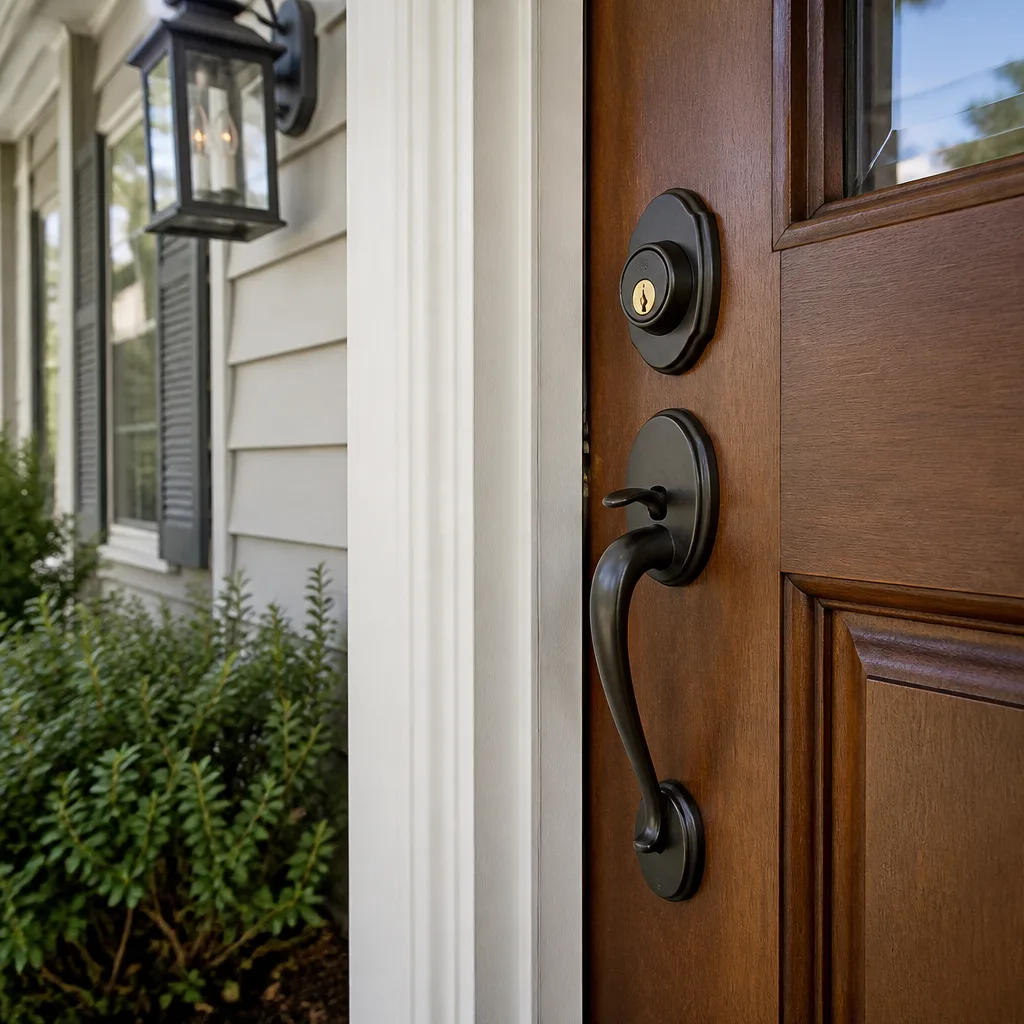
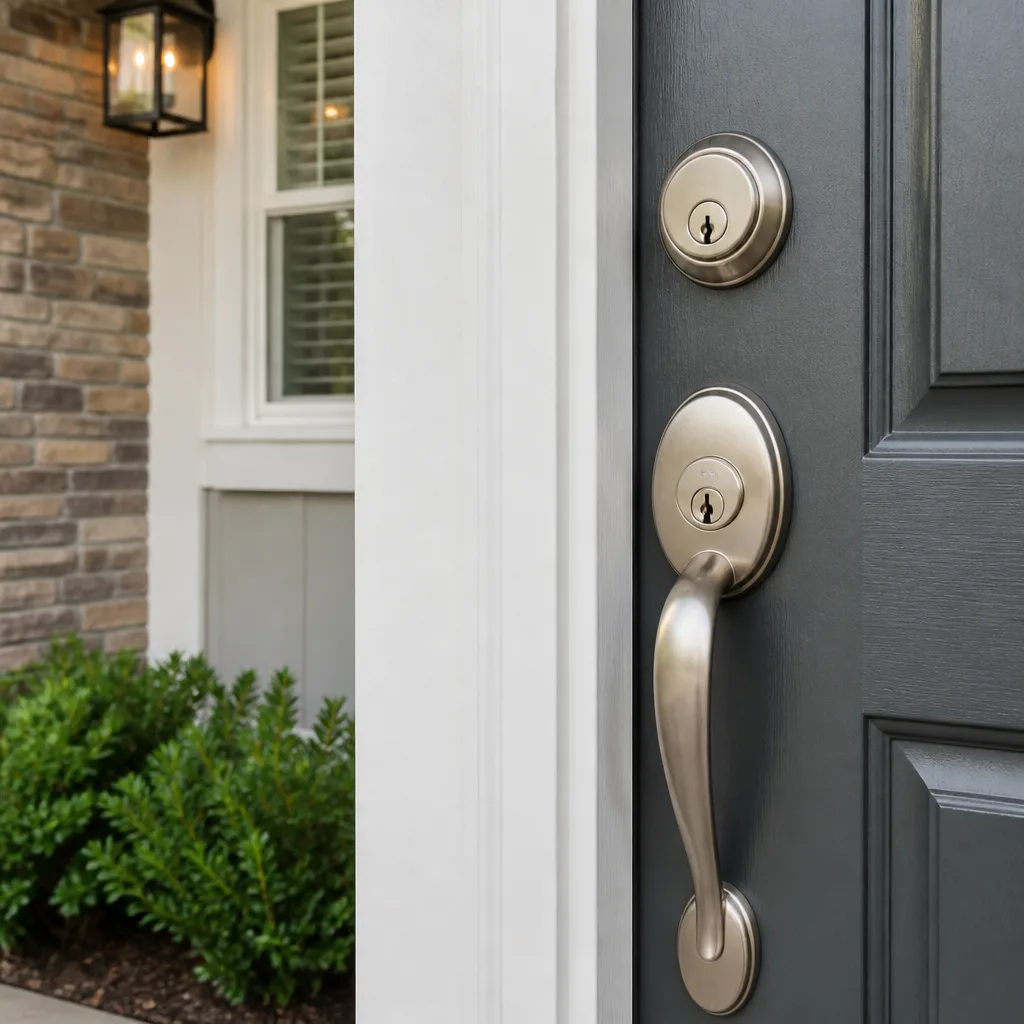
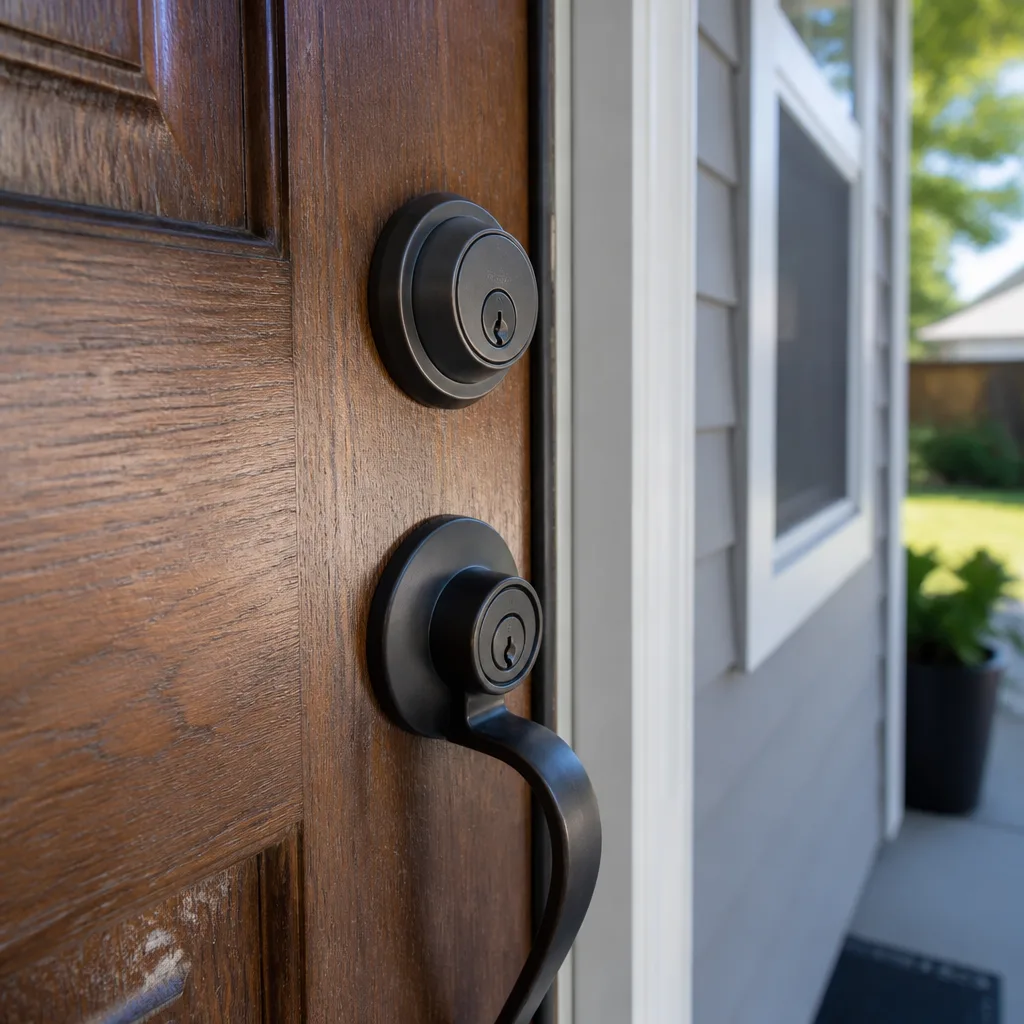
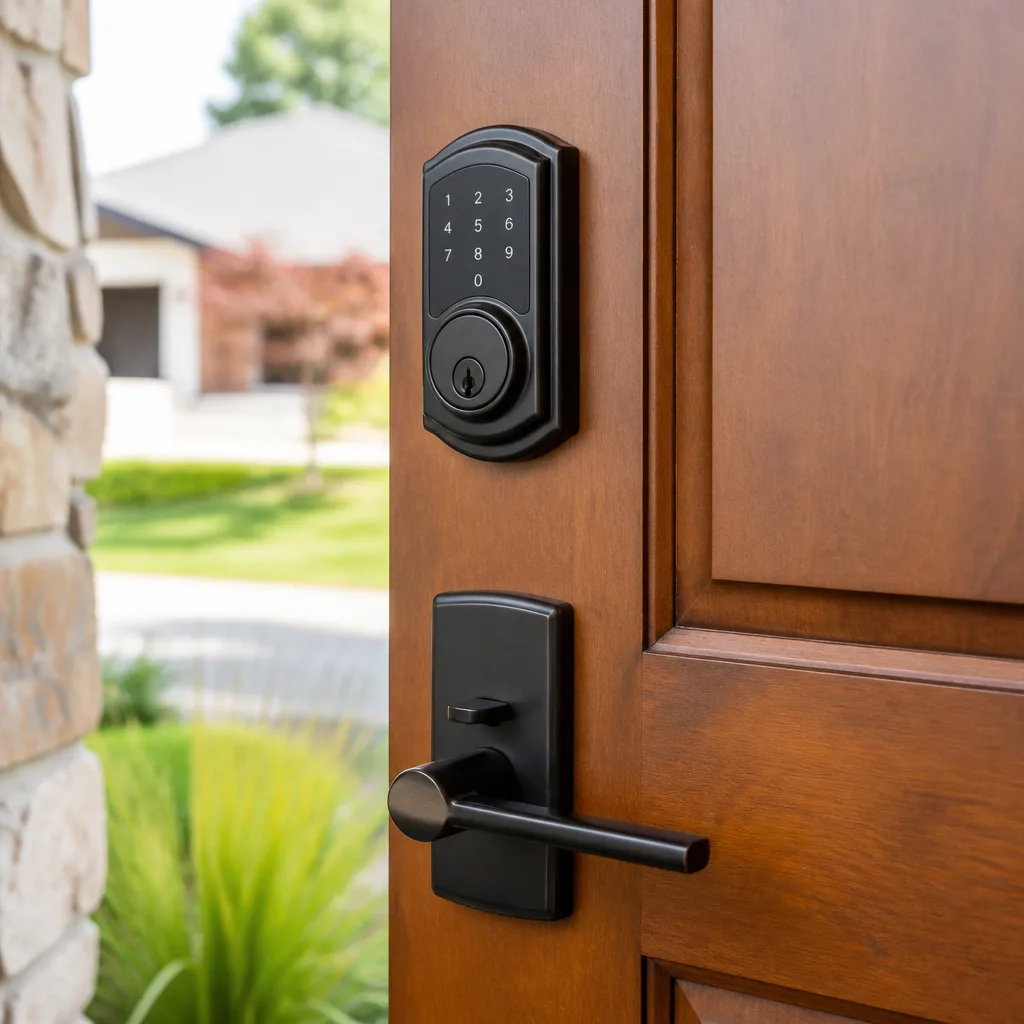
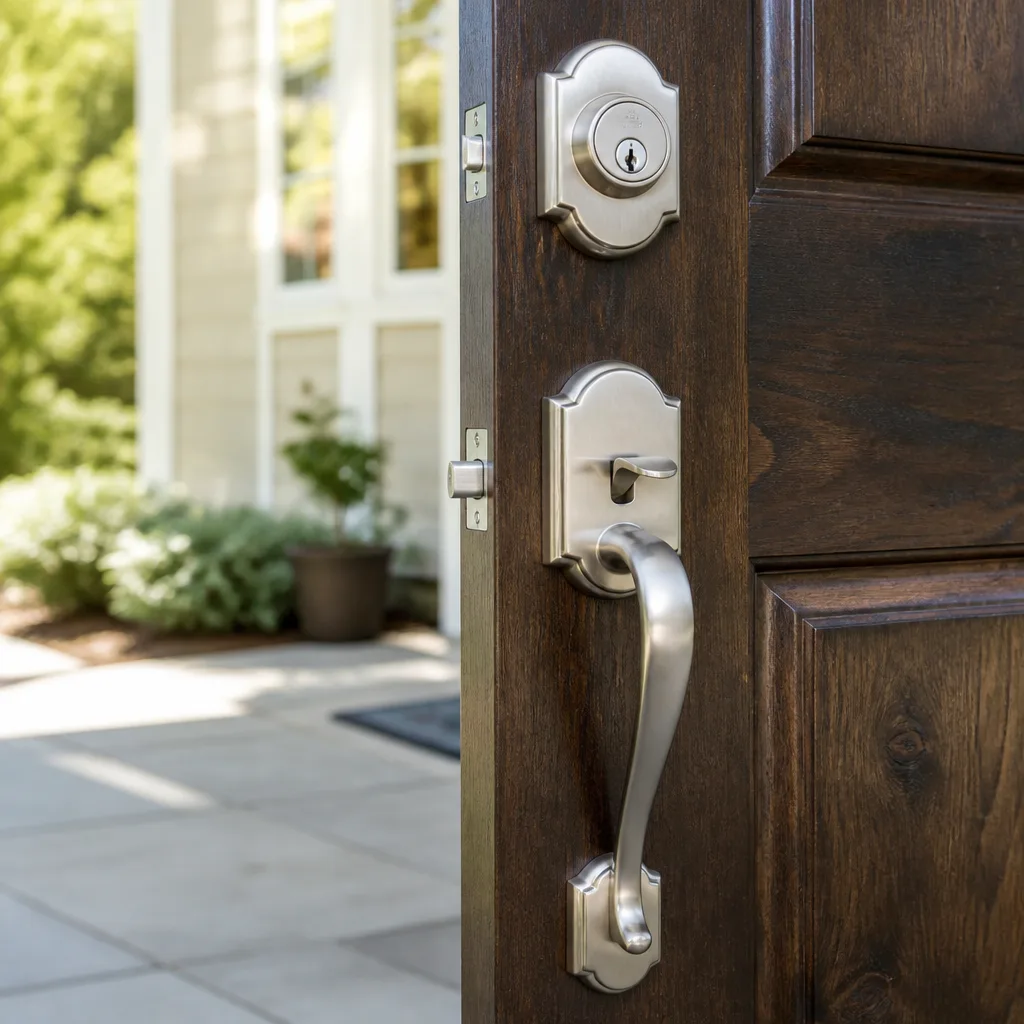
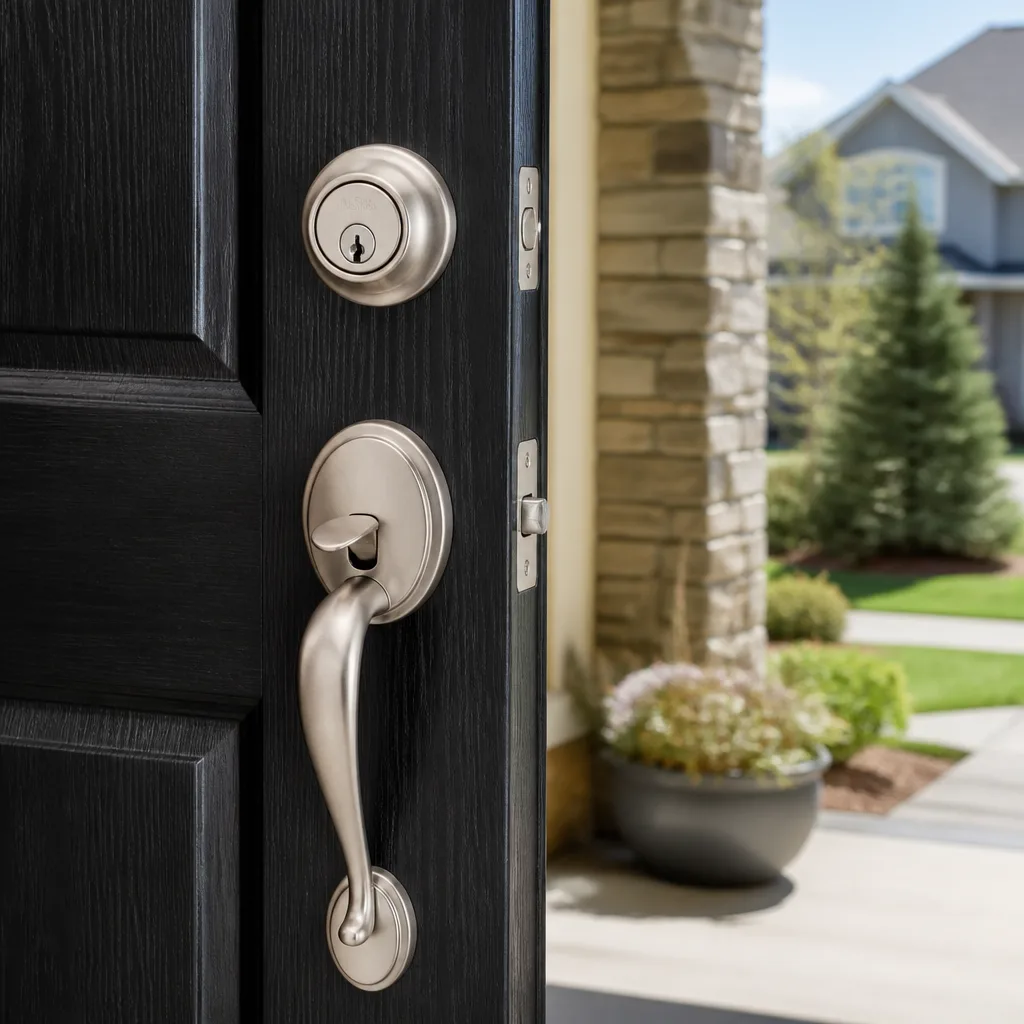
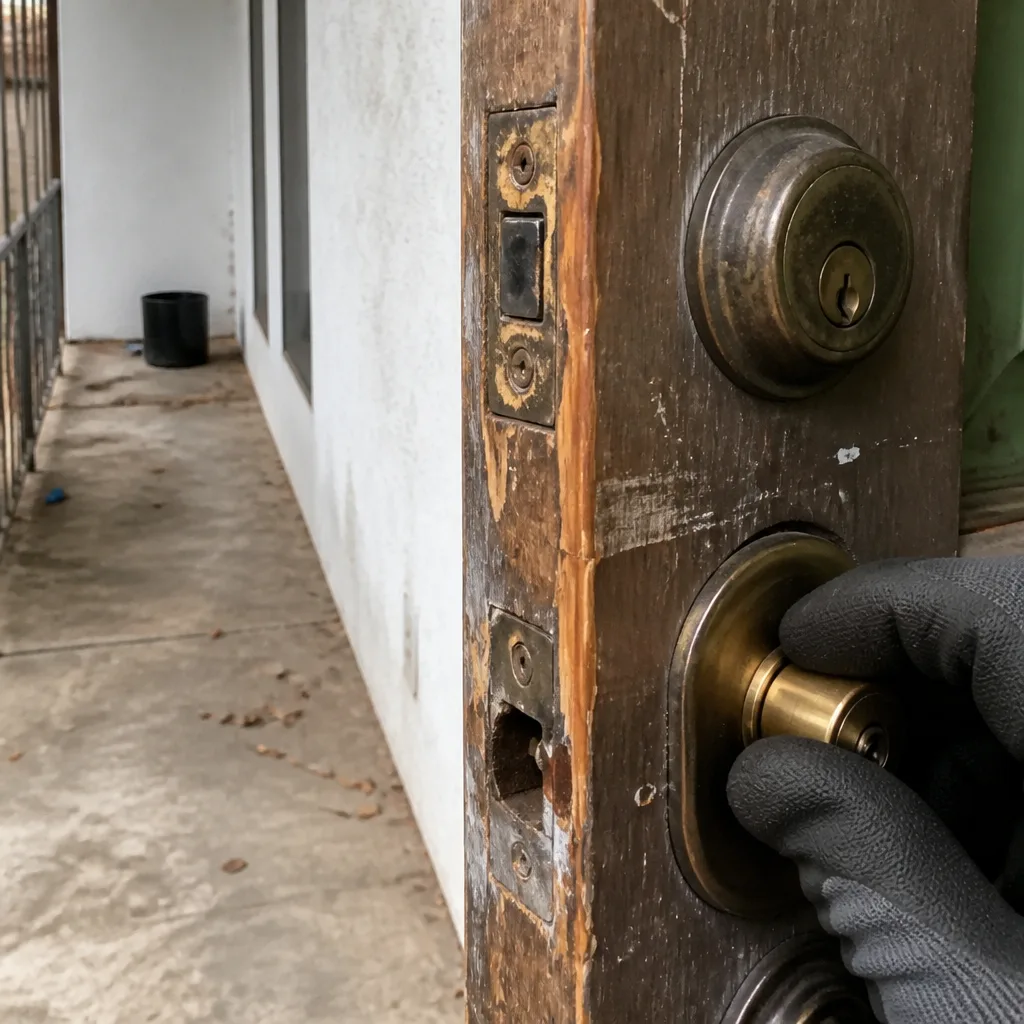 Before
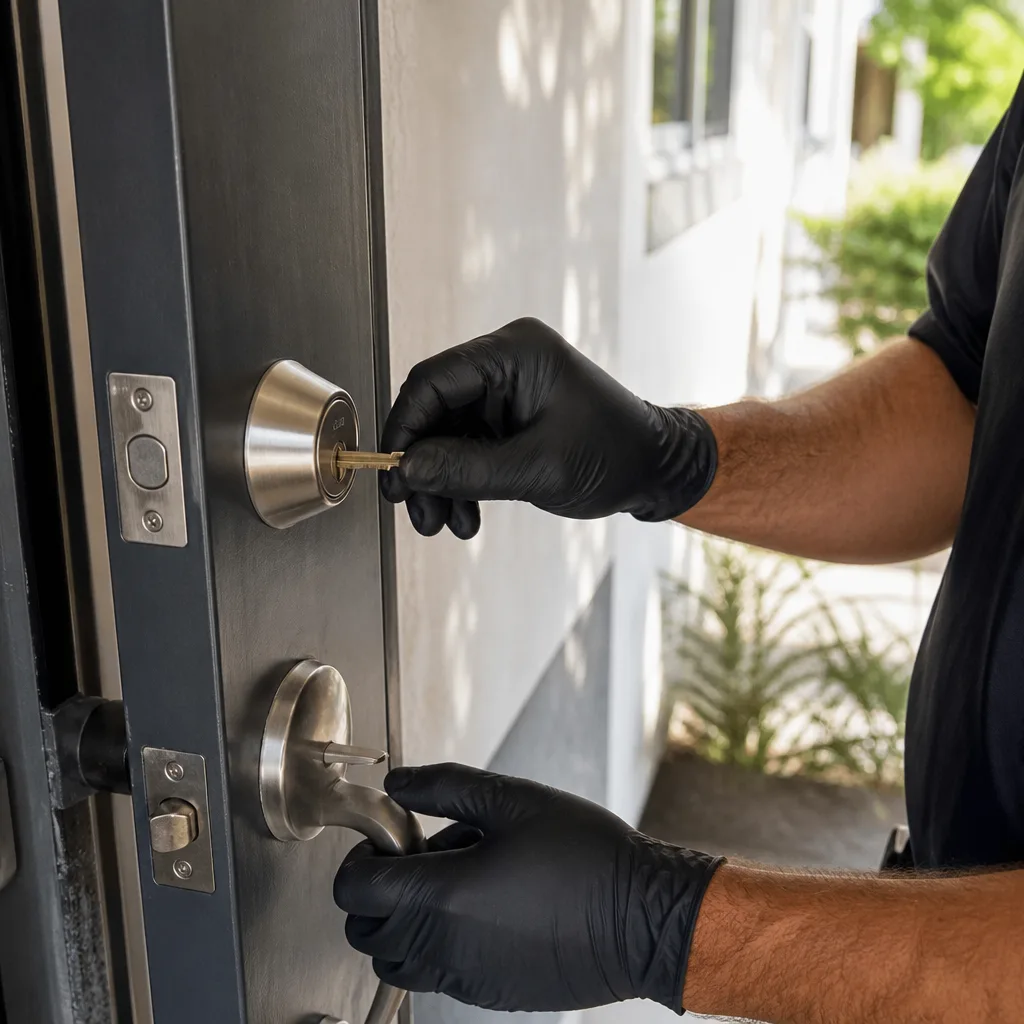 After
AfterDIY vs Professional Residential Locksmith: What’s Safe to Do Yourself
Installing a deadbolt looks like a drill-and-screw job until you hit the part where the bolt centerline has to align with a strike plate mortised into the door frame within 1/16 of an inch. Off by more than that and the bolt will short-throw under pressure, which is exactly the condition a forced-entry attempt exploits. This guide sorts every common residential lock task into three honest categories: safe to do yourself, possible but high-consequence if wrong, and professional-only. We’re writing this from Los Angeles, where older homes in neighborhoods like Silver Lake and West Adams mix original 1920s door hardware with modern smart locks, and where the wrong DIY decision on a primary door is a security exposure, not just a cosmetic issue.
Quick Answer
Safe DIY residential locksmith work is limited to interior door hardware swaps, lock lubrication, strike plate screw tightening, and replacing a door viewer. Anything on an exterior door that affects the locking mechanism itself, including deadbolt installation, rekeying, and smart lock integration, carries an unforgiving alignment or pin-depth tolerance where a mistake leaves the door insecure, and professional repair typically costs more than the original service call would have.
Table of Contents
- What’s Genuinely Safe to Do Yourself
- DIY-Possible But High-Consequence If Wrong
- Professional-Only Tasks, Regardless of Skill Level
- The Tool Gap: What a Locksmith Carries That You Don’t
- How to Brief a Locksmith After a DIY Attempt
- What DIY Actually Costs vs Calling a Los Angeles Locksmith
- Common Mistakes to Avoid
- When to Call a Professional
What’s Genuinely Safe to Do Yourself
There are four residential lock tasks that a careful homeowner can handle without introducing risk. These tasks sit on interior doors or on non-critical hardware, and none of them affect the security of an exterior entry point.
1. Replacing an Interior Door Knob or Lever
This is the classic first lock project, and for good reason. An interior passage knob or privacy set has no security function. On a bedroom or hallway door, the worst outcome of a mistake is a sticky latch or a knob that wobbles, and both are easy to correct. You’ll need a Phillips screwdriver and about ten minutes. The new knob or lever from a brand like Kwikset or Baldwin typically comes with a template, though most interior preps are standardized at 2 3/8 inches backset. What you should not do: replace an exterior entry knob with no deadbolt above it and call the job done. That’s not an interior swap, and the next section explains why.
2. Lubricating a Lock Cylinder
A dry cylinder feels gritty when you insert the key, or the key sticks partway in. The fix is straightforward and takes under five minutes. Use a dry graphite powder or a Teflon-based lubricant made for locks. Spray a short burst directly into the keyway, insert the key, and work it back and forth a few times. What you should never use: WD-40. It’s a solvent and a temporary lubricant that evaporates into a gummy residue, which traps dust and makes the cylinder worse within weeks. In Los Angeles, where dry wind carries fine dust from the foothills into every door hardware surface, we see this pattern constantly. A graphite-lubricated cylinder stays smooth for years.
3. Tightening Strike Plate Screws
When a deadbolt or latch rattles, or the door needs to be pulled toward the frame for the bolt to throw, the strike plate screws have usually worked loose. This is a five-minute fix: tighten the existing screws. If they spin without catching, replace them with screws at least 3 inches long so they bite into the door frame’s structural stud, not just the jamb trim. This single change is one of the highest-value DIY improvements you can make on a Los Angeles door, because many older door frames in neighborhoods like Highland Park and Echo Park were built with shorter trim screws that do not resist a shoulder push. Long screws do. No special tools required.
4. Replacing a Door Viewer (Peephole)
A door viewer threads through a hole in the door. Replacement takes about two minutes: unscrew the interior barrel, thread out the old viewer, thread in the new one, and tighten. The only caveat is that the new viewer’s thread diameter should match the existing hole. If you have to widen the hole on a metal or fiberglass door, that crosses into a different category with a real margin for error. On a standard wood door, swapping a viewer is about as safe as DIY gets.
Key takeaway: Every task in this section either sits on an interior door or touches hardware that does not secure the entry point. If a mistake on the task could leave a primary exterior door unlocked, unopenable, or falsely secure, it doesn’t belong here.
DIY-Possible But High-Consequence If Wrong
The tasks in this category are not difficult because they’re technically complex. Most aren’t. They’re risky because a mistake on a primary door leaves a homeowner either locked out, insecure, or both, and the recovery cost typically exceeds what the professional job would have cost in the first place. That’s the common thread, and it’s the reason we mark these high-consequence rather than hard.
1. Deadbolt Installation on an Exterior Door
A deadbolt protects the door. It does not protect it well unless the bolt’s centerline aligns with the strike plate mortised into the door frame within 1/16 of an inch. The bolt must also throw its full 1-inch length into the frame without binding. This is where the drill-and-screw illusion falls apart. An alignment error leaves a condition locksmiths call a short throw, where the bolt only partially enters the strike plate. Under a kick or a shoulder hit, a short-thrown bolt often shears the strike plate screws or splinters the jamb. The door looks locked, feels locked, and fails when it matters. In our experience across Los Angeles, the most common failed deadbolt installs we redo are ones where a homeowner completed the job successfully by appearance, but the bolt was short-throwing by anywhere from an eighth to a quarter inch.
The tolerance is unforgiving because the entire security function depends on it. A professional deadbolt installation includes drilling the cross-bore and edge-bore on center, mortising the strike plate flush into the jamb, setting the bolt depth so it bottoms fully, and testing the throw under actual door pressure. It is not one measurement. It’s five, and they all have to agree. If you want to attempt this yourself, the real test is not whether the bolt throws, but whether it throws its full length with the door closed and light pressure applied against it. If you can see bolt face at the plate, you have a problem. A residential locksmith in Los Angeles carries a jig that positions these holes correctly on the first attempt, which is a strong argument for the cost of the call.
2. Lock Rekeying
Rekeying means changing a lock’s internal pins so old keys no longer work, without replacing the hardware. The concept is simple: the key lifts pins to a shear line, and the plug rotates. The execution is not. Each pin sits in a stack with a bottom pin and a top pin, and the cut depths on the key must match those pin lengths precisely. A pin that sits too high or too low produces a lock that does not turn, or worse, one that turns for the wrong key. The false-security failure is the dangerous one: a rekeyed lock that functions with the new key and still turns with a key from the previous tenant, previous owner, or a neighbor’s similar key.
To rekey a Schlage or Kwikset cylinder properly, you need the cylinder out of the lock, a plug follower to hold the top pins in place, a pinning tray to keep the pins organized, and the correct depth chart for the brand. One lost pin or one swapped spring and the lock either binds or accepts keys it should not. In Los Angeles, where rental turnover and roommate changes are constant, rekeying is the single most requested service we perform. A rekey in Los Angeles typically costs far less than buying the tools and a pinning kit for a one-time job, and the work is done right the first time. If you have already rekeyed a lock yourself and you’re not certain about the result, the DIY category has moved: treat the lock as untrusted and get it professionally rekeyed.
3. Smart Lock Integration
Smart locks have changed the conversation in Los Angeles, where a large share of homes now run at least one connected deadbolt, often a Yale or Baldwin model. The DIY appeal is obvious: a smart lock retrofits over an existing deadbolt, and the app walks you through pairing. What the app cannot do is assess the mechanical state of the deadbolt underneath. If the bolt was already short-throwing, binding, or sitting in a misaligned strike plate, the smart motor will strain against that condition. The common failure pattern we see is a lock that works manually but jams when the motor drives it, which creates a lockout condition when the motor fails mid-cycle. There are also wiring and mounting considerations on older Los Angeles doors where the existing prep is slightly off-center, which pushes the smart module toward the door edge and causes it to bind after a few weeks of use.
This is a DIY-possible task that we suggest treating as a two-stage job. Stage one: verify the mechanical deadbolt underneath is correctly installed and throws cleanly. If it does not, fix that first. Stage two: install the smart lock according to the manufacturer’s instructions, and test it thirty times in a row, manually and via the app, before relying on it. The moment anything feels intermittent, stop. A smart lock that works ninety-five percent of the time is a lock that fails when a resident is outside with no key, and that call is more expensive than the original installation.
- Deadbolt install: high-consequence because a misaligned bolt short-throws and fails under force.
- Rekeying: high-consequence because pin-depth errors produce a lock that appears secure but isn’t.
- Smart lock integration: high-consequence because a marginal mechanical base produces motor jams and lockouts.
Professional-Only Tasks, Regardless of Skill Level
Some tasks sit entirely outside the DIY envelope. The distinction is not about your capability. It’s about the type of error these tasks tolerate, which is none, and the equipment required to execute them correctly.
1. Master Key System Design
A master key system is a deliberate hierarchy where one key opens many locks, and each lock also has a change key that opens only that lock. The math is exact. Each cylinder gets pin stacks cut at two shear lines, and the system is designed so that no unintended key crosses over. A poorly designed master system creates cross-keying, where a change key from unit 2 opens unit 7, or a tenant key opens the front gate. That is not a minor issue. In a Los Angeles apartment building, access control failures are a liability event. Master key work is always professional, always surveyed, and always documented with a written keying schedule. This is not a DIY task. It’s not even a one-technician task done casually.
2. High-Security Cylinder Installation
High-security cylinders from brands like Medeco or Mul-T-Lock use sidebars, angled cuts, and in some lines, interacting pins that create a second shear line. Installation requires exact torque specifications on the cylinder retaining screw, anti-drill plate alignment, and in many cases, a decoder or the manufacturer’s pinning tools to service the cylinder later. Cross-thread a retaining screw on a Medeco cylinder and you have not saved any money. You’ve created a repair that requires a locksmith with credentials for that line. These cylinders are not more expensive because the brand name is on the faceplate. They’re more expensive because the tooling and the training are restricted, by design, to preserve the key-control promise that makes the product worth buying. The Ridley Locksmith & Security team is certified to work on Medeco, Mul-T-Lock, Abloy, and Sargent hardware. That certification is a gatekeeper, not a marketing phrase.
3. Any Work on a Previously Forced or Damaged Door
When a door has been kicked, pried, or otherwise forced, the damage is not just what you can see. The internal door frame structure is often fractured behind the trim, the lock prep holes are distorted, and the alignment between door and jamb has changed. Working on that door without addressing the structural repair first means installing new hardware into a damaged foundation, and the new hardware inherits the old weakness. This category includes any door in Los Angeles where a burglary or blunt-force entry attempt has occurred. The correct sequence is frame repair, then re-prep, then hardware installation, each confirmed by measurement. A professional does this in a single visit with the door sound again. A homeowner attempting it without the frame assessment often installs a new deadbolt into a jamb that is still cracked behind the plate, which is a time bomb wearing a new faceplate.
Key takeaway: The dividing line between DIY-possible and professional-only is not skill. It’s consequence. These tasks have no recovery path that costs less than doing it right the first time.
The Tool Gap: What a Locksmith Carries That You Don’t
The most honest way to understand why some residential locksmith work resists DIY is to look at what a professional brings to the job. The tools are not decorative. Each one exists to solve a specific failure mode that a homeowner with a screwdriver cannot see.
- Plug follower: a cylinder-shaped rod that holds top pins and springs in place while the plug is removed during rekeying. Without one, pins and springs eject into the cylinder housing, and you cannot see what you’ve lost.
- Pinning tray: a grooved tray that organizes pins by position and length during a rekey. It prevents the exact failure that causes most bad DIY rekeys: a pin swapped out of position.
- Calipers: used to measure pin lengths to the thousandth of an inch when decoding an unknown key or verifying a rekey. A human eye cannot do this.
- A decoder: a tool that reads the cuts on an existing key so a locksmith can cut a new one or match a cylinder without a key. This is standard equipment and requires practice to use accurately.
- Jig and hole saw set: positions the cross-bore and edge-bore on center during deadbolt installation. This is the single tool that most determines whether a DIY install short-throws or aligns.
Now look at the math. A basic pinning kit for one brand, the most common one being Kwikset or Schlage, runs several hundred dollars. Add the plug followers, a pinning tray, and a set of calipers, and you are easily past the cost of three or four professional service calls. If you will rekey one lock in your life, the tools never pay for themselves. If you will rekey every lock in a 20-unit Los Angeles building, the math changes, and that’s a different conversation. For the homeowner with one exterior door and one project, the tool gap is not a skills gap. It’s an economic one, and it points toward calling a professional.
How to Brief a Locksmith After a DIY Attempt
When a homeowner has attempted a lock job themselves and then calls us, the single most useful thing they can do is tell us exactly what they touched, in what sequence, with what result. Not doing this costs time and leads to a wrong diagnosis. The technician arrives and assumes a clean starting point unless told otherwise, and a door that has been half-modified is not a clean starting point.
- List every part you removed. Knob, deadbolt, strike plate, screws, cylinder. If you removed it and put it back, say so, even if it looks fine.
- List every part you replaced. If you bought a new knob or smart lock and installed it, the technician needs to know what is aftermarket versus original. Mixed hardware on one door changes the diagnosis.
- Describe the failure in specific terms. Not “the lock is broken” but “the key turns but the bolt only extends halfway” or “the new deadbolt binds when I close the door.” Specifics narrow the problem.
- Say whether any parts were forced. If you pried the knob off, drilled a stuck screw, or tapped the cylinder with a hammer, say so. Hidden damage from force is common, and the technician needs to inspect for it.
- Mention any old or unfamiliar keys you tested. If you rekeyed and tested an old key that still worked, that is the single most important fact on the call. It tells the technician the pinning is wrong.
This list does not make the job harder. It makes the job faster and the diagnosis accurate, which means the technician fixes the actual problem in one visit instead of staging a discovery process across your front door. Every Ridley Locksmith & Security technician arrives with a written price before any work starts, and a thorough briefing helps us keep that price accurate. If you have already worked on the lock and you’re not sure what you changed, tell us exactly that. We would rather hear “I’m not sure what I did” than a confident but incorrect summary, because we will find the truth either way, and the honest version is faster.
What DIY Actually Costs vs Calling a Los Angeles Locksmith
The cost question is where most DIY decisions are made, and it’s where the math is most often done wrong. A homeowner sees a deadbolt for $35 at a hardware store and compares it to a professional installation for $150 to $300. That comparison is incomplete in a way that matters.
The real DIY cost includes the tool purchase, the time spent, and the risk-adjusted cost of failure. A rekey done wrong costs the pinning kit, then the locksmith call to fix it, and in Los Angeles that corrective call is often an emergency call because the homeowner tests the lock, believes it’s secure, and discovers the problem at the worst moment. We have rekeyed locks after a DIY attempt where the wrong pins had been installed so that the lock worked with both the new key and an old one. The homeowner paid for the kit, the pins, the time, and then the professional rekey anyway. The professional rekey alone would have cost less than the DIY attempt plus the correction.
Here is an honest comparative for the Los Angeles market:
- Deadbolt installation: professional, roughly $150 to $300 including hardware on a standard wood door; DIY, $35 for the lock plus a hole saw kit if you don’t own one, plus the time, plus the risk of a short-throw correction. If the correction is needed, total cost lands well above the professional original.
- Rekeying: professional, typically $75 to $160 for the first lock and less per additional lock on the same visit; DIY, $300-plus for tooling on a one-time job, with no quality check.
- Smart lock install: professional, roughly $120 to $250 in Los Angeles depending on the lock and door condition; DIY, the lock price plus the risk of a motor jam that becomes an emergency call.
None of these numbers are a teaser. They are honest ranges, and any Ridley Locksmith & Security customer gets a written price before any work starts. That price is the price on the invoice. There is no call-out surcharge added on arrival, and the comparison against a hardware-store purchase gets a lot more accurate when you include the cost of recovery from a bad result.
Common Mistakes to Avoid
- Skipping the existing prep measurement. Los Angeles doors built before the 1980s often have non-standard prep distances, and a new Kwikset or Baldwin knob assumes a standard 2 3/8-inch backset. Installing hardware on a non-standard prep without measuring first is the fastest way to a binding latch.
- Overtightening every screw. A deadbolt or knob that is screwed down too hard binds internally. Hand-tight plus a quarter turn is the general rule. Cranked-down screws on a cylinder can warp the housing.
- Using WD-40 or household oil in a keyway. As covered above, this creates the exact gumming problem it seems to solve. Graphite only, or a Teflon-based lock lubricant.
- Assuming a new lock means a secure door. A high-quality deadbolt into a weak strike plate or a cracked jamb is not security. In Los Angeles, older doors often need long screws and a reinforced plate, and those details are part of a correct install, not extras.
- Rekeying without a pinning chart. Pin depths are measured in thousandths, and guessing at them produces locks that either don’t turn or accept the wrong key. This is not a task where “close” is good enough.
- Leaving a DIY-failed lock on the door overnight. A door that binds, half-throws, or doesn’t lock is an open invitation. If you cannot make it secure today, call a locksmith today. We answer the phone live, 24 hours a day, at (956) 275-7388.
When to Call a Professional
The decision to call a professional is not an admission of defeat. It’s a recognition that some tasks carry a failure cost higher than the service call, and that a primary door is exactly the wrong place to learn by trial. Call a residential locksmith when the task involves the security of an exterior entry point, when you’re not certain a rekeyed lock rejects old keys, when a deadbolt isn’t throwing its full length, or when any tool purchase is required for a one-time job. Call before you start, not after the failure. Ridley Locksmith & Security offers free estimates in Los Angeles, with a written price before any work begins, and a technician who arrives background-checked and in uniform. Call (956) 275-7388 and a live person answers. That is the standard.
Frequently Asked Questions
Yes, technically, but the alignment tolerance is unforgiving. A deadbolt that short-throws because the bolt centerline is off by even a fraction of an inch will not hold under force, and redoing the install correctly costs more than having it done right the first time. We recommend professional installation on any exterior door.
Rekeying with a branded kit is possible, but pin-depth errors produce a lock that either binds or accepts old keys, and the homeowner usually cannot tell which. The false-security outcome is the dangerous one. For a single lock, professional rekeying in Los Angeles costs less than the tooling for a one-time DIY attempt.
Tell them everything you touched, in what order, and be specific about what the lock does now. A technician who knows what has already been changed diagnoses faster and fixes the actual problem in one visit instead of working from a wrong starting assumption.
Yes. Graphite powder or a Teflon-based lock lubricant provides lasting lubrication without attracting dust. Household oil and WD-40 gum up over time, especially in Los Angeles where fine dust coats door hardware.
Deadbolt installation typically runs $150 to $300 including hardware, and rekeying typically costs $75 to $160 for the first lock. These are honest ranges, not teasers. A reputable Los Angeles locksmith gives a written price before work starts and does not add a call-out surcharge at the door.
Not always, but the mechanical deadbolt underneath must be correctly installed first. A smart motor on top of a misaligned bolt creates jams and lockouts over time. If you’re unsure about the base hardware, have it checked before or during the smart lock install.
The Bottom Line
The residential locksmith tasks that look simple on video are not dangerous because they’re complex. They’re risky because the failure state is a primary door that either locks you out or leaves you exposed, and recovery costs more than the original professional job. Safe DIY work sits on interior doors and non-critical hardware. Everything on an exterior door that affects the locking mechanism deserves a professional, and the math usually favors the professional even on cost. Know the category, take the honest path, and when you call a Los Angeles locksmith, get a written price before work starts and a written guarantee on the work. That’s the accountable standard, and it’s how Ridley Locksmith & Security home runs every job.
For commercial property work, see Commercial Locksmith in Los Angeles. For home-specific work beyond this guide, see Residential Locksmith in Los Angeles. For rekeying specifically, see Rekey Locks in Los Angeles.
Written by Drew Kowalski, Owner at Ridley Locksmith & Security, serving Los Angeles since 2007.