
Last updated October 9, 2026
Non-destructive entry first, always - and we re-key Schlage, Kwikset, and Baldwin locks on the spot while you watch
You get a price before we start. It does not change when we arrive. No surprises.
 Before
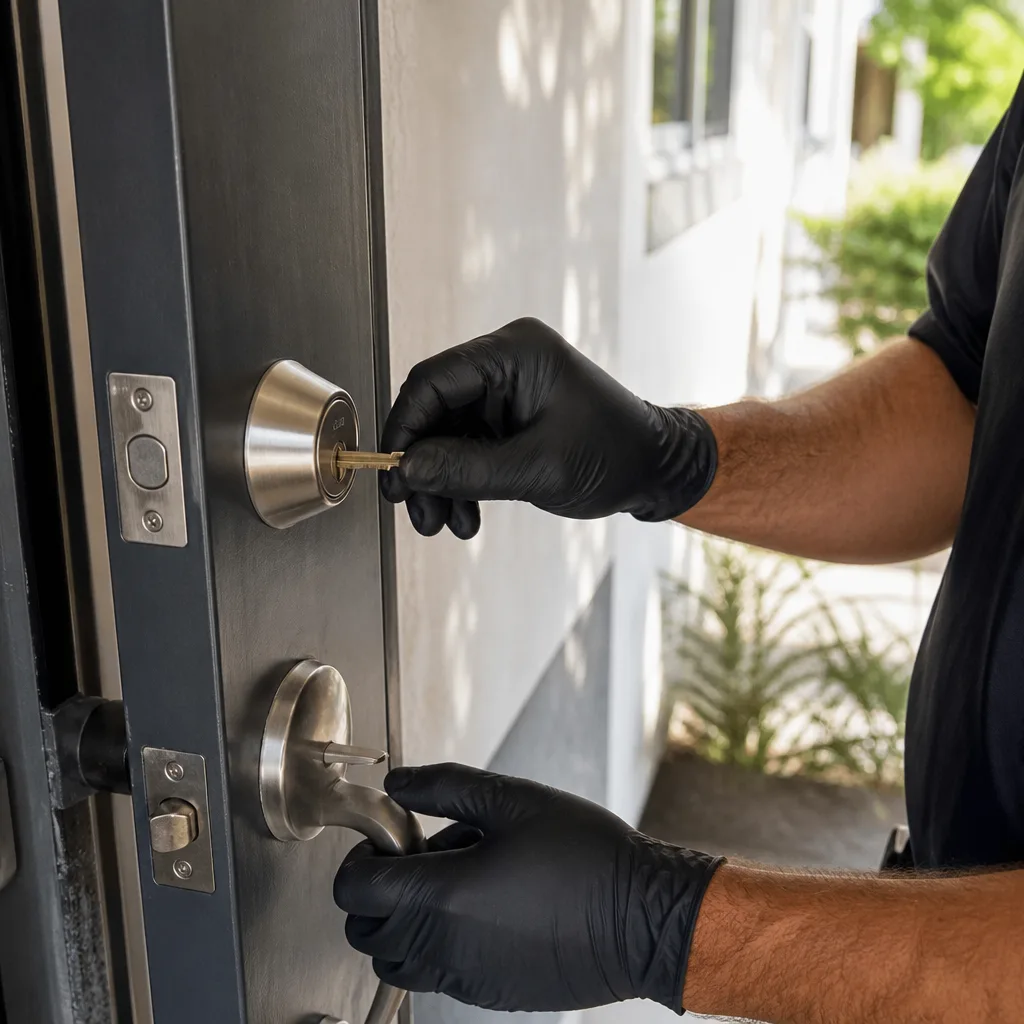 After
AfterDIY vs Professional Locksmith: The Los Angeles Homeowner’s Decision Guide
YouTube has millions of views on lock-picking and deadbolt installation tutorials, and most of them are technically accurate for the hardware shown. The problem is that mismatched door prep dimensions, incorrect backset measurements, and improperly torqued strike plates are invisible in a video and very visible to a burglar. This guide draws the line between what a careful Los Angeles homeowner can handle and what needs a trained hand, and it does so using the same criteria a working locksmith uses when deciding whether a job is routine or risky. For DIY vs Professional Residential Locksmith: What’s Safe to Do Yourself, see our detailed breakdown. You’ll learn which tasks are genuinely safe, which ones have hidden failure modes, and how to vet a professional when the job calls for one.
Quick Answer
DIY locksmith work in Los Angeles is reasonable for lubricating cylinders, replacing an existing deadbolt on a pre-drilled door, or installing a door chain. Rekeying, new door prep, high-security hardware installation, and smart lock programming on non-standard door thicknesses are best left to a Ridley Locksmith & Security home technician, because the failure modes compromise security or void insurance coverage. The decision is not about skill; it is about what happens when the job goes wrong.
Table of Contents
- What a Careful DIYer Can Handle Without Risk
- Tasks That Look Simple But Carry Real Risk
- The Insurance Dimension in Los Angeles
- California Rental Property Rules and Deadbolt Compliance
- How to Vet a Professional Locksmith in Los Angeles
- What Professional Locksmith Work Actually Costs in Los Angeles
- Smart Locks: The Overlooked DIY Trap
- Common Mistakes to Avoid
- When to Call a Professional
- Frequently Asked Questions
What a Careful DIYer Can Handle Without Risk
Some locksmith tasks are genuinely approachable for a homeowner with basic tools and patience. We’re not gatekeeping the trade; we’re telling you where the line is, because a confused customer is not a confident customer.
Lubricating a Stiff Cylinder
If your key sticks or the cylinder feels gritty, a few drops of a dry PTFE lubricant or graphite powder into the keyway usually resolves it. Do not use WD-40 or household oil. Those attract dust and gum up the pin chambers over time. Los Angeles has dry, dusty air for most of the year, and oil-based lubricants turn that dust into a paste. Graphite or a dry lock lubricant from a hardware store is the right call.
Replacing a Like-for-Like Deadbolt on Existing Door Prep
If your door already has a standard 2-1/8-inch crossbore and a 2-3/8-inch or 2-3/4-inch backset hole, swapping a deadbolt from Kwikset or Schlage is a screwdriver job. The door prep is already done, the bolt throw length matches, and the strike plate screw holes align. This is the one replacement task where the failure mode is mostly cosmetic: misaligned trim or a slightly stiff throw.
Installing a Door Chain or Surface Bolt
A door chain, a swing bar, or a surface-mounted slide bolt requires only screws into the door face and jamb. There is no drilling through the door, no cylinder, no pinning. If you can use a drill and a level, you can do this in thirty minutes. The one thing to check: the screws must bite into solid wood or a stud behind the jamb casing, not drywall. A chain anchored in drywall is theater, not security.
Tasks That Look Simple But Carry Real Risk
These are the jobs where the YouTube video ends with the lock working and omits the three months that follow, and why DIY vs Professional Rekey Locks: What’s Safe to Do Yourself matters for homeowners. The failure modes are invisible in a video and very visible to a burglar.
Rekeying Without the Correct Pinning Kit and Follower Bar
Rekeying means changing a lock’s internal pins so old keys no longer work, without replacing the hardware. You remove the cylinder plug, swap the pins to match a new key’s cuts, and reassemble. If you do this without a proper follower bar, the top pins and springs launch across the room. If you use the wrong pin sizes, the lock will work with your key but may also accept keys it should not. The worst outcome is not a broken lock; it is a lock you believe is secure that opens with minimal effort or jams at the worst possible moment. A professional rekey in Los Angeles typically runs $25 to $45 per lock cylinder, including the new keys. Rekeying a lock in Los Angeles is the single most cost-effective security measure when moving into a new home, and it is cheap enough that doing it wrong to save forty dollars makes no sense.
Installing a New Lock on an Unprepared Door
Drilling a 2-1/8-inch crossbore through a door and a 1-inch latch bore into the edge requires a jig, the correct hole saws, and a steady hand on the edge bore to keep it perpendicular. If the edge bore is off by even a few degrees, the latch and the strike plate will not align, and the door will not close securely, or will chew up the strike plate over time. Los Angeles has a mix of housing stock from 1920s bungalows in Highland Park to 1990s stucco boxes in the Valley, and many older doors have non-standard thicknesses that do not match modern bolt housings. A botched bore on a solid wood door often means replacing the door, which starts at $300 before paint and hardware.
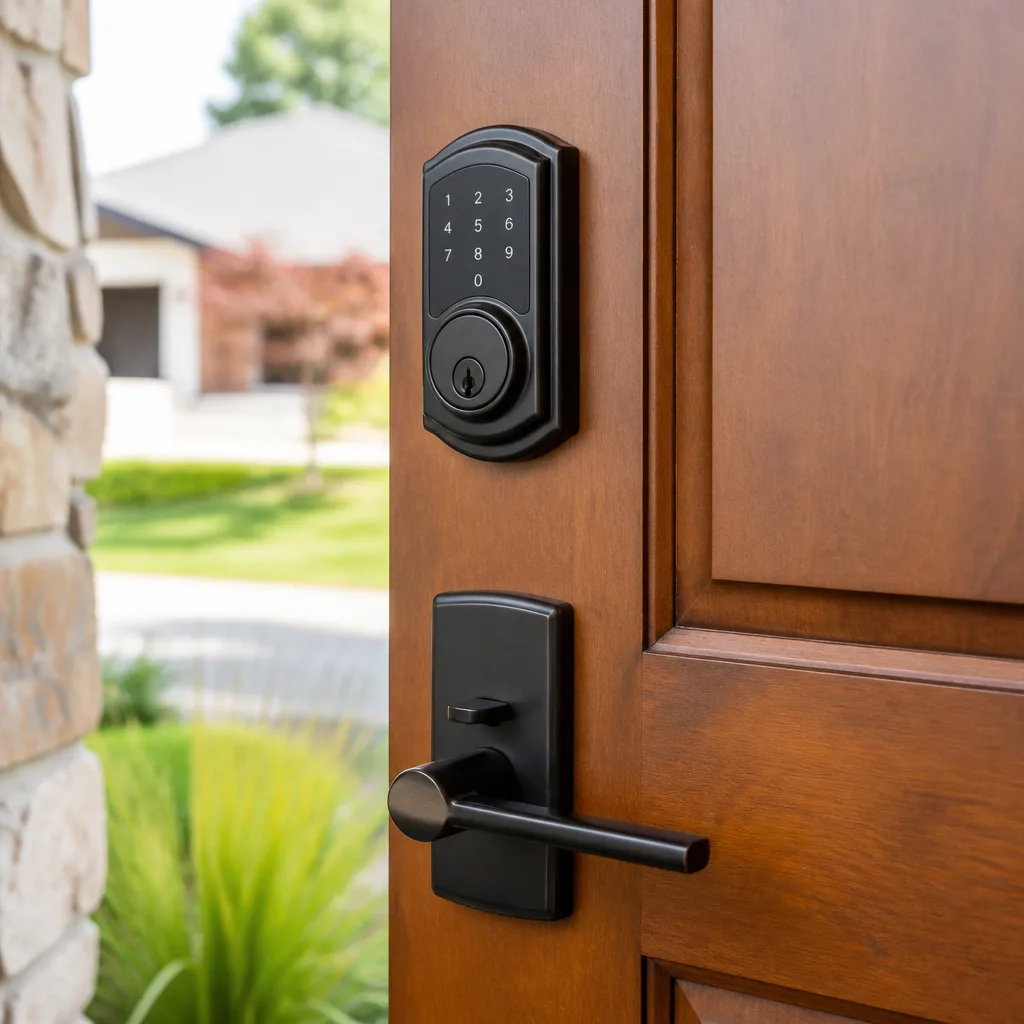
Programming Smart Locks on Non-Standard Door Thicknesses
Smart locks assume a door thickness between 1-3/8 and 1-3/4 inches. Older Los Angeles homes, especially pre-war Spanish and Craftsman builds, often have doors at 2 inches or more. The tailpiece on a smart lock deadbolt will not reach, or will bind when torqued, and the deadbolt will fail to throw completely. The lock reports “locked” to your phone but the bolt is only half-extended. This is a security failure that an app will not warn you about. We have seen this exact scenario in Silver Lake and West Adams more times than we can count.
The Insurance Dimension in Los Angeles
California homeowner’s insurance policies are tightening. Since 2020, several major carriers operating in Los Angeles have added language requiring evidence of “professional installation” for claims involving high-security door hardware: Medeco or Mul-T-Lock deadbolts, reinforced strike plates, and door armor kits. What that means in practice: if you install a high-security deadbolt yourself and then file a break-in claim, your adjuster may ask for installation documentation. If you cannot produce it, the claim can be reduced or denied.
The logic from the carrier’s side is straightforward. A high-security cylinder installed without the correct tailpiece length, or a strike plate screwed into drywall with 1/2-inch screws, is not doing what the policy assumes it is doing. The insurer is pricing risk on the premise that the hardware is performing to spec. A written invoice from a licensed professional is the documentation that closes the loop.
If you are installing hardware at the high-security end, your policy may effectively require a professional install to keep your coverage intact. This is not a scare tactic; it is the current language from adjusters working the LA market. Before you buy an Abloy or Medeco deadbolt for a DIY install, call your agent and ask about their documentation requirements for break-in claims involving door hardware.
California Rental Property Rules and Deadbolt Compliance
California Civil Code Section 1941.3 requires landlords to provide and maintain functioning deadbolts on all exterior doors of rental units. The deadbolt must be operable from the inside without a key, and the strike plate must be installed with screws that penetrate the door frame stud. If a landlord in Los Angeles does a DIY deadbolt replacement that fails inspection, or installs a deadbolt that does not throw completely, the liability falls squarely on the landlord. A tenant break-in where the deadbolt was defective becomes a habitability claim, and Los Angeles tenant-side attorneys pursue these aggressively.
For landlords managing properties in neighborhoods like Koreatown, Echo Park, or the Mid-Wilshire corridor, the cost of a professional residential locksmith in Los Angeles is a line item that protects against a much larger exposure. The same logic applies to rekeying between tenants. California law does not explicitly mandate rekeying between tenancies, but it is the single most common security upgrade requested by Los Angeles property managers, and doing it properly with a written record protects the owner in disputes over who had access to the unit.
How to Vet a Professional Locksmith in Los Angeles
When a job warrants a professional, the vetting process matters more than the price. A locksmith who arrives in an unmarked van, gives a vague verbal estimate, and starts drilling before you have seen a number is operating outside any accountability structure. Los Angeles has a documented problem with bait-pricing in the locksmith trade: a dispatcher quotes $35 over the phone, and the technician arrives and announces the job will be $300 after “discovering” complications. How Long Does Commercial Locksmith Take? Timelines and What to Expect covers realistic timelines so you can spot inflated quotes. This is common enough that the Federal Trade Commission has issued warnings about it.
Here is the vetting sequence we recommend, in order:
- Ask for the price in writing before dispatch. A legitimate locksmith will give you a price range for the described job on the phone and confirm it in writing before work begins. If the dispatcher will not give you a number, hang up.
- Ask for the technician’s arrival identification. The person at your door should arrive in a marked vehicle, in uniform, with identification. Not a subcontracted driver in a personal car.
- Ask what guarantee accompanies the work, and in what form. A verbal promise is worthless. A written guarantee, covering the repair for a specific period, is the minimum standard. Ridley Locksmith & Security provides a written guarantee on every repair, covering the work for one full year, under the 365-Day Done Right Promise. If the repair fails inside that window, we return at no charge, and that return visit is automatic, not something you have to ask for.
- Ask about brand coverage before you commit. A professional should be trained on the full range from Schlage and Kwikset to high-security lines like Medeco and Mul-T-Lock. If the technician does not recognize the brand on your door, that is the end of the conversation.
The vetting takes ten minutes on the phone. A botched install that requires a door replacement takes days and costs hundreds. The math is not close.
What Professional Locksmith Work Actually Costs in Los Angeles
You should know what a fair price looks like before you pick up the phone. These are the typical ranges we see across Los Angeles, from the Valley to the Westside to the Eastside. They assume a standard door with existing prep and no emergency dispatch surcharge.
| Service | Typical Price Range in Los Angeles | Notes |
|---|---|---|
| Rekey a standard deadbolt or knob | $25 to $45 per cylinder | Includes new keys; the most cost-effective security upgrade after a move |
| Replace a standard deadbolt (like-for-like) | $85 to $160 | Includes hardware, installation, and labor on existing door prep |
| Install a deadbolt on an unprepared door | $140 to $240 | Includes drilling, strike plate reinforcement, and hardware |
| High-security deadbolt installation (Medeco, Mul-T-Lock) | $250 to $450 | Hardware cost is a significant portion; includes restricted key registration |
| Smart lock installation, standard door | $100 to $180 | Labor only; hardware purchased separately or supplied |
| Service call for lockout | $65 to $120 | Daytime rate; expect more at night, though the full price should still be quoted before dispatch |
Two things to know about these numbers. First, every legitimate provider in Los Angeles quotes the full price on the phone before anyone is dispatched, and that price is the price on the invoice. There is no call-out surcharge added on arrival. Second, these ranges assume a standard door. Non-standard thicknesses, older hardware, and access-control work on commercial locksmith jobs in Los Angeles are surveyed and scheduled with a written scope and a flat per-lock price.
Smart Locks: The Overlooked DIY Trap
Smart locks are marketed as the easiest DIY security upgrade, and for a standard door in a 1990s or 2000s Los Angeles build, they usually are. The problems appear with the door, not the lock. Older homes in Los Angeles neighborhoods like Leimert Park, Jefferson Park, and the older parts of Pasadena often have solid-core doors with non-standard thicknesses, or mortise locksets that were installed before standardized crossbore prep existed. A smart lock designed for a 1-3/8 to 1-3/4 inch door will not mate correctly with a 2-inch door, and the installer ends up either shimming the tailpiece or forcing the bolt into a misaligned strike plate. Both failures produce a lock that reports secure status to your phone while the bolt is not fully thrown.
If your door is not standard, the DIY path is to measure the door thickness and the backset before buying anything. Backset is the distance from the door edge to the center of the cylinder hole, typically 2-3/8 or 2-3/4 inches. If your measurements do not match the lock’s spec sheet, do not buy it. The professional path is to have the door and frame evaluated before selecting hardware. A locksmith who works with smart locks daily will know which models handle non-standard doors and which are likely to fail within a year.
One more consideration for Los Angeles specifically: many smart locks are Wi-Fi connected and depend on a hub’s range. In older LA homes with lath-and-plaster walls, Wi-Fi signal attenuation is severe. A smart lock that cannot reach the hub becomes a very expensive manual lock, and the fix is usually an additional hub, not a DIY tweak.
Common Mistakes to Avoid
- Using WD-40 in a lock cylinder. It lubricates briefly, then attracts dust and gums the pin chambers. Los Angeles air is dry and dusty for most of the year, making this failure mode worse here than in coastal cities. Use graphite or PTFE only.
- Drilling door prep without a jig. A hand-held drill produces a crossbore that is off-axis, and the latch will bind against the strike plate. The door often closes only if you lift or press on it, which means the deadbolt is not doing its job.
- Rekeying with a universal pin kit and no follower bar. The springs and top pins eject, the bottom pins are mixed up, and the lock ends up keyed to a key you cut yourself with marginal precision. The result is a lock that jams or accepts keys it should not.
- Installing a high-security deadbolt and keeping the original strike plate. The strike plate is the most attacked component in a kick-in. A reinforced strike plate with 3-inch screws into the stud is the difference between a door that holds and a door that splinters. High-security hardware on a standard strike plate is lipstick on a problem.
- Replacing a mortise lockset with a cylindrical deadbolt. Older Los Angeles homes have mortise locksets, and converting them to modern cylindrical hardware is not a simple swap. The door prep is different, the edge bore is larger, and the trim plate dimensions will not cover the old mortise pocket. You end up with a door that needs wood filler, paint, or replacement.
- Assuming a smart lock install is a ten-minute job on any door. It is, on a standard door. On a non-standard door, it is a project that can produce a false “locked” status and a compromised entry point.
- Buying hardware based on looks instead of compatibility. The wrong backset or crossbore size defeats the purpose of the purchase. Buy hardware that matches your door prep, or change the prep first.
When to Call a Professional
Call a professional when the job involves rekeying, drilling new door prep, installing high-security hardware, programming a smart lock on a non-standard door, or any work where a failure would compromise the security of the property. These are the jobs where the consequence of a mistake is not cosmetic; it is a door that opens when it should not, or hardware that fails when you need it to hold. Ridley Locksmith & Security provides a written price before any work starts, covers every repair with a written guarantee for one full year, and sends background-checked, uniformed technicians on every residential and commercial call. We operate to The Garrison Standard, and a live person answers our phone 24 hours a day, 7 days a week. Call (956) 275-7388 for a free estimate in Los Angeles.
Frequently Asked Questions
Safely doable DIY tasks include lubricating a stiff cylinder with graphite or PTFE, replacing a like-for-like deadbolt on an existing pre-drilled door, and installing a door chain or surface bolt. These tasks have either no security failure mode or a failure mode that is cosmetic. Anything involving rekeying, new door prep, high-security hardware, or smart locks on non-standard doors should go to a professional.
Expect $25 to $45 per cylinder for a rekey, $85 to $160 for a deadbolt replacement on existing prep, and $140 to $240 for a deadbolt installation on an unprepared door. High-security hardware installation runs $250 to $450 including the hardware. Every legitimate provider quotes the full price on the phone before dispatch, with no call-out surcharge added on arrival. Call (956) 275-7388 for an exact quote on your job.
It should be, and with any provider operating to a written standard, it is. Ridley Locksmith & Security delivers a written price before any work begins, every time. The number on that written price is the number on the invoice. If a provider will not commit to a written price before dispatch, that is a red flag.
Not for standard hardware, but several major carriers writing policies in Los Angeles require documentation of professional installation for high-security hardware claims. If you install a Medeco or Mul-T-Lock deadbolt yourself and file a break-in claim, your adjuster may ask for an installation invoice. A written invoice from a professional closes that loop.
You can, but the failure mode is deceptively dangerous. A poorly rekeyed lock can accept keys it should not or jam without warning. Professional rekeying in Los Angeles costs $25 to $45 per cylinder, including new keys. For that price, the risk-adjusted math strongly favors a professional, especially for a rekey in Los Angeles after moving into a new home.
A legitimate locksmith arrives in a marked vehicle, in uniform, with identification, and provides a written price before starting work and a written guarantee covering the repair. Ask for these things on the phone before the technician is dispatched. If the dispatcher avoids giving a price or explaining the guarantee, call someone else.
The Bottom Line
The DIY-versus-professional decision in locksmith work is not about skill; it is about what happens when the job goes wrong. Lubricating a cylinder, swapping a deadbolt on existing prep, or adding a door chain are reasonable DIY tasks. Rekeying, new door prep, high-security hardware, and smart locks on non-standard doors are not, because their failure modes compromise security, void insurance coverage, or create landlord liability. Los Angeles homeowners who have never touched a pin kit should call a professional for those, and they should vet that professional before the technician is dispatched. Browse more guides & resources to prepare for that call. The written price and the written guarantee are the two documents that separate a legitimate shop from the unmarked van. Ridley Locksmith & Security has operated to The Garrison Standard since 2007, with independently owned and operated locations and a 365-day guarantee on every repair. Call (956) 275-7388 for a free estimate, and a live person will answer.
Written by Drew Kowalski, Owner at Ridley Locksmith & Security, serving Los Angeles since 2007.