
Last updated October 9, 2026
Non-destructive entry first, always - and we re-key Schlage, Kwikset, and Baldwin locks on the spot while you watch
You get a price before we start. It does not change when we arrive. No surprises.
 Before
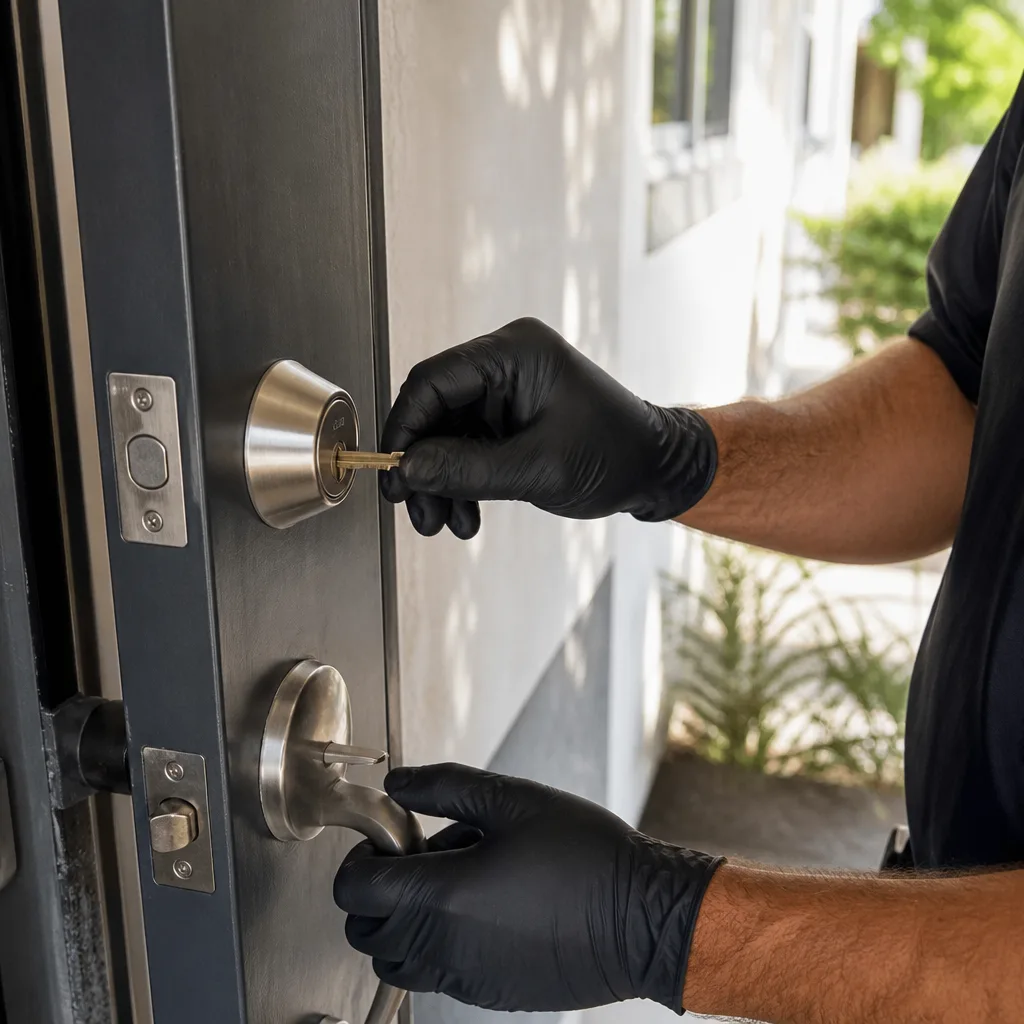 After
AfterThe Complete Guide to Locksmith in Los Angeles
The California Bureau of Security and Investigative Services (BSIS) lists thousands of locksmith licensees across the state. Yet a 2022 BSIS enforcement sweep found a significant share of those operating in Los Angeles were either expired or fictitious. That means the “local locksmith” you found on Google Maps may not exist as a legal entity at all. This guide explains how Los Angeles locksmithing actually works: what services cost, how the broker model inflates prices, what a real security audit looks like, and how to verify you’re dealing with a legitimate operator before you hand over a key to your home or business.
Quick Answer
A legitimate locksmith in Los Angeles is a state-licensed operator with verifiable BSIS credentials, a physical business address, and a written price quoted before any work begins. Expect to pay $75 to $160 for a residential lockout, $95 to $225 for a rekey, and $150 to $400 for deadbolt or hardware upgrades depending on the lock grade and neighborhood. The single most important step in Los Angeles is verifying the BSIS license against the company name and the technician at your door, because the majority of complaints trace back to unlicensed brokers who subcontract work to whoever answers the phone.
Table of Contents
- How BSIS Licensing Works in Los Angeles (and Why a Number Isn’t Enough)
- The Broker Model Exposed: How Call-Center Listings Work
- Locksmith Services by Situation: What You’ll Actually Need in LA
- What Locksmith Services Cost in Los Angeles: Honest Price Ranges
- Security Audit vs. Sales Pitch: How to Tell the Difference
- Accountability Structures: What Separates a Locally Operated Company from a One-Person Shop
- Common Mistakes to Avoid
- When to Call a Professional
- Frequently Asked Questions
- The Bottom Line
How BSIS Licensing Works in Los Angeles (and Why a Number Isn’t Enough)
California requires every locksmith company and every locksmith employee to hold a license from the Bureau of Security and Investigative Services. A company holds a Locksmith Company license; individual technicians hold a Locksmith Employee license. Both numbers should appear on the business website, the invoice, and the technician’s identification. The license number alone, however, is not proof. Los Angeles has a well-documented problem with operators who display a valid-looking number that belongs to another entity, or who let the license lapse but keep the number printed on marketing materials.
Here’s what to cross-check before letting anyone touch your locks:
- Look up the company license on the BSIS website. The public license lookup is free. The name on the license should match the name of the business you contacted. If it doesn’t, you’re likely dealing with a broker or a fictitious business name with no legal standing.
- Ask for the technician’s employee license number. A legitimate company dispatches licensed technicians. If the person on the phone won’t provide the technician’s number before arrival, that’s a red flag.
- Verify the physical address. The address on the license should be a real commercial location or registered office, not a P.O. box or a residential address that changes every few months.
- Check the vehicle. In Los Angeles, a legitimate locksmith arrives in a marked van with the company name and license number displayed. An unmarked van suggests a subcontractor working through a call center.
- Confirm the invoice includes the license number. BSIS requires the company license number on all invoices and receipts. If it’s missing, the operator is not compliant regardless of what the website says.
In our experience across Los Angeles neighborhoods from Sherman Oaks to Long Beach, the expired or fictitious license problem concentrates in the cheap end of the market. Operators quoting $19 lockouts or $29 rekeys are almost always brokers with no local address and no accountability structure. The price looks attractive until the technician arrives and discovers that the lock is “high security” and the price triples.
The Broker Model Exposed: How Call-Center Listings Work
The most common complaint about locksmiths in Los Angeles follows the same script: you call a number from a Google ad or a Maps listing, the person on the phone quotes a low price, a technician arrives in an unmarked vehicle, and the final bill is two to four times the quoted figure. What’s happening is the broker model. The number you dialed belongs to a marketing company or a lead-generation call center that owns no trucks, employs no technicians, and holds no locksmith license. They sell your job to whichever independent operator agrees to take it, and that operator has to make the job worth their time after the broker takes a cut.
Here’s how the model distorts pricing and service quality:
- The quote is a placeholder, not a price. The call-center dispatcher doesn’t know what lock you have, what hardware is installed, or what the actual labor will require. The quoted number exists to get you off the phone and locked into a job.
- The technician is incentivized to upsell. Because the broker took a cut, the technician arrives needing to extract more revenue. Deadbolts get condemned, cylinders get “repaired,” and rekeys become “full replacements.”
- No one is accountable. If the work fails in three months, the call-center number routes to a different operator who has no record of your job. The original technician’s phone goes to voicemail. The broker has already moved on.
- Licensing is murky. The technician may have an employee license, but the company you called does not. That means the invoice you receive is not a legal locksmith invoice under California law.
At Ridley Locksmith & Security, we operate differently by design. We are part of the Garrison Partners family, independently owned and operated under The Garrison Standard since 2007. That standard requires a written price delivered before any work starts, on every single job. It requires a background-checked, uniformed technician on every residential and commercial call. It requires a written guarantee covering the repair for one full year. Those requirements exist precisely because the broker model has poisoned the Los Angeles market so thoroughly that customers have been trained to expect bait pricing and anonymous subcontractors.
Locksmith Services by Situation: What You’ll Actually Need in LA
Most guides organize locksmith services by marketing category: residential, commercial, automotive. That’s useful for a website menu, but it doesn’t help a homeowner standing outside a locked door at 11 p.m. in Echo Park or a property manager dealing with a tenant turnover in Koreatown. Here’s the situation-based breakdown we use when a customer calls Ridley Locksmith & Security.
The Lockout: You’re Outside and the Key Isn’t Working
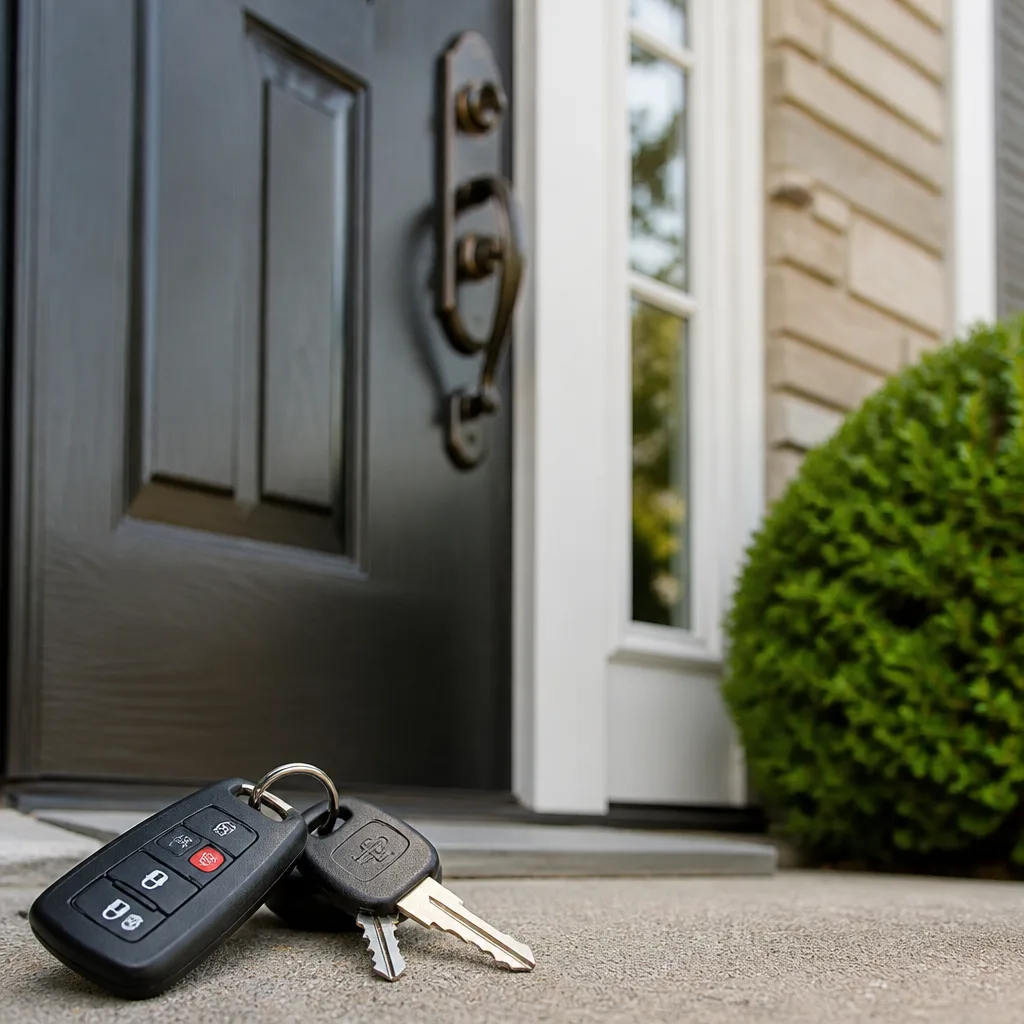
A lockout means gaining entry when the key is lost, broken, or locked inside. In Los Angeles, a legitimate locksmith will verify you have a right to enter before opening the door. That means a lease, a utility bill, or an ID matching the address. This verification step separates licensed operators from the unlicensed ones who will open any door for anyone. A proper non-destructive entry on a standard residential knob or deadbolt takes 10 to 30 minutes. If the technician immediately reaches for a drill, that’s a red flag: drilling destroys the lock and turns a $100 entry into a $300 lock replacement.
The Rekey: Old Keys Stop Working, Hardware Stays
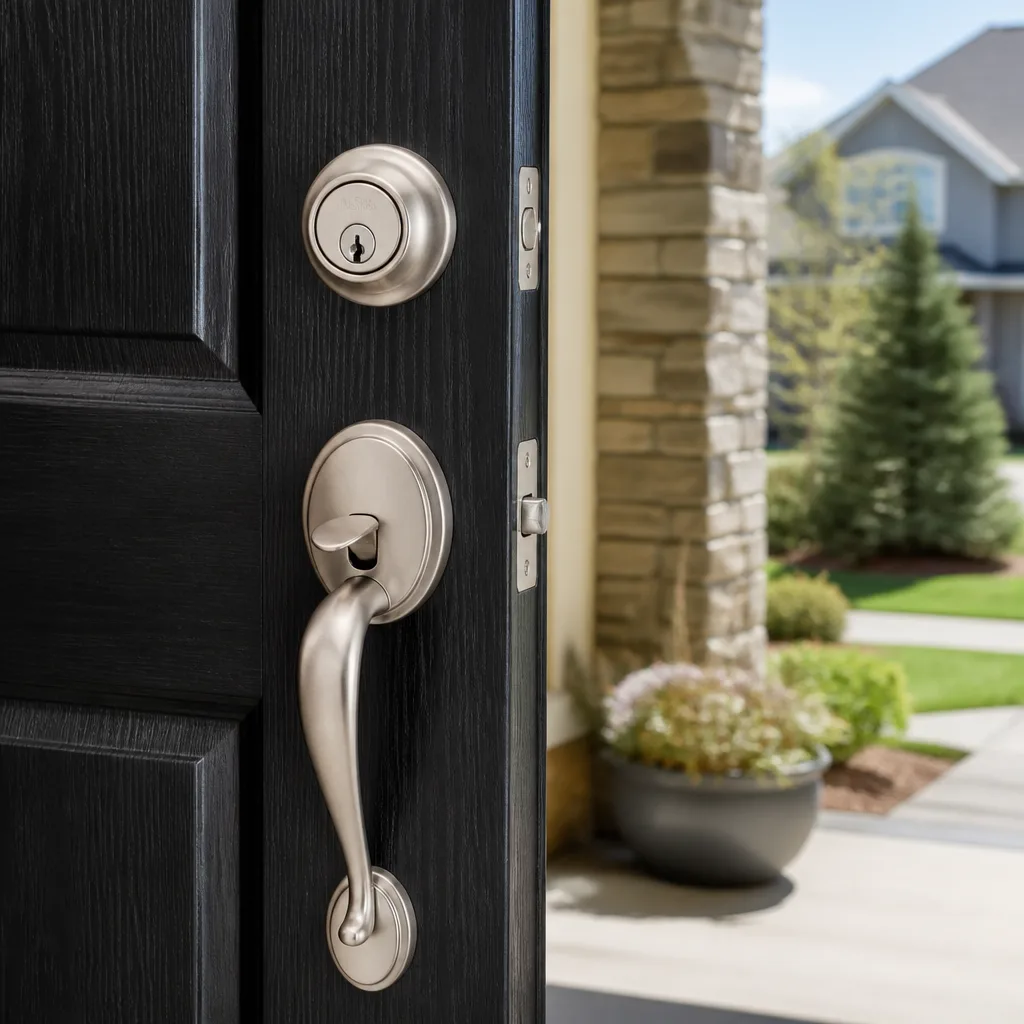
Rekeying means changing a lock’s internal pins so old keys no longer work, without replacing the hardware. It’s the service most homeowners need after buying a house, after a tenant moves out, or after a relationship ends or a key goes missing. In Los Angeles, rekeying a standard Schlage or Kwikset deadbolt and knob typically takes 15 to 30 minutes per lock and costs $15 to $30 per cylinder on top of the service call. We’ve written a full guide on Rekey Locks in Los Angeles that covers pricing, timing, and when rekeying beats replacement. For now, know this: if the key turns but doesn’t open, or if you’ve lost track of who has copies, a rekey is almost always the right call and it should be done by a licensed technician, not a handyman with a screwdriver.
The Deadbolt Upgrade: The Single Highest-Value Residential Improvement
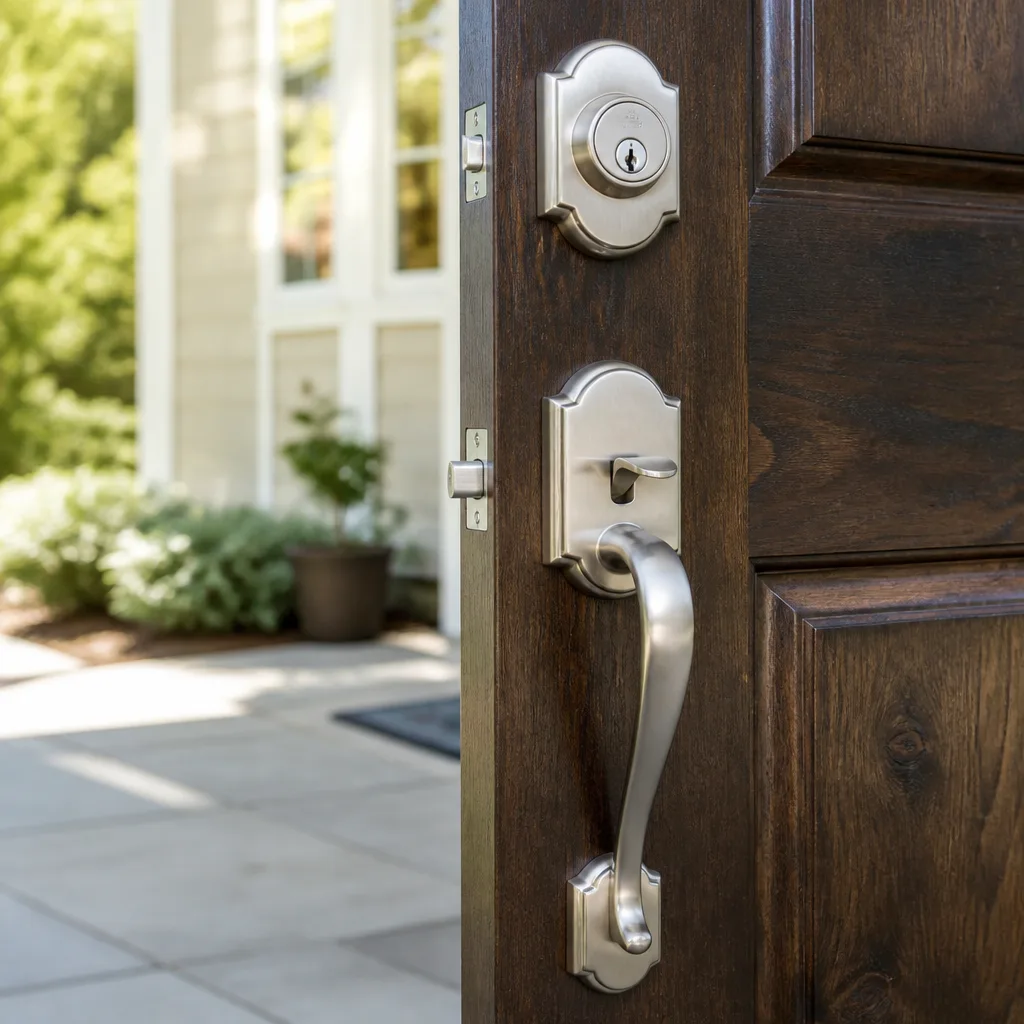
Los Angeles homes built before the mid-1990s were commonly fitted with Grade 3 deadbolts. These are the cheapest residential grade, rated for minimal forced-entry resistance, and many of the ones we see in older neighborhoods like West Adams and Highland Park have been in service for decades. Upgrading to a Grade 1 deadbolt, which is the commercial-grade standard, changes the security posture of a door more than any other single improvement. Brands like Medeco, Mul-T-Lock, and Baldwin manufacture Grade 1 deadbolts with hardened steel bolts and drill-resistant cylinders. Expect to pay $180 to $400 installed depending on the brand and whether the door requires additional prep. More detail is available in our Residential Locksmith in Los Angeles guide.
The Commercial Master Key System
A master key system means each door has its own key, but a single key opens every door. Property managers in Los Angeles use these systems across apartment buildings, offices, and retail strips. The system is built on a pinning chart, which is a document mapping every cylinder to the master key hierarchy. When a technician rekeys a single door in a master system, they must work from that chart or they risk breaking the hierarchy. This is not work for a generalist. It requires training on high-security cylinders from manufacturers like Medeco, Mul-T-Lock, Abloy, and Sargent. Our technicians are certified on those lines, and our Commercial Locksmith in Los Angeles page covers the system design process in depth.
The Automotive Situation: Keys, Fobs, and Transponder Work
Automotive locksmith work in Los Angeles includes lockouts, key duplication, transponder programming, and fob replacement. The cost varies widely by make and model. A standard key for an older domestic vehicle may run $10 to $30; a proximity fob for a late-model European car can exceed $400. The key question is whether the technician has the programming equipment and the code access for your specific vehicle. Ask before you dispatch. The vehicle should also be registered in your name or you should have proof of ownership.
The Security Upgrade Consultation
Sometimes the customer doesn’t know what they need. They’ve had a break-in attempt, or they bought a building, or they just want an honest walkthrough of what’s weak. That’s a security consultation. A legitimate consultation covers the physical condition of doors, frames, hinges, strike plates, and lock types. It does not begin with a sales pitch for a $3,000 camera system or a smart lock bundle. More on this below.
What Locksmith Services Cost in Los Angeles: Honest Price Ranges
Los Angeles is a sprawling market, and prices vary by neighborhood, time of day, and the specific hardware involved. What follows are honest ranges based on what we see across the city, from the Valley to the Westside to the South Bay. These are total prices including service call and labor, not “starting from” numbers.
| Service | Typical Price Range (Los Angeles) | Time on Site |
|---|---|---|
| Residential lockout (non-destructive) | $75 – $160 | 15 – 30 minutes |
| Rekey per cylinder (standard Schlage, Kwikset, Yale, Baldwin) | $15 – $30 per cylinder, plus $65 – $95 service call | 10 – 20 minutes per lock |
| Deadbolt replacement (Grade 2, standard hardware) | $95 – $180 | 30 – 45 minutes |
| Deadbolt installation (Grade 1, Medeco or Mul-T-Lock) | $180 – $400 | 45 – 90 minutes |
| Commercial door closer replacement | $150 – $350 | 45 – 60 minutes |
| Master key system (per cylinder on initial setup) | $20 – $40 per cylinder, plus system design fee | Depends on door count |
| Automotive lockout | $60 – $120 | 15 – 20 minutes |
| Automotive transponder key programming | $80 – $250 | 20 – 45 minutes |
Night, weekend, and holiday calls in Los Angeles typically add a differential of $20 to $75 depending on the distance and the hour. A legitimate operator states this differential on the phone. We state the full price before anyone is dispatched, and that price is the price on the invoice. There is no call-out surcharge added on arrival. If a company won’t give you a written price before the technician leaves their last job, hang up and call a different number.
Security Audit vs. Sales Pitch: How to Tell the Difference
In the trade, a security audit is a systematic walkthrough of a property’s physical security posture. It covers doors, frames, hinges, strike plates, lock types, window accessibility, lighting, and perimeter entry points. The output is a written list of vulnerabilities and recommended remediations, prioritized by severity. Some companies use the word “audit” to mean something else: a scripted sales visit designed to justify a large equipment purchase.
Here’s how to tell them apart at the moment the technician walks your property:
- A real audit measures. The technician measures door thickness, setback, hinge spacing, and gap clearance because those numbers determine what hardware fits and what fails. A sales pitch glosses over measurements and moves quickly to product recommendations.
- A real audit asks about your specific risks. Have there been break-ins in the neighborhood? Who has keys? When was the building constructed? A sales pitch asks one question: what’s your budget?
- A real audit documents before it recommends. The technician writes down what is installed, what condition it’s in, and what the vulnerabilities are. A sales pitch skips documentation and opens a tablet to a product catalog.
- A real audit distinguishes between urgent and optional. A broken strike plate on the rear door is urgent. A smart lock upgrade is optional. A sales pitch treats every item as urgent.
A proper security audit in Los Angeles takes 30 to 60 minutes for a standard single-family home and 90 minutes to three hours for a commercial property. It should produce a written scope, not a verbal summary. At Ridley Locksmith & Security, every audit ends with a written price for each recommended item, and you choose what to approve. Nothing is bundled into a package you didn’t ask for.
Accountability Structures: What Separates a Locally Operated Company from a One-Person Shop
Independent one-person locksmith shops fill a real need in Los Angeles. Some are excellent. Others are excellent until the moment something goes wrong, and then the customer discovers there is no structure behind the work. The difference is accountability. A one-person shop has no oversight, no documented standard, and no one to answer to when a repair fails. A company like Ridley Locksmith & Security operates under The Garrison Standard, which is a written code of operating requirements that every technician and every job must meet.
Here’s what The Garrison Standard requires at every job step:
- Written price before work begins. Not an estimate. A written price. If the scope changes mid-job because the technician discovers a broken frame or a frozen cylinder, the customer receives a revised written price before that additional work proceeds.
- Background-checked, uniformed technician. The person at your door is an employee, not a subcontractor. They arrive in a marked vehicle. Their BSIS license is on their person.
- Written guarantee covering the repair for one full year. If the repair fails inside the guarantee window, Ridley returns at no charge. This is the 365-Day Done Right Promise, and it is non-negotiable. A free second visit happens automatically if the repair fails, not because you argued for it.
- Live person answers every call, 24 hours a day, 7 days a week. Not a voicemail. Not an answering service. A live person. That matters at 2 a.m. when you’re locked out in a neighborhood you don’t know well.
Part of the Garrison Partners family since 2007, Ridley Locksmith & Security is led by Drew Kowalski and operates as an independently owned and operated location under The Garrison Standard. The structure means there is a code to point to. If something goes wrong, the customer isn’t negotiating with a solo operator’s mood. They’re enforcing a written guarantee.
Common Mistakes to Avoid
- Hiring based on the first Google ad without checking the license. The top ad position in Los Angeles is often purchased by a broker, not a locksmith. Cross-check the company name against the BSIS license lookup before you hang up.
- Accepting a verbal quote without a written price. A verbal quote is legally useless. In Los Angeles, the bait-pricing script is common enough that you should assume any quote you don’t have in writing will change when the technician arrives.
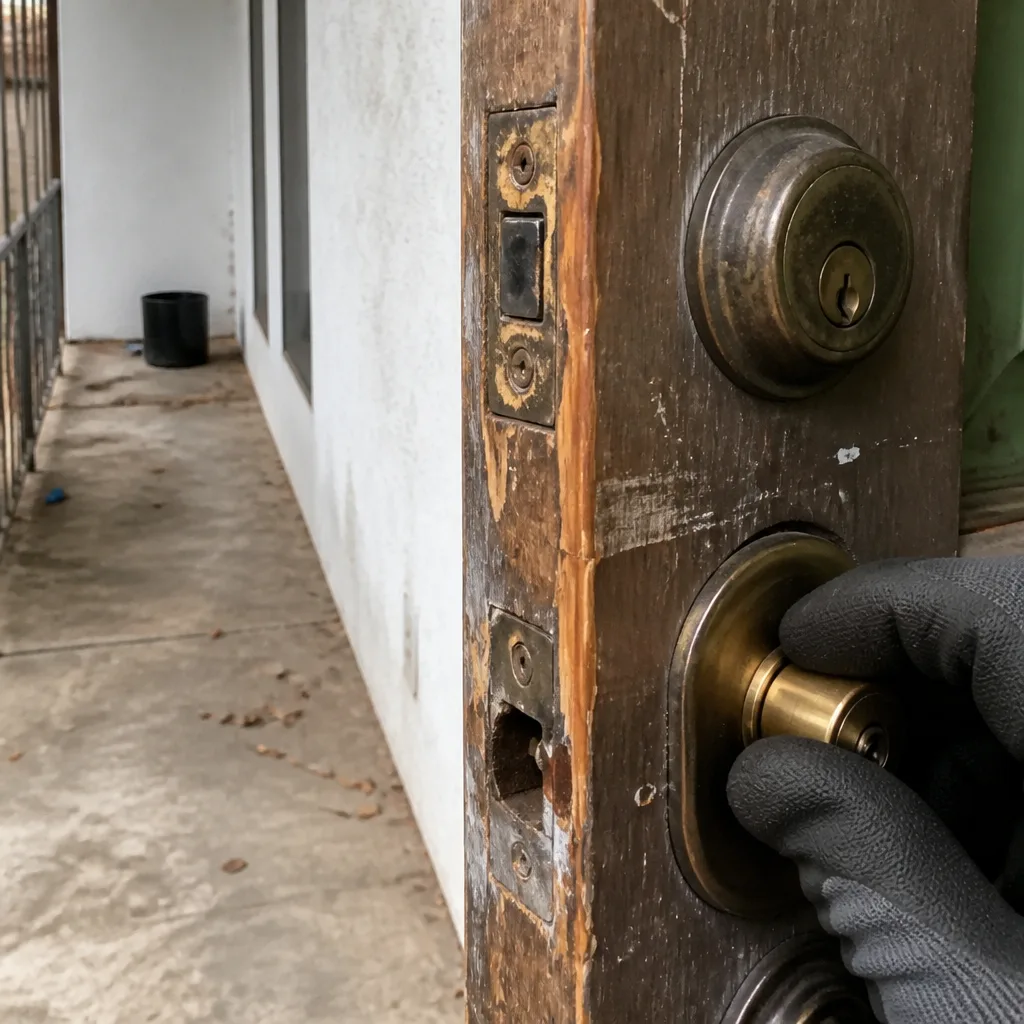
- Letting the technician drill the lock without discussing alternatives. Drilling is sometimes necessary when a lock is truly frozen or the cylinder is damaged. But it should be the last resort, not the first move. A drill converts a $100 entry into a $200 lock replacement, and the old hardware goes in the trash.
- Confusing a handyman with a locksmith. A handyman may be able to install a deadbolt, but a handyman is not licensed by BSIS to perform locksmith work. If the job involves pins, cylinders, or master keying, hire a licensed locksmith.
- Ignoring the door frame. In Los Angeles, many break-ins succeed not because the lock failed but because the strike plate was mounted to a softwood frame with screws that were too short. A solid lock on a weak frame is a false sense of security.
- Not asking who holds the guarantee. If the company won’t put the guarantee in writing and won’t say what happens if the work fails in six months, there is no guarantee. The 365-Day Done Right Promise at Ridley is a document, not a handshake.
- Choosing the cheapest bid on a commercial master key system. A master key system that’s pinning chart is wrong or lost will cost thousands to rebuild. This is not the place to save $200. Hire a company that works from documented system records.
When to Call a Professional
Call a licensed locksmith when you’re locked out and can’t safely gain entry without risking damage, when keys have gone missing and you don’t know who holds copies, when a tenant moves out and you need the locks changed before the next occupant arrives, when a deadbolt feels loose or the key sticks and you have to jiggle it, when you’ve had a break-in or an attempted break-in and need a full security audit, and when you’re planning a commercial master key system. These situations all share one trait: the cost of doing it wrong is higher than the cost of doing it right the first time. Ridley Locksmith & Security offers free estimates in Los Angeles. Call (956) 275-7388 for a written price before any work starts.
Frequently Asked Questions
Look up the company name on the California Bureau of Security and Investigative Services public license lookup and confirm the name matches the business you contacted, the address on the license is a real location, and the technician’s employee license is valid. Call (956) 275-7388 for a licensed technician with credentials verified before dispatch.
Expect $75 to $160 for a residential lockout, $15 to $30 per cylinder for rekeying plus a $65 to $95 service call, and $95 to $400 for deadbolt replacements depending on grade and brand. The price you’re quoted on the phone should be the price on the invoice. If it isn’t, you’re dealing with a broker.
Yes, most residential lockouts in Los Angeles can be resolved non-destructively using picking and bypass techniques that leave the lock functional. Drilling is a last resort for frozen or damaged cylinders. A technician who reaches for the drill immediately is either inexperienced or trying to inflate the invoice.
Rekeying changes the internal pins so old keys stop working, while the hardware stays in place. Replacement swaps the entire lock for new hardware. Rekeying is cheaper and is the right call when the existing hardware is in good condition and you just need to control who holds keys. See our Rekey Locks in Los Angeles guide for specifics.
Yes. At Ridley Locksmith & Security, every customer receives a written price before work begins, and that written price is the price on the invoice. No surcharges are added on arrival. If the scope changes mid-job, you receive a new written price before additional work proceeds. Call (956) 275-7388 for a written quote.
For commercial work including master key systems, high-security cylinders, and door closers, you need a locksmith certified on commercial hardware from manufacturers like Medeco, Mul-T-Lock, and Sargent. See our Commercial Locksmith in Los Angeles page for the full scope of commercial services.
The Bottom Line
Los Angeles has a locksmith market that rewards skepticism and punishes impulse clicks. The broker model is widespread, bait pricing is common, and the license number on the website often belongs to no one. Protect yourself by verifying BSIS credentials, demanding a written price before work begins, asking for the technician’s employee license number, and checking that the guarantee is a document, not a verbal promise. For every residential and commercial need, from a midnight lockout to a building-wide master key system, Ridley Locksmith & Security home is the starting point. We answer the phone live 24 hours a day, every technician is background-checked and uniformed, and every job carries the 365-Day Done Right Promise in writing. Call (956) 275-7388 for a free estimate in Los Angeles.
Written by Drew Kowalski, Owner at Ridley Locksmith & Security, serving Los Angeles since 2007.