
Last updated October 9, 2026
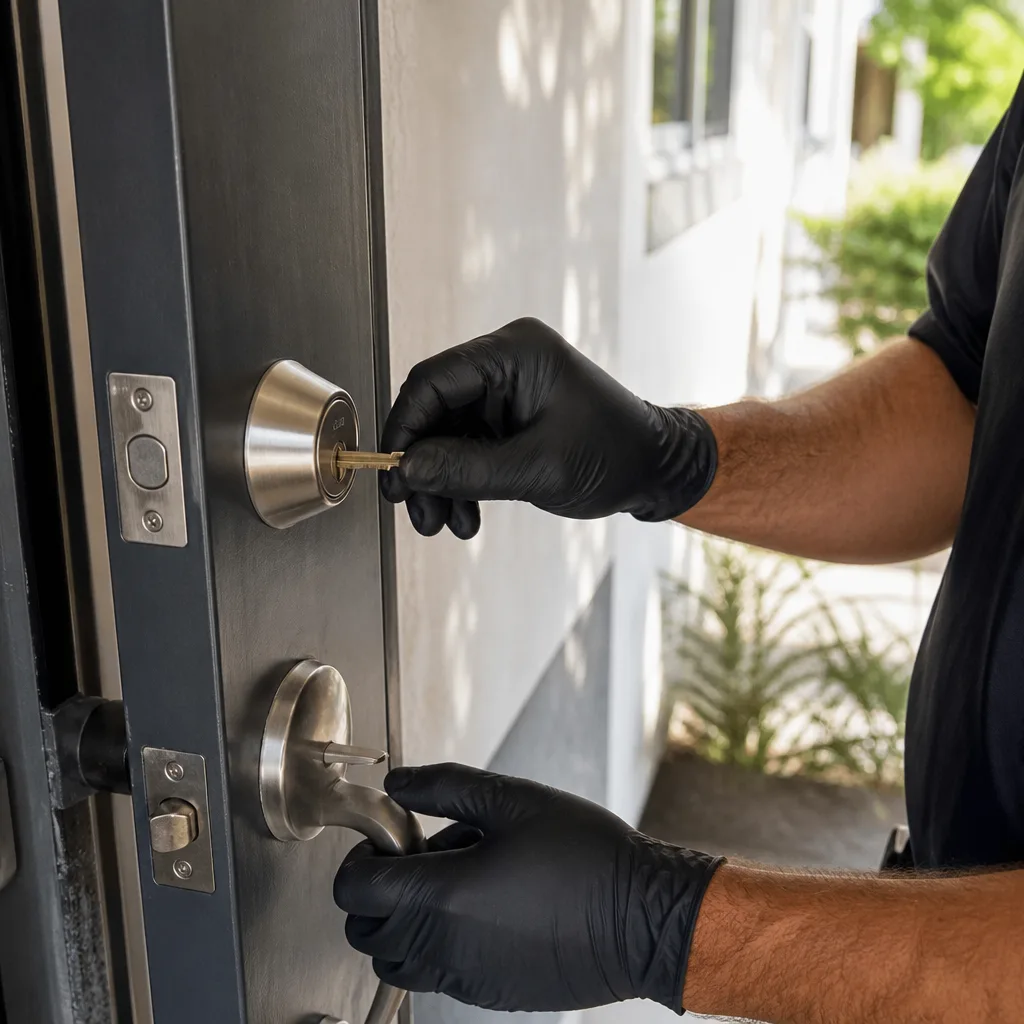
Non-destructive entry first, always - and we re-key Schlage, Kwikset, and Baldwin locks on the spot while you watch
You get a price before we start. It does not change when we arrive. No surprises.
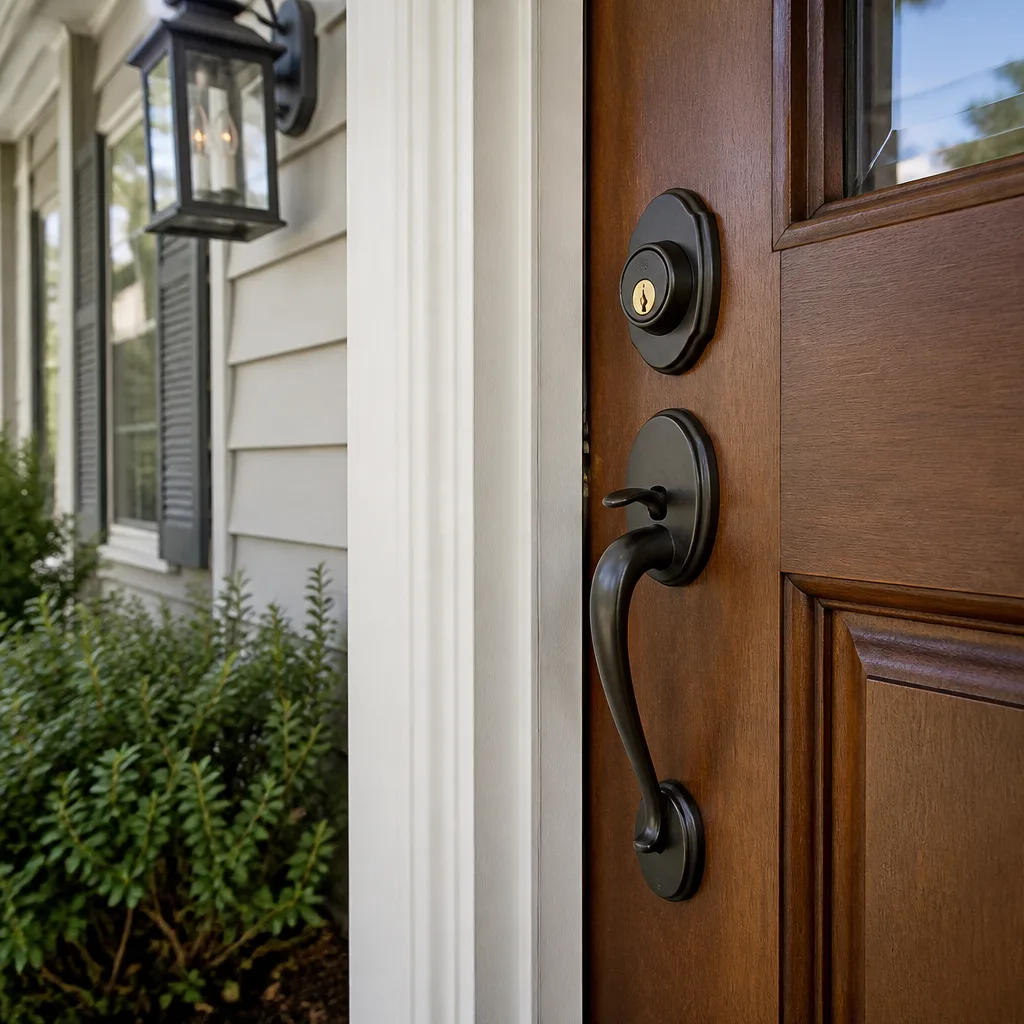
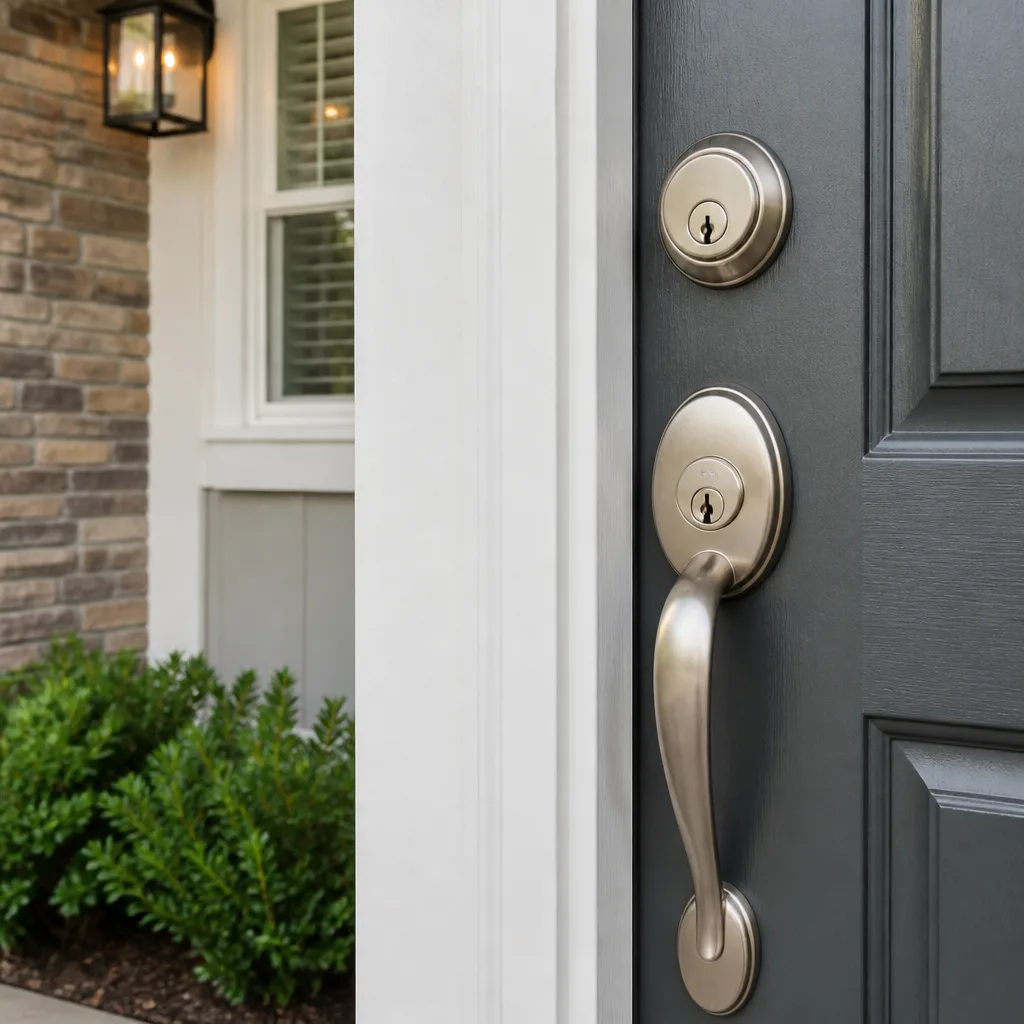
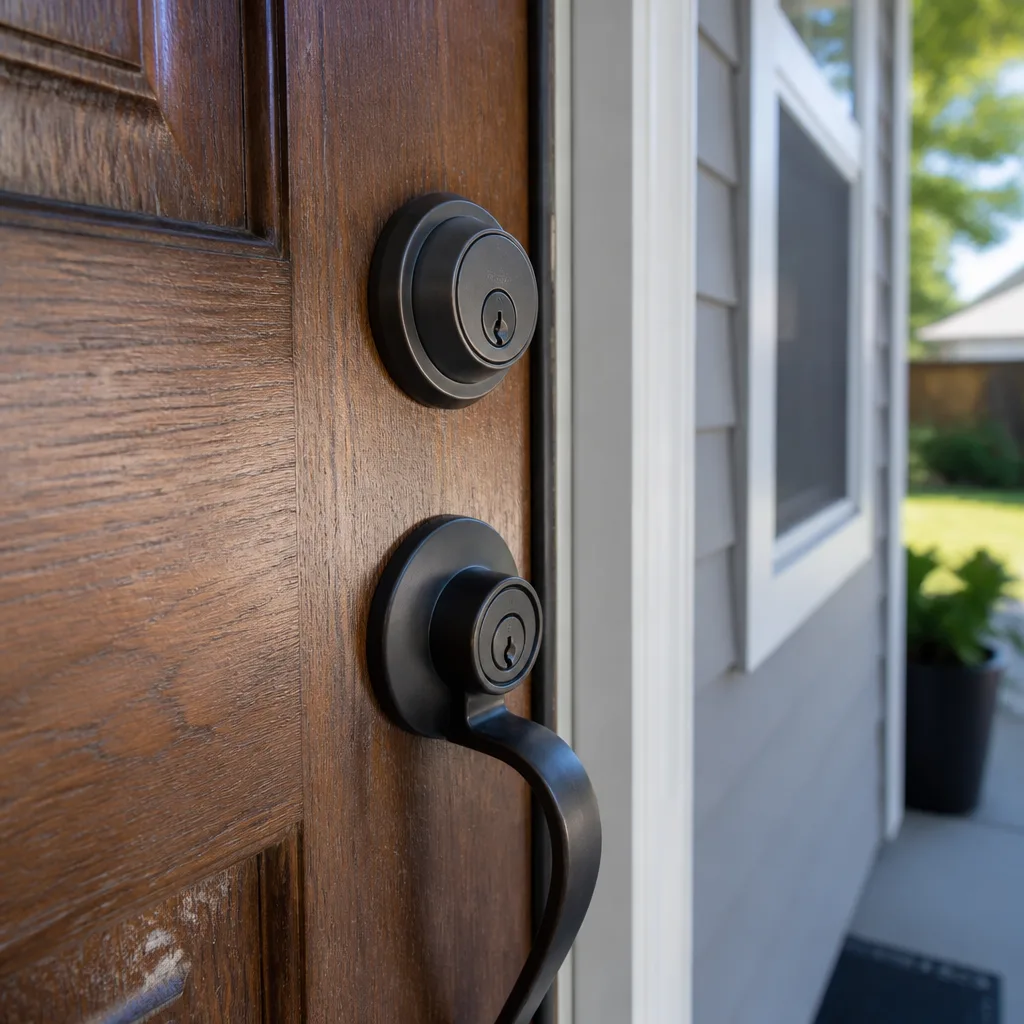
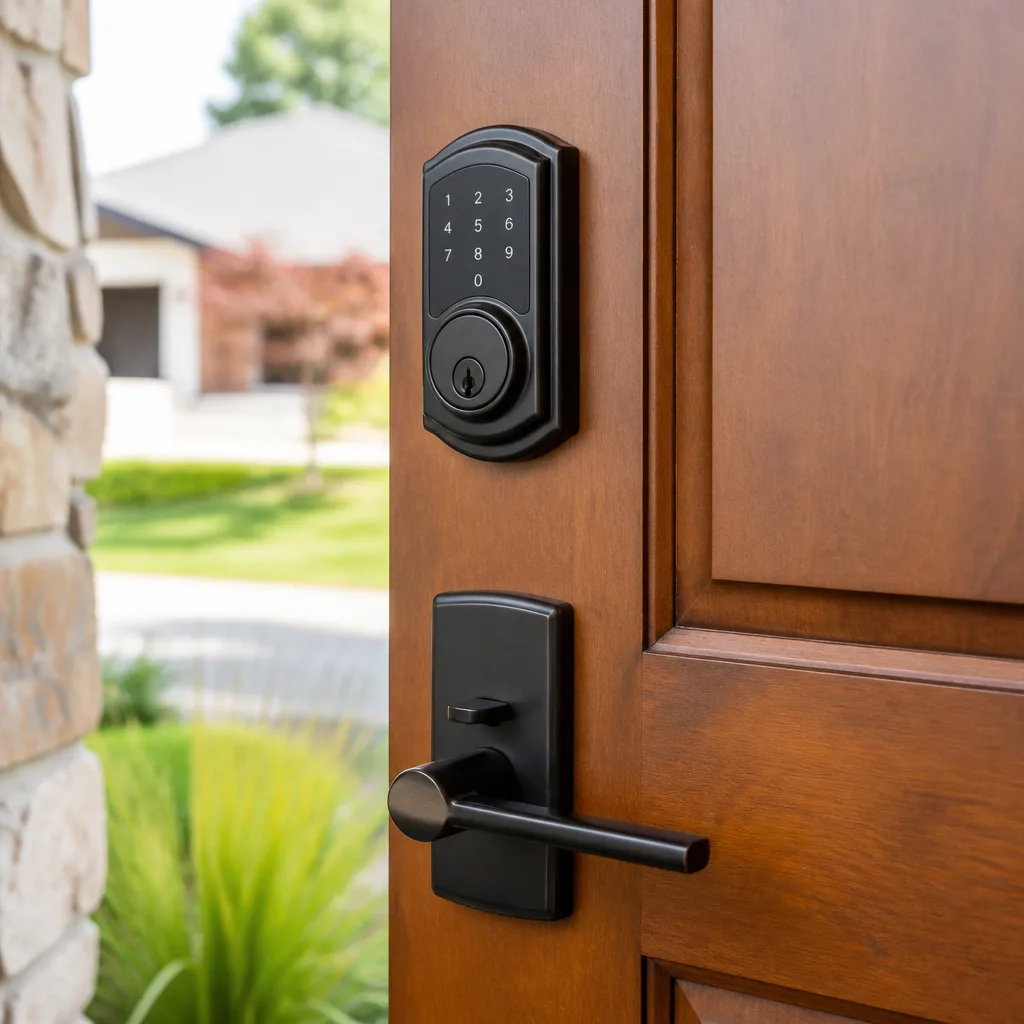
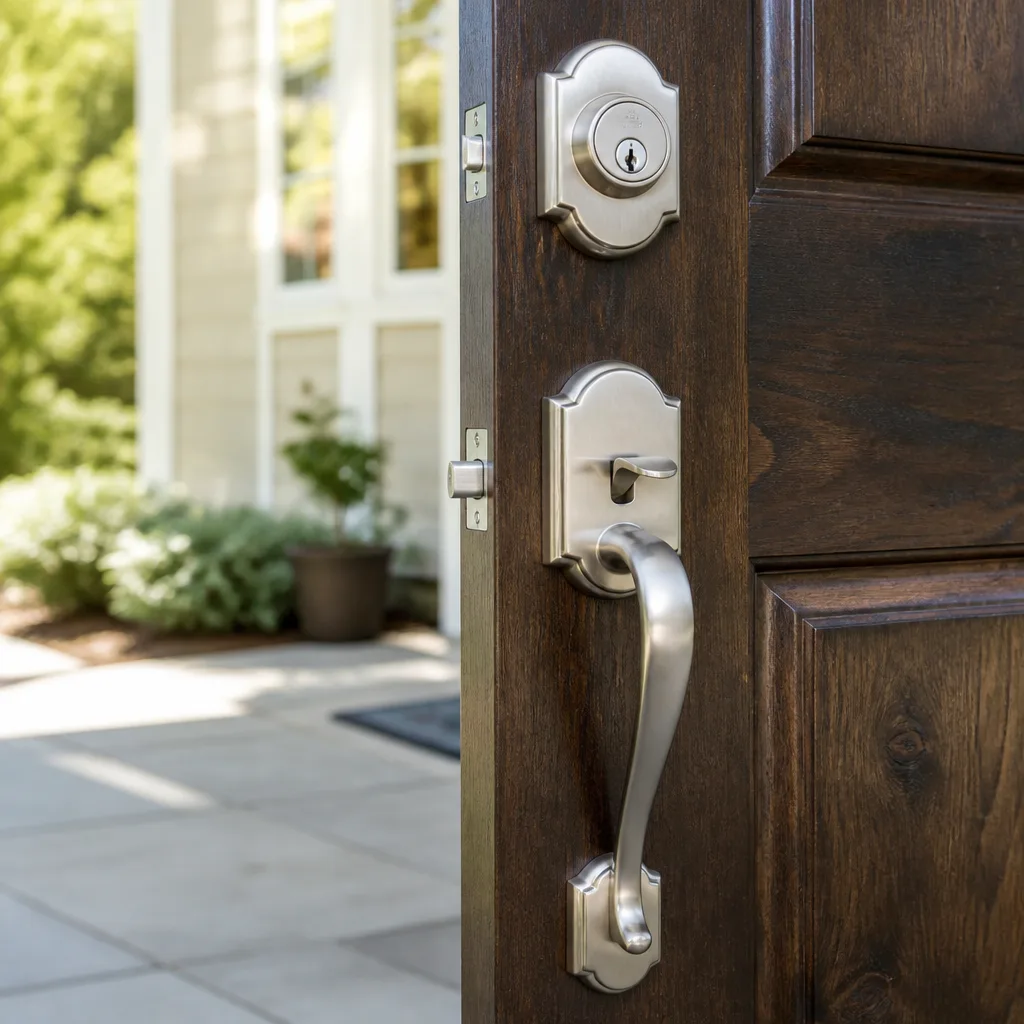
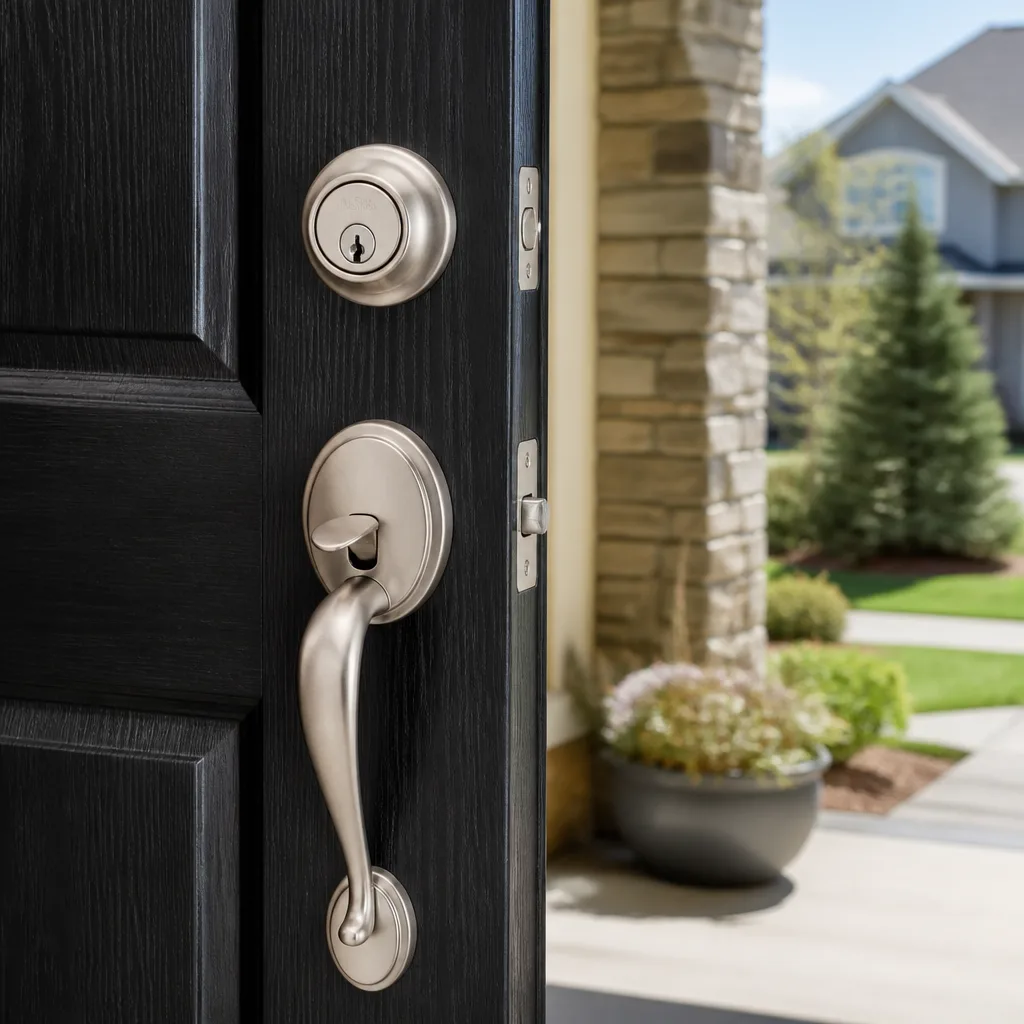
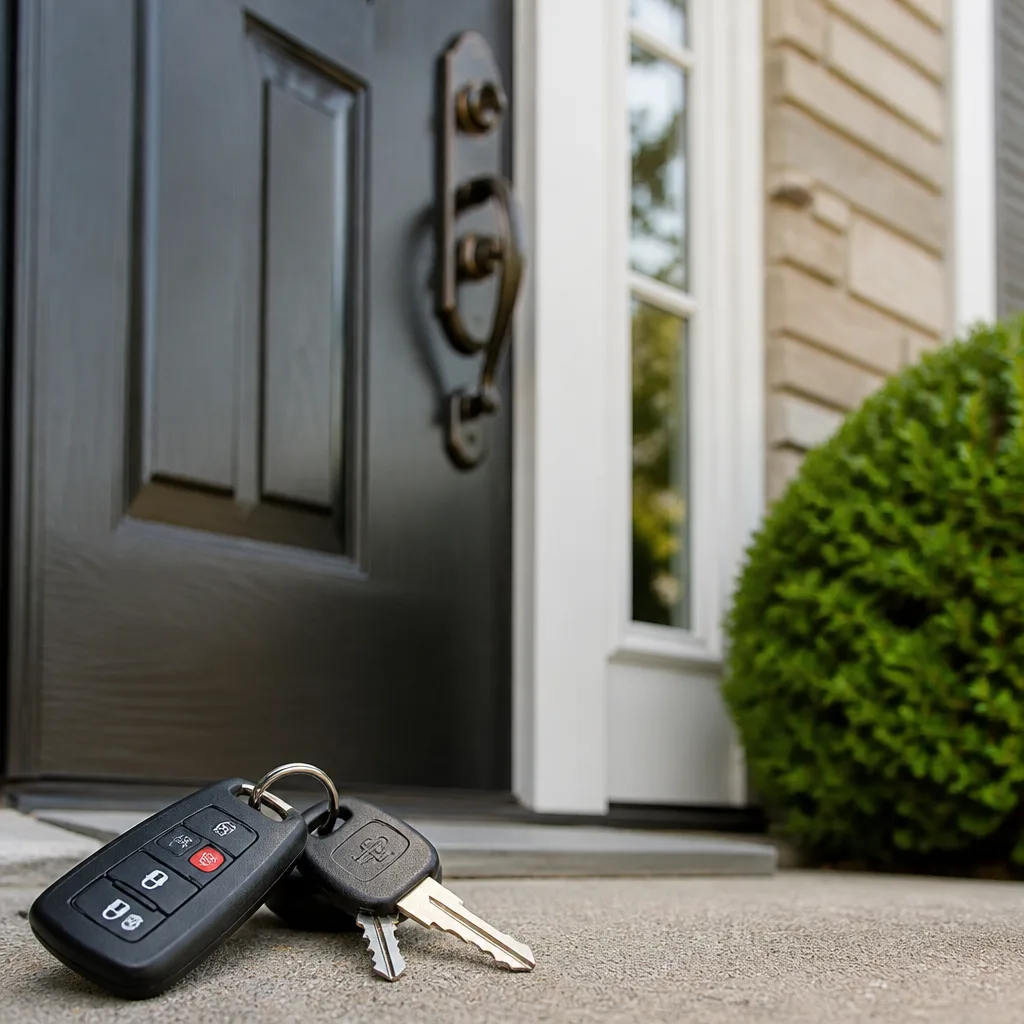
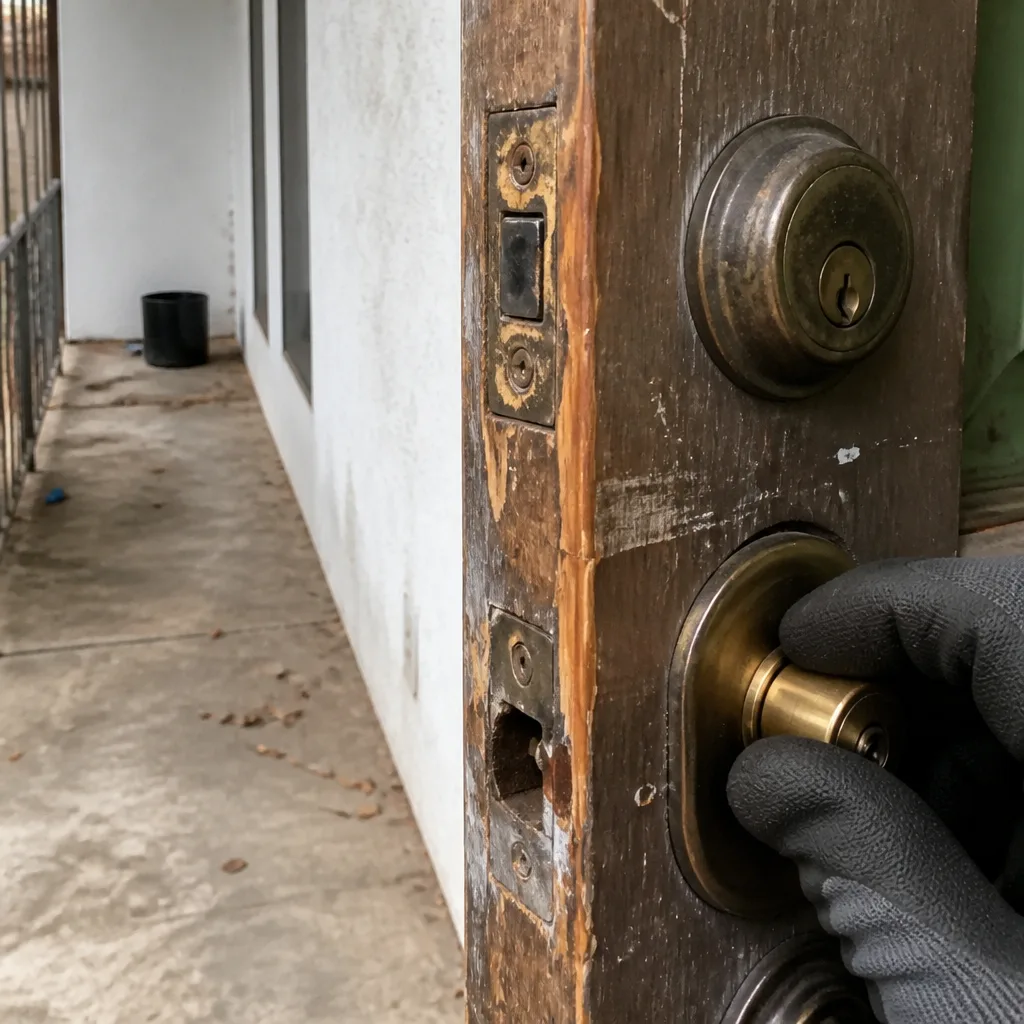 Before
 After
AfterThe Complete Residential Locksmith Guide for Los Angeles Homeowners
California does not license locksmiths the way it licenses electricians or plumbers. Anyone can put the word “locksmith” on a van, buy a Google listing, and start taking calls. That single regulatory gap is why the Los Angeles area generates more locksmith fraud complaints per capita than almost any metro in the country, and why a $35 service call can turn into a $400 invoice before you know what hit you. This guide maps the full scope of residential locksmith work in Los Angeles, explains the legitimate price structure, and teaches you the questions that separate a real locksmith from a bait-and-switch operation.
Quick Answer
A residential locksmith in Los Angeles handles rekeying, lockouts, deadbolt installation, and high-security upgrades, with typical jobs costing $75 to $300 depending on lock count and hardware. Legitimate companies quote a written price before dispatching a technician, and that price does not change at the door. The fastest way to protect yourself is to confirm the business has a verifiable Los Angeles address, ask whether technicians are employees or subcontractors, and insist on a written quote before any work starts.
Table of Contents
- What a Residential Locksmith in Los Angeles Actually Does
- How to Verify a Legitimate Los Angeles Locksmith Before Anyone Arrives
- How Residential Locksmith Pricing Works in Los Angeles
- The Locks on Your Los Angeles Home: What You Have and What You Should Have
- LA-Specific Security Risks Homeowners Should Know
- The Garrison Standard: What Accountability Looks Like in Practice
- What a Locksmith Should Decline or Refer Out
- Common Mistakes to Avoid
- When to Call a Professional
- Frequently Asked Questions
- The Bottom Line
What a Residential Locksmith in Los Angeles Actually Does
Residential locksmith work breaks into three categories: routine jobs, specialized upgrades, and work a legitimate shop should politely decline. Knowing the line between these keeps you from paying for work you don’t need or accepting a patch when a replacement is the honest call.
Routine Residential Work
These are the calls we handle every day across Los Angeles, from residential locksmith service in Los Angeles calls in the Valley to the Westside:
- Rekeying. Rekeying means changing the internal pins inside the lock cylinder so the old keys no longer work, while keeping the existing hardware. It is the single most important service after moving into a new home, after a roommate leaves, or after a contractor returns the keys. A rekey typically takes 15 to 20 minutes per lock.
- Lockout service. Getting a homeowner back inside without damaging the door or frame. A skilled technician can open most common residential locks non-destructively in under fifteen minutes. If the lock cannot be opened without damage, the technician should tell you that before drilling, and the cost of the replacement should be quoted first.
- Deadbolt installation. Adding a deadbolt to a door that only has a knob lock, or replacing a worn deadbolt with a newer one. Most Los Angeles homes built before the mid-1990s came with knob locks only on back and side doors.
- Lock replacement. When a lock is actually worn out, damaged, or so outdated that rekeying no longer makes sense. You replace the hardware, not the key.
Specialized Residential Work
This is where the scope of Los Angeles residential locksmithing extends beyond the basics, and where a technician’s training becomes visible:
- High-security lock upgrades. Installing locks that resist picking, bumping, and forced entry. Brands like Schlage and Kwikset make solid mid-grade hardware, while Abloy and Sargent produce cylinders that require restricted key blanks you cannot copy at a hardware store. We train our technicians on the full spectrum, from everyday residential hardware up to high-security lines.
- Master key systems for homes. A master key system lets one key open all doors while each family member’s key only opens the doors they need. It’s more common in commercial work, but some larger Los Angeles properties with guest houses, ADUs, or home offices use them.
- Door hardware upgrades. Replacing worn strike plates, reinforcing door frames, or adding longer screws to the strike plate and hinges. This is security work that costs little but makes a real difference to how a door resists a kick.
How to Verify a Legitimate Los Angeles Locksmith Before Anyone Arrives
Because California does not license locksmiths, the burden of verification falls on the homeowner. The good news: it takes about five minutes, and it rejects most of the bad operators in the Los Angeles market immediately. Here is the step-by-step process we recommend to every homeowner in Los Angeles who calls us with a question about another company or a quote that does not look right.
- Verify the business address. Search the company name plus the address they list. Run the address through Google Street View. If the address is a parking lot, a UPS store, or a residential apartment with no signage, that is a red flag. A legitimate Los Angeles locksmith has a physical location where you could, in theory, walk in and speak to someone.
- Check CLSB affiliation. The California Locksmith Association does not license anyone, because the state does not require it, but membership signals that the business has chosen to submit to an industry body. Ask the dispatcher if the company is a CLSB member, and if they hesitate, move on.
- Ask about technician identification. Before anyone is dispatched, ask what identification the technician will carry. The answer should be a company ID with a name and photo, a uniform, and a marked vehicle. If the dispatcher cannot describe any of those, cancel.
- Ask for the written price on the phone. A real locksmith can quote the service call fee and the labor cost per lock before dispatching. Parts cost may be confirmed after the technician sees the hardware, but the labor number should be firm. If the phone person will not give you a dollar figure, that is the end of the conversation.
In our experience at Ridley Locksmith & Security, the businesses that fail these checks in Los Angeles are usually not locksmiths at all. They are dispatch offices that route calls to the nearest available van, often operated by someone with no accountability to anyone.
How Residential Locksmith Pricing Works in Los Angeles
Legitimate locksmith pricing in Los Angeles is built on three parts: the service call fee, labor by the lock, and parts at a disclosed markup. Bait-and-switch operations invert this. They quote a low service call, then apply pressure at the door with inflated labor charges and parts prices that were never mentioned on the phone. Here is what you should expect.
What a Legitimate Quote Includes
- Service call fee: $19 to $45 in Los Angeles, depending on the company and the time of day. This covers dispatching the technician to your address.
- Labor per lock: Rekeying typically runs $20 to $30 per lock cylinder. New deadbolt installation runs $40 to $75 in labor per door, depending on whether the door needs to be prepped. Lockout service is usually a flat labor rate of $60 to $120.
- Parts: A standard Schlage or Kwikset deadbolt runs $35 to $80 at retail, and a locksmith marks that up modestly. A high-security cylinder from Abloy or Sargent can run $80 to $200 per lock, plus labor.
Here is what common jobs cost in Los Angeles, based on what we see at Ridley Locksmith & Security home every week:
| Job | Typical Range in Los Angeles | What’s Included |
|---|---|---|
| Rekey 3 doors | $95 to $165 | Service call, labor for 3 cylinders, new keys |
| Lockout (non-destructive) | $75 to $140 | Service call, labor, no parts |
| Install one deadbolt | $110 to $185 | Service call, labor, standard Schlage or Kwikset deadbolt |
| Install one high-security deadbolt | $180 to $320 | Service call, labor, Abloy or Sargent cylinder and hardware |
These are honest ranges, not teaser prices. The full price is quoted on the phone before anyone is dispatched, and that price is the price on the invoice. No call-out surcharge added on arrival.
What Bait-and-Switch Looks Like
- The phone quote is only a service call fee of $15 to $19, and the dispatcher refuses to quote labor per lock “until the technician sees the job.”
- The technician arrives, drills the lock within minutes, and tells you the lock “must be replaced” at $150 to $400 per lock.
- The technician asks for payment in cash or by peer-to-peer transfer, and offers no written invoice.
- The phone number routes to a national call center, not to a Los Angeles business address.
If any of those things happen, stop the job. Pay nothing. Call someone else.
The Locks on Your Los Angeles Home: What You Have and What You Should Have
Most homes in Los Angeles were built with hardware that met code at the time but falls short of what a modern security standard requires. The housing stock is a mix of 1920s Spanish Revival, mid-century post-and-beam, and 1990s stucco boxes, each with its own characteristic lock problems.
What Most Los Angeles Homes Have
- Knob locks on back and side doors. Common on pre-1990 construction. A knob lock is trivial to bypass with basic tools and offers almost no resistance to a shoulder check.
- A single deadbolt on the front door. Better than a knob lock, but most are Grade 3 hardware with a one-inch throw. They meet the minimum, and that is all they do.
- Short screws in the strike plate. Builders routinely installed strike plates with half-inch screws that bite only into the door jamb trim. A solid kick defeats them.
- Keyed-alike locks. If the front and back doors share one key, anyone who has ever held a copy of that key has access to the whole house. Rekeying to a fresh key is the fix when you buy a home or after any contractor has held keys.
What We Recommend for Most Los Angeles Homes
- Deadbolts on every exterior door. At minimum, a Grade 2 deadbolt. On front doors, a Grade 1. The difference in cost is about $20 to $40 per lock, and it changes how the door responds to force.
- Three-inch screws in every strike plate and hinge. This is the cheapest security upgrade in Los Angeles, and it is the one we recommend before any hardware change. The screws anchor the strike plate to the stud behind the jamb.
- Rekey every lock to a fresh key when you move in. You have no way of knowing how many copies of the old key exist or who holds them. A rekey in Los Angeles is a 15-minute-per-lock job that eliminates that uncertainty entirely.
- Consider a high-security cylinder on the main entry. If you live in a neighborhood with elevated break-in risk, or if you simply want a key that cannot be copied at a hardware store, a high-security brand like Abloy or Sargent makes sense. The blank is restricted, so no one duplicates it without authorization.
LA-Specific Security Risks Homeowners Should Know
Los Angeles is not one security profile. It is a patchwork of neighborhoods with different forced-entry patterns, different housing eras, and different response times to police calls. What makes sense in Hancock Park does not always make sense in Pacoima, and what makes sense in Sherman Oaks differs from Silver Lake.
Elevated Forced-Entry Neighborhoods
Certain Los Angeles neighborhoods report disproportionately high forced-entry residential burglaries. Based on LAPD crime data and our own service records, the pattern concentrates in parts of South LA, the Eastside, and the central corridor, but no neighborhood is immune. What changes is not the lock recommendation, but the urgency of getting it done. A deadbolt upgrade and rekey after a move-in is non-negotiable everywhere in Los Angeles, but in elevated-risk areas we also recommend high-security cylinders on all exterior doors, not just the front.
Building Age and Lock Vulnerability
Los Angeles housing falls into rough eras, and each era has a characteristic vulnerability:
- Pre-1950 (Spanish Revival, Craftsman): Original doors may be solid wood, which is good, but the locks often date from the same era. They have not been rekeyed in decades, and the cylinders are worn to the point that a bump key opens them in seconds.
- 1950 to 1985 (mid-century, tract housing): Lightweight hollow doors and builder-grade hardware. The door flexes and the latch does not seat properly. These homes need deadbolts and strike plate reinforcement.
- 1985 to 2010 (stucco suburban): Standard Schlage or Kwikset knobs and deadbolts, but installed with short screws and rarely rekeyed after the first owner. The hardware is fine; the installation is the problem.
- 2010 to present: Newer builds with code-compliant deadbolts, but many homeowners replace smart locks without rekeying the mechanical cylinder, which leaves the second-key bypass active.
Common Entry Points in LA Architecture
The most common entry point for forced entry in Los Angeles is not the front door. It is the side door off a driveway or alley, the back door off a yard, or a sliding glass door on a ground floor. These doors are out of sight from the street, which gives anyone working on them time. They are also the doors most likely to have a knob lock rather than a deadbolt. In Spanish Revival homes, service porches and side entries are particularly common. In mid-century homes, the sliding glass door is the weak point, and it needs a secondary lock or bar rather than a lock change.
The Garrison Standard: What Accountability Looks Like in Practice
Most Los Angeles locksmith problems trace back to one root cause: no one is accountable. A call center dispatches a subcontractor who has no boss on site and no reason to care whether the job is done right. The customer cannot call back and get the same person, and the dispatcher has no authority to make anything right. We built Ridley Locksmith & Security to be the opposite of that, and we operate under a documented standard called The Garrison Standard, which every technician and every job must meet.
In practice, The Garrison Standard means specific things:
- Background-checked, uniformed technicians. The person who arrives at your door is our employee, in our uniform, in a marked vehicle, with company identification. Not a subcontractor. Not an unmarked van.
- A written price before any work starts. The quote is delivered in writing, and the price on that document is the price on the invoice. This is not a courtesy. It is the rule.
- Documented key counts. When we rekey a lock, we tell you exactly how many keys we cut, and we hand every one of them to you. If we cut five keys for a rekey job, you get five keys. There is no spare floating around in a van.
- The 365-Day Done Right Promise. Every repair carries a written guarantee covering the work for one full year. If the repair fails inside that window, we return at no charge. This is called the 365-Day Done Right Promise, and it is automatic, not something you have to ask for.
- A live person answers the phone 24 hours a day, 7 days a week. Not a voicemail, not an answering service. A person at our Los Angeles operation picks up when you call, day or night.
The Garrison Code, the operational document behind The Garrison Standard, is what holds every technician accountable. It covers how we conduct a job, how we communicate a price, and how we clean up after ourselves. It exists so that a customer who calls commercial locksmith service in Los Angeles through our operation gets the same standard of accountability as a homeowner who needs a rekey.
What a Locksmith Should Decline or Refer Out
A legitimate locksmith knows the boundary of the trade. Some work looks like locksmithing but is not, and a shop that accepts it is not doing you a favor. Here is what we refer out in Los Angeles, and why you should be suspicious of any locksmith who takes these jobs on without qualification.
Work a Residential Locksmith Should Decline
- Alarm system installation or integration. That is an alarm company’s work. A locksmith can install the lock, but wiring a door contact into a monitored system requires a different credential.
- Security camera installation. Some locksmiths sell cameras, but the work belongs with a licensed low-voltage contractor or surveillance specialist. It involves wiring, networking, and monitoring configuration that a lock technician does not have standing to certify.
- Safes and vaults. A residential locksmith may be able to open or service a residential safe, but a true vault or a high-end TL-rated safe requires a safe technician, which is a separate specialty. We decline vault work and refer it to a qualified shop.
- Structural door or frame repair. If a door has been kicked in and the jamb is splintered, the right fix is a carpenter or contractor, then a locksmith to replace and rekey the hardware. We can install reinforcement plates, but a destroyed jamb is a construction job.
Why this matters to you as a Los Angeles homeowner: a locksmith who accepts every job is a locksmith who will not tell you when the honest answer is “that is not our work.” The best technicians we know are the ones who tell you what they will not do. For a deeper look at where to draw the line, see our guide on DIY vs Professional Locksmith: The Los Angeles Homeowner’s Decision Guide.
Common Mistakes to Avoid
- Calling the first Google ad without checking the address. The top paid listing in Los Angeles is often a national dispatch call center, not a local shop. The van that shows up may be from an unmarked operation with no accountability to anyone.
- Accepting a phone quote with no labor number. If the dispatcher quotes only a $19 service call and says the technician will “assess” the rest on site, you are walking into the classic bait-and-switch pattern. Hang up.
- Letting a technician drill a lock without asking about non-destructive options. Most residential locks in Los Angeles can be opened without drilling. Drilling takes 30 seconds, but it destroys the cylinder and usually means a new lock sale. Ask before the drill comes out.
- Not rekeying after buying a home. The previous owner, their family, their housekeeper, their contractor, and the neighbors may all hold copies of the old key. You will never know who. A rekey removes the question entirely.
- Treating all locksmiths as equivalent. The gap between a trained, accountable operation and a dispatch shop is the entire ballgame in Los Angeles. One of them has a physical address, employee technicians, and a written guarantee. The other has a Google listing and a van.
When to Call a Professional
Some lock work is genuinely doable yourself: tightening a loose doorknob, lubricating a sticky latch, or replacing a strike plate screw. But the moment the work touches the lock cylinder, the keying, or the security of the door, you want a professional. For commercial properties, read our DIY vs Professional Commercial Locksmith: What’s Safe to Do Yourself breakdown. Call a locksmith when you move into a new home and need a rekey, when a key breaks off in the lock, when a lock has been tampered with or appears damaged, when you have been burglarized or lost a key and cannot account for every copy, or when you want a security upgrade rather than a hardware swap. The cost of a wrong fix is a false sense of security, and that is the most expensive outcome in Los Angeles. Ridley Locksmith & Security offers free estimates in Los Angeles – call (956) 275-7388.
Frequently Asked Questions
A residential locksmith job in Los Angeles typically runs between $75 and $300, depending on the number of locks and the hardware involved. A rekey of three doors runs $95 to $165, a lockout runs $75 to $140, and a single deadbolt installation runs $110 to $185. Call (956) 275-7388 for an exact quote – estimates are free.
Verify the business address, confirm CLSB membership, ask about technician ID and uniforms, and require a written price on the phone before dispatch. If any of those four checks fails, call someone else.
Yes. At Ridley Locksmith & Security, the price we quote on the phone is the price on the invoice, in writing, before any work starts. No call-out surcharge added on arrival. If another company will not commit to a labor number before dispatch, do not let them dispatch.
A live person answers our phones 24 hours a day, 7 days a week, and we dispatch Los Angeles technicians citywide. For lockouts, you will get a real estimated arrival window on the phone. Call (956) 275-7388.
Rekeying changes the internal pins so the old keys no longer work, while keeping the existing hardware. Replacing a lock means swapping out the entire lockset. Rekeying is faster and cheaper, and it is the right call when the hardware is in good condition but the key control is uncertain.
California has never enacted a licensing program for locksmiths, unlike electricians and plumbers. That is why verifying the business yourself is the only real protection a Los Angeles homeowner has, and why we recommend the four-step check outlined in this guide before anyone arrives.
The Bottom Line
Residential locksmith work in Los Angeles is not complicated, but the market around it is. The work itself is straightforward: rekey, replace, reinforce, resolve. The complication is the market’s lack of licensing, the prevalence of dispatch call centers, and the bait-and-switch pattern that preys on people who do not know the legitimate price structure. If you verify the address, require a written price, and ask about technician accountability, you will filter out almost every bad operator in Los Angeles. The rest is just locks. For more guides & resources, visit our blog.
Written by Drew Kowalski, Owner at Ridley Locksmith & Security, serving Los Angeles since 2007.