
Last updated October 9, 2026
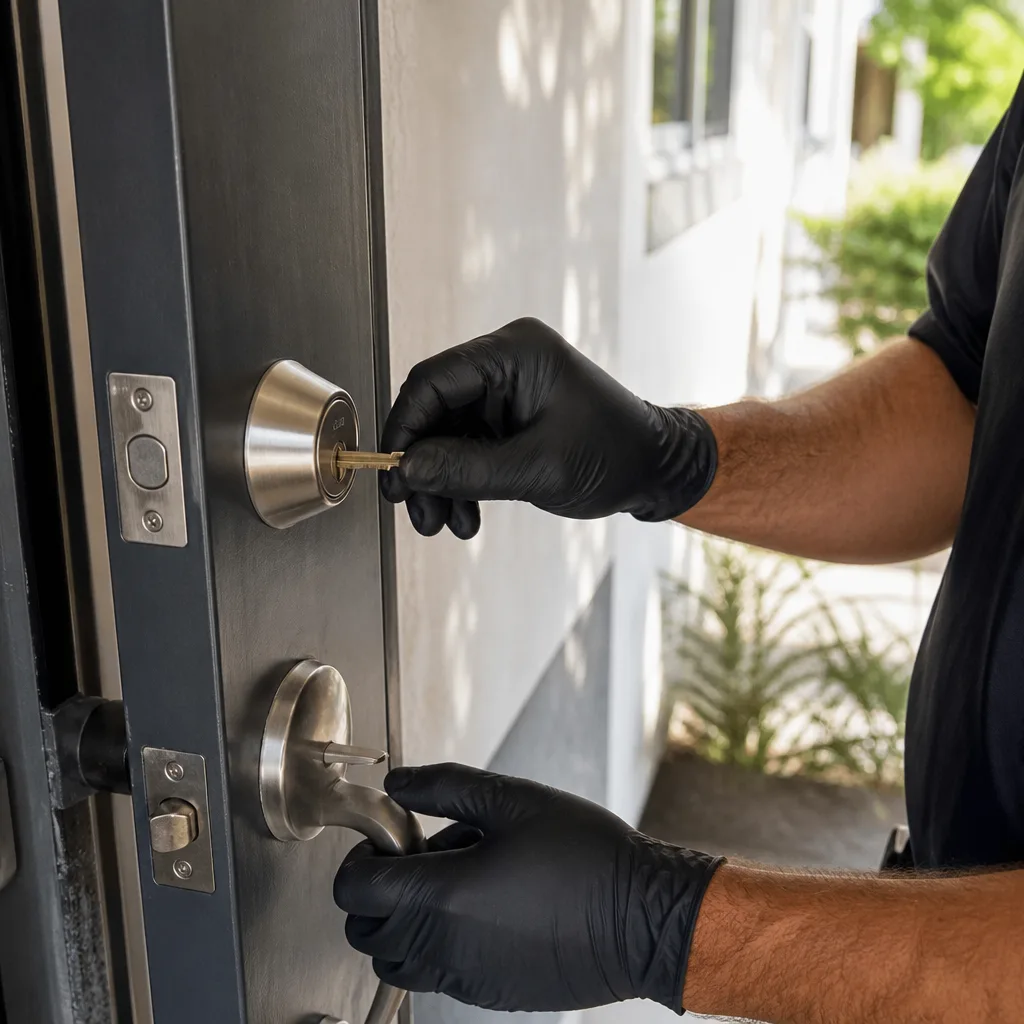
Non-destructive entry first, always - and we re-key Schlage, Kwikset, and Baldwin locks on the spot while you watch
You get a price before we start. It does not change when we arrive. No surprises.
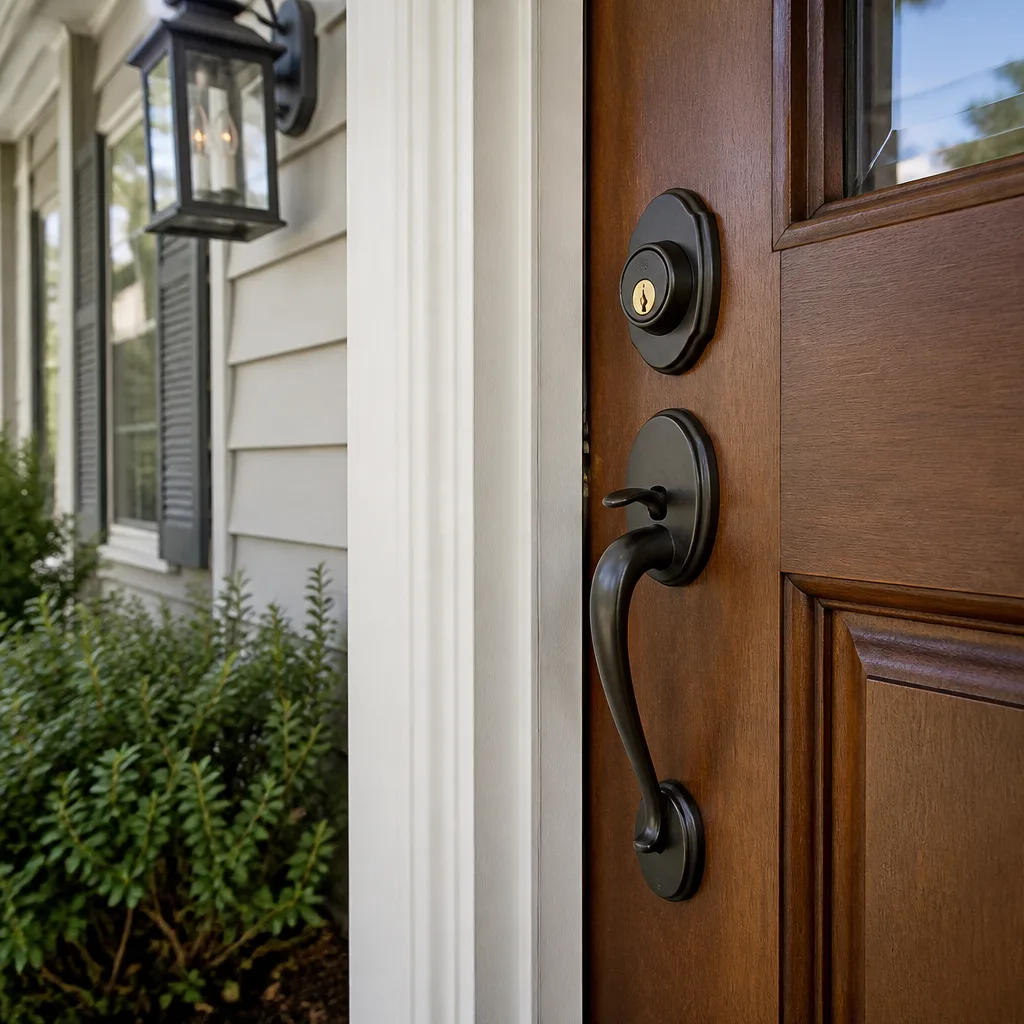
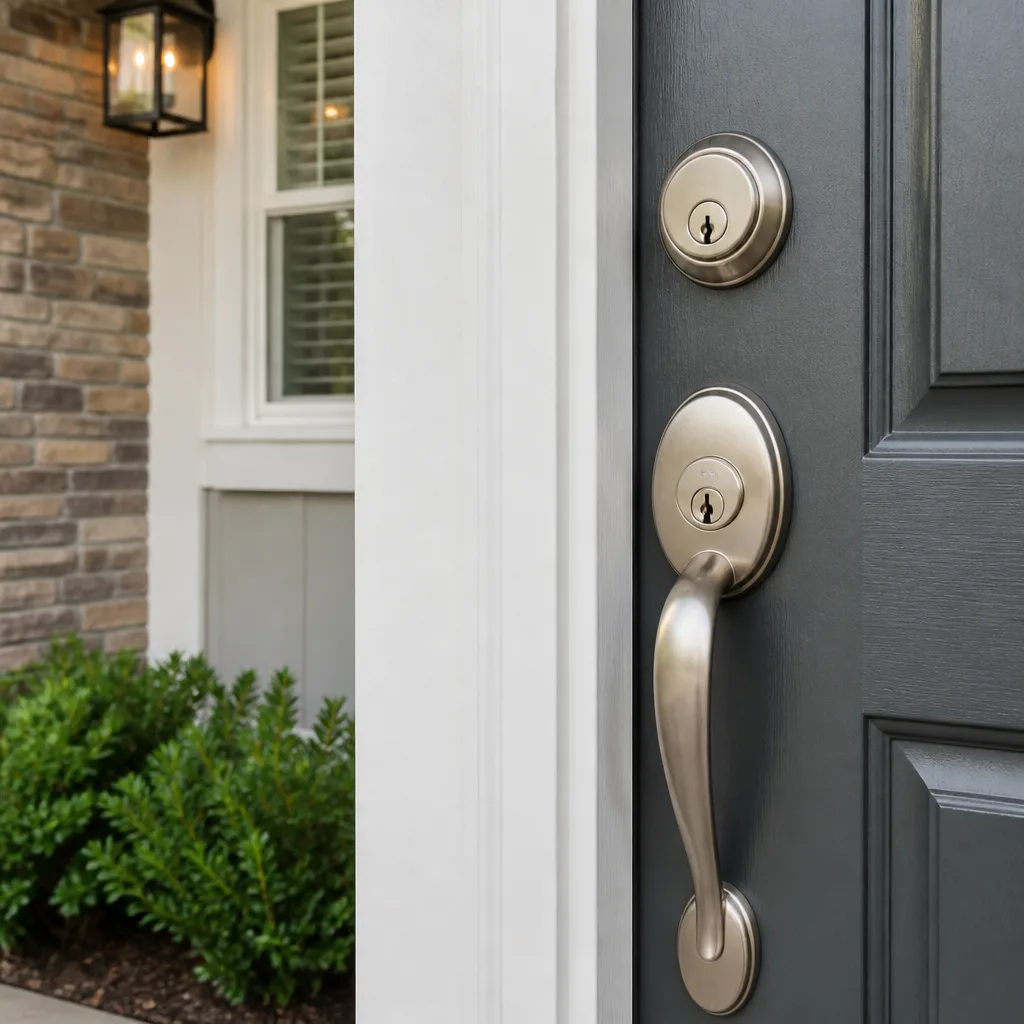
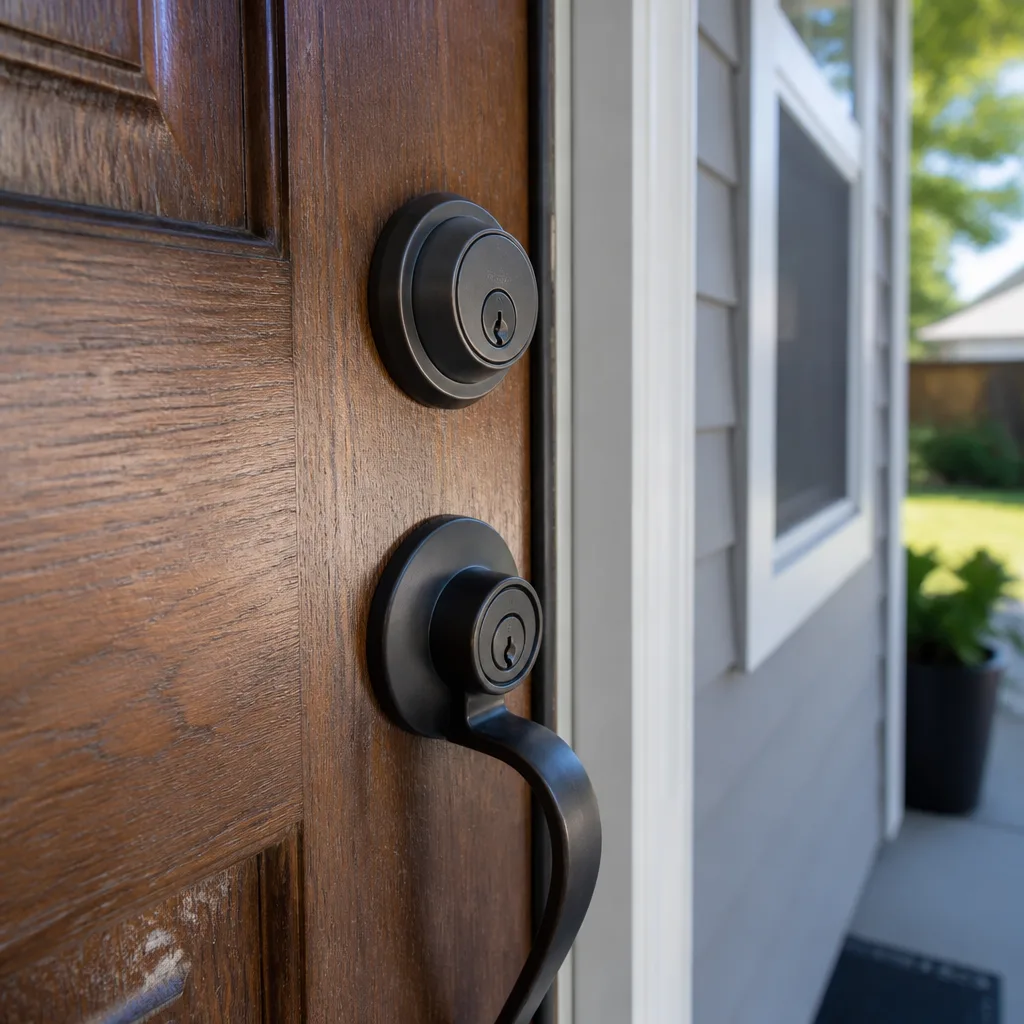
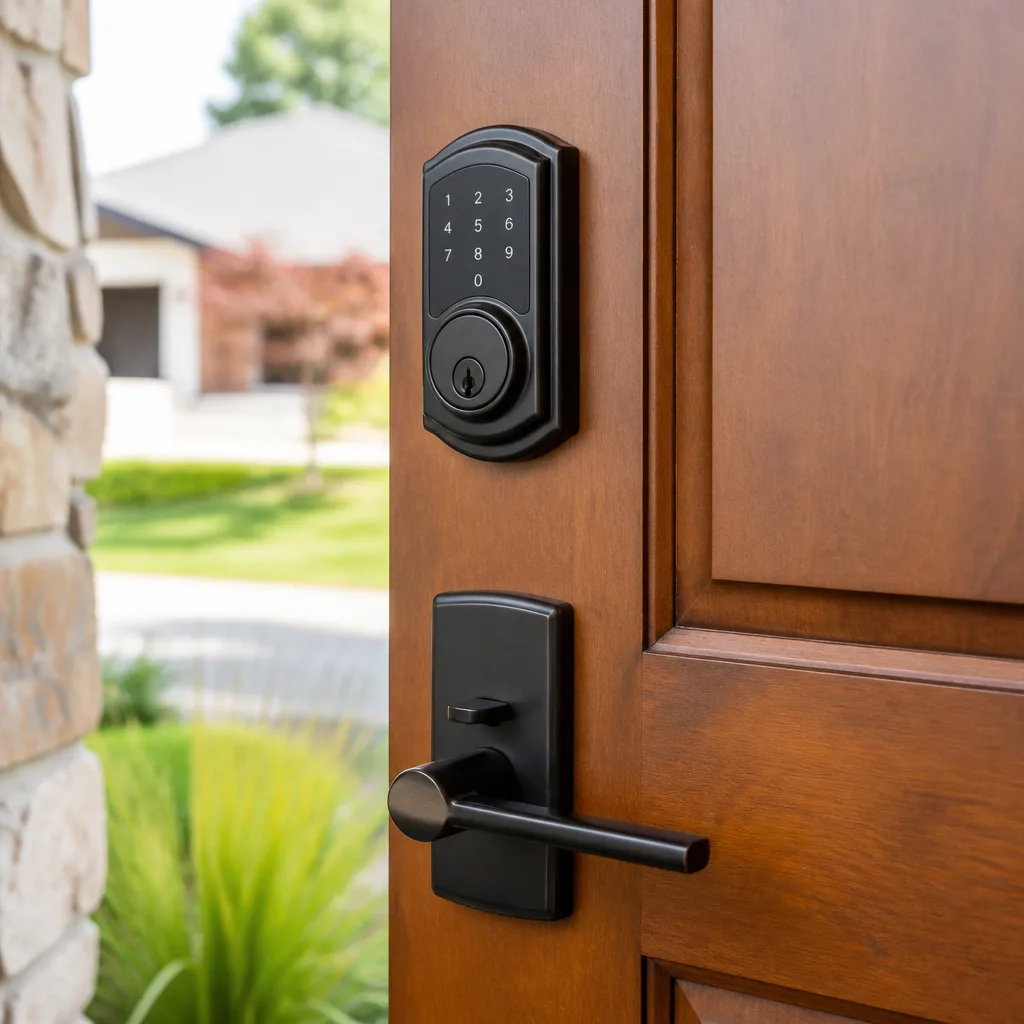
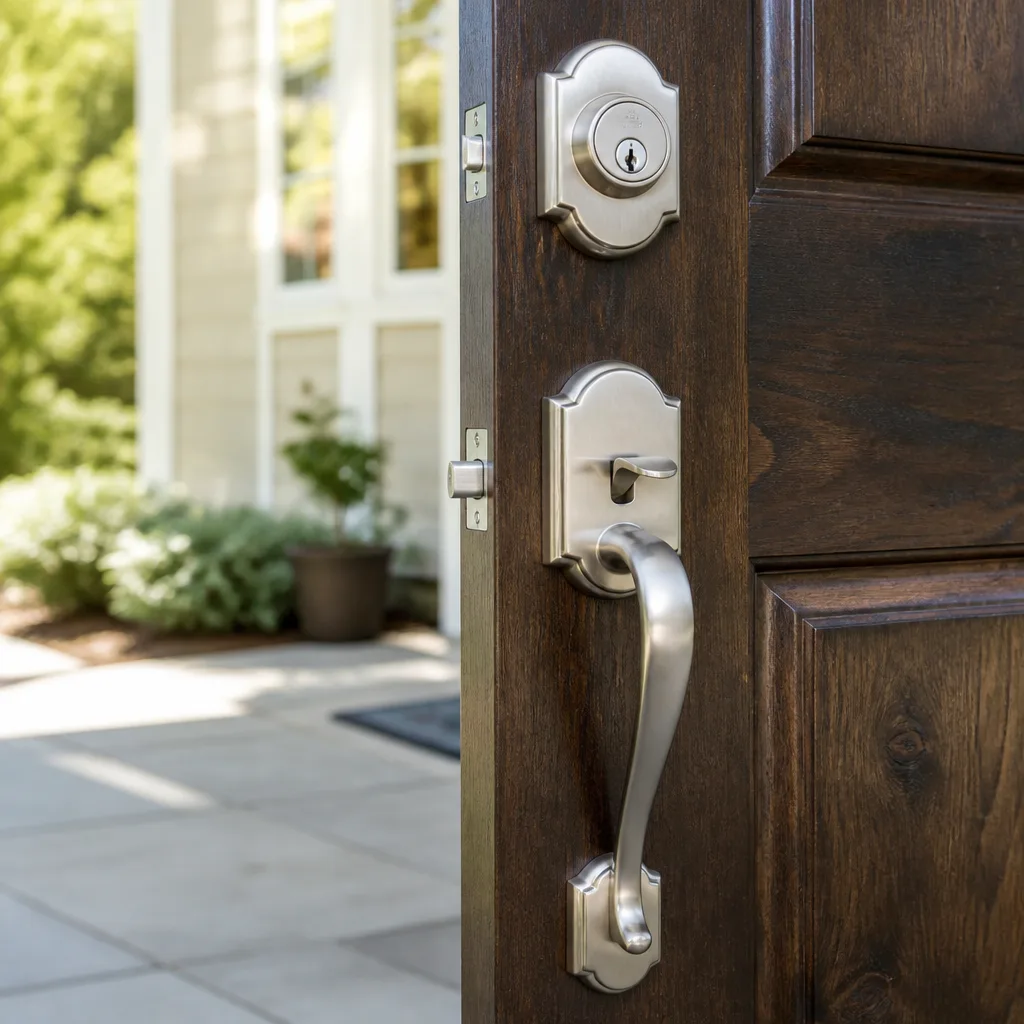
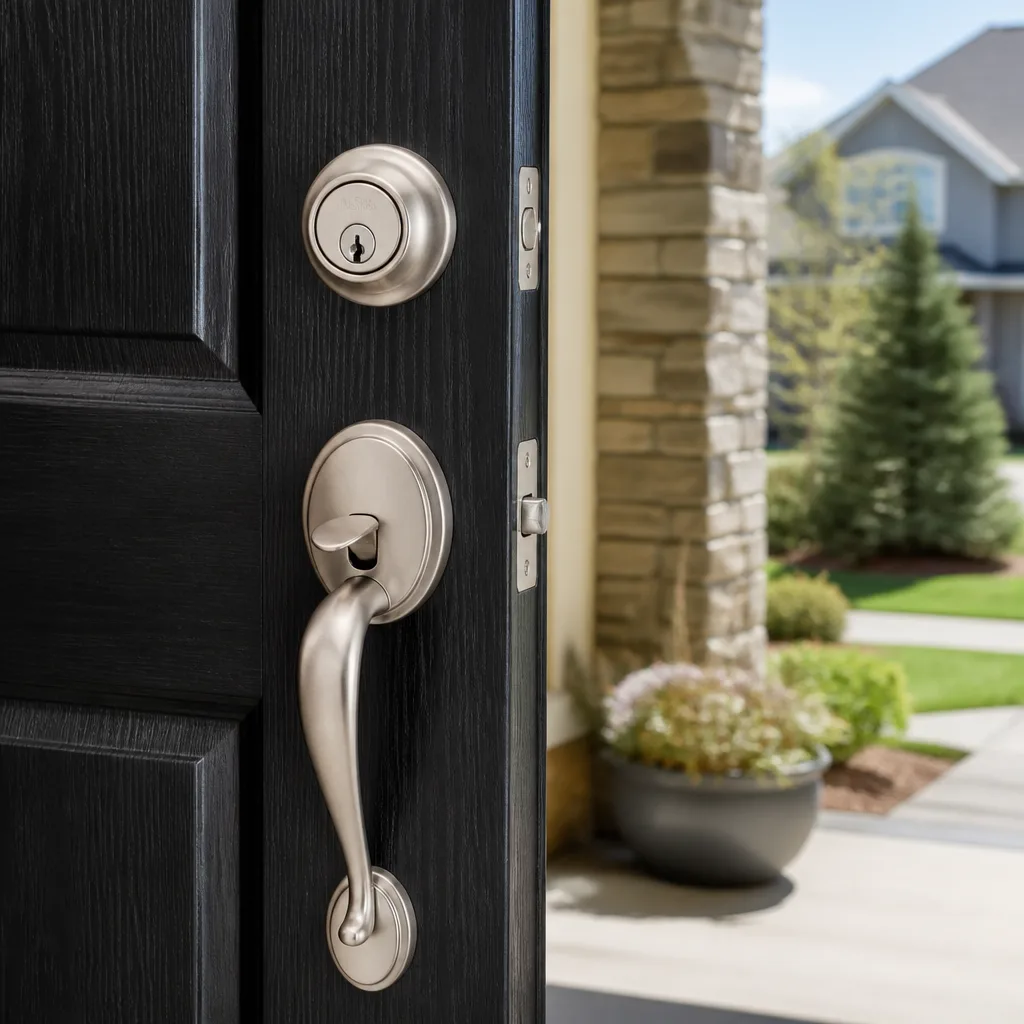
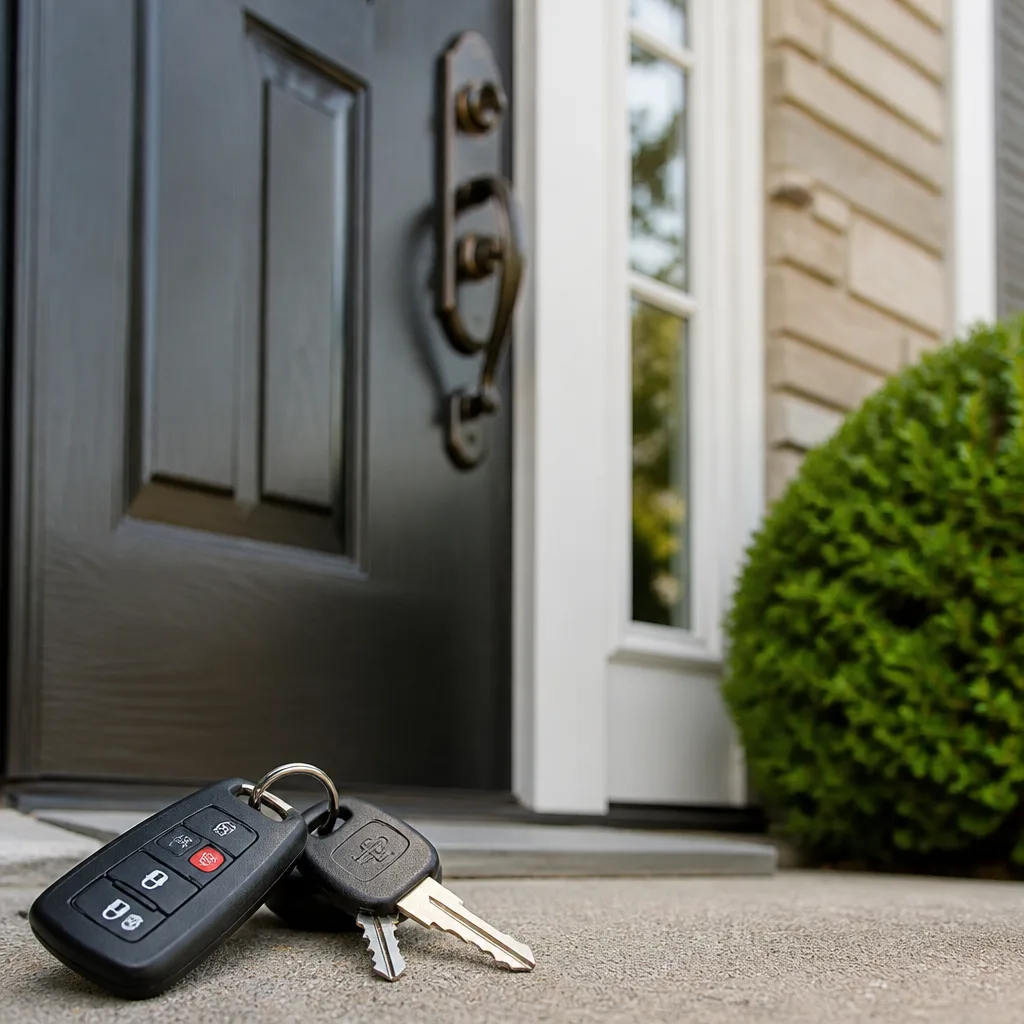
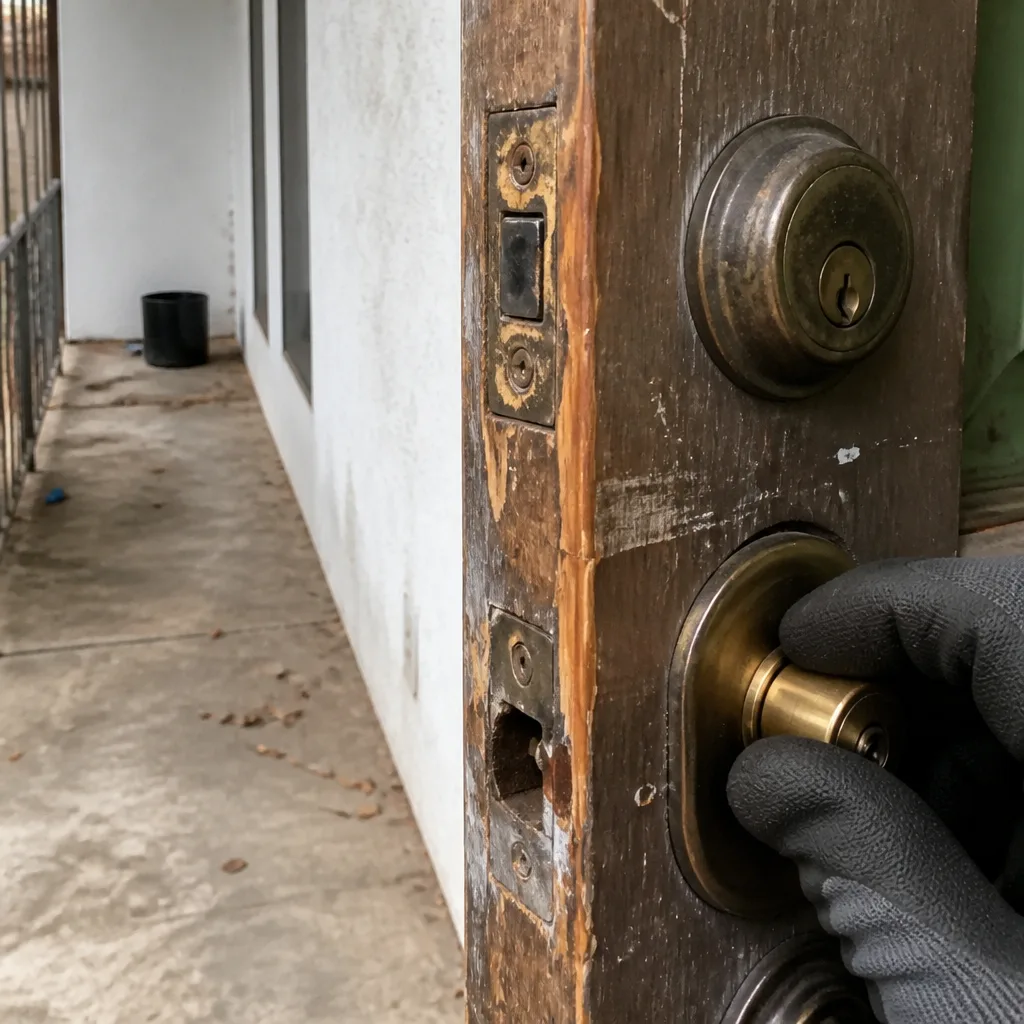 Before
 After
AfterLocksmith Warning Signs: A Los Angeles Homeowner’s Reference Guide
The most common locksmith scam in Los Angeles doesn’t start with a lie about price. It starts with a legitimate-looking Google Business listing that connects to a call center in another state, which then dispatches an unlicensed subcontractor who drills your lock unnecessarily and charges four times the quoted rate. The scam is layered, and each layer appears at a different point in the transaction. This guide walks you through the specific warning signs at each stage so you can recognize a fraudulent operation before any damage is done to your door, your lock, or your wallet.
Quick Answer
A legitimate Los Angeles locksmith will have a verifiable local street address, quote you a written price before any work begins, arrive in a marked vehicle with a uniformed technician who carries identification, and rarely if ever need to drill your lock. Following a Rekey Locks Maintenance Checklist for Los Angeles Homeowners can help you stay ahead of many common lock issues. Fraudulent operations hide behind generic business names, out-of-state call centers, “starting at $15” bait pricing, and technicians who refuse to put anything in writing. If the technician cannot produce a business license number or a written quote before touching your lock, end the transaction immediately.
Table of Contents
- Ad-Level Red Flags: What the Listing Reveals Before You Call
- Phone-Call Red Flags: What the Dispatcher Says
- On-Arrival Red Flags: The First 90 Seconds at Your Door
- The “Defective Lock” Upsell: How Scammers Create Damage to Justify Charges
- What a Legitimate Technician’s Job Workflow Actually Looks Like
- How Los Angeles Climate and Housing Stock Affect Lock Failure
- High-Security Hardware: When a Standard Lock Isn’t Enough
- Common Mistakes to Avoid
- When to Call a Professional
- Frequently Asked Questions
- The Bottom Line
Ad-Level Red Flags: What the Listing Reveals Before You Call
The scam begins before the phone rings. Fraudulent locksmith operations in Los Angeles invest heavily in search advertising and fake listings because they know most homeowners call the first number they see when they’re locked out at 11 p.m. in Silver Lake or standing in front of a deadbolt that won’t turn in Sherman Oaks. Learning to read a listing critically is the first line of defense.
Generic Business Names
Legitimate locksmith companies in Los Angeles have specific, traceable names. A company called “Locksmith Los Angeles” or “LA Locksmith Pros” or “Cheap Locksmith LA” is almost certainly a lead-generation front, not a real business with a physical location. These names are designed to catch search traffic, not to build a reputation. A real operation that has been serving a community since 2007, as Ridley Locksmith & Security home has under the Garrison Partners family, has no need to hide behind a keyword-stuffed alias.
No Street Address or a Fake One
Click on the listing and look for a physical address. If the address is missing, listed as “serving Los Angeles area,” or shows a PO Box, that’s a red flag. If an address is listed, copy it into a maps search. Many fraudulent listings use the address of a vacant lot, a UPS Store, or an apartment building where no locksmith business operates. A legitimate shop will have a real commercial address you can visit. We’ve had customers in Los Angeles call us after driving to a “locksmith office” that turned out to be a mailbox rental in Van Nuys.
Prices Listed at $15 to $35
No legitimate, licensed, insured locksmith in Los Angeles can provide a service call for $15. Think about the economics: a background-checked technician, a marked van with commercial insurance, proper licensing, and the tools to handle Schlage, Kwikset, Yale, and Baldwin hardware. The bare minimum operating cost for a single service call in Los Angeles County exceeds $75 before the technician touches your door. When you see “$15 and up” or “$19 service call” in an ad, that number is bait. The real price will appear after the technician arrives, once you’re locked out and vulnerable.
Local Numbers That Route Out of State
Fraudulent operations buy local Los Angeles area codes, 213, 310, 818, 323, and 424, to appear local. When you call, the phone rings at a call center in Arizona, Florida, or overseas. You can sometimes detect this in the first seconds of the call: background noise that sounds like a call floor, a greeting that doesn’t state a company name clearly, or a hold message with generic music. These call centers dispatch whoever is available, often an unlicensed subcontractor who pays for the lead.
Phone-Call Red Flags: What the Dispatcher Says
Once you’re on the phone, the dispatcher’s responses tell you a great deal. A legitimate Los Angeles locksmith operation answers with the company name and can answer specific questions about licensing, procedures, and pricing structure. A call center employee reading from a script cannot.
Cannot Produce a Business License Number
Ask directly: “What is your locksmith business license number?” In Los Angeles, legitimate locksmiths are required to carry a California state license and are subject to local business regulations. A legitimate dispatcher will provide the company’s license number without hesitation. A call center worker will stumble, deflect, or claim that information is “in the office.” If they cannot state the license number on request, hang up. We are regularly asked for ours and the answer is ready before the question is finished.
Vague “Starting At” Pricing Without Asking About Hardware
A legitimate locksmith asks what you need before quoting a price. What kind of lock is it? Is it a deadbolt, a knob lock, a mortise lock? What brand? What’s the problem, exactly? When a dispatcher quotes “$35 to unlock” without asking a single question about your door, your lock type, or your situation, they are not diagnosing anything. They are reciting bait pricing. The written price comes later, after the technician has seen the lock. We quote a written price before any work starts, but that price is based on real information about your situation, not a scripted guess.
No Confirmation of a Specific Technician’s Name
Ask: “Who is coming? What’s the technician’s name?” A legitimate company can tell you the name of the person being dispatched, and that person arrives in a marked vehicle wearing a uniform with identification. A call center operation almost never knows who will show up. The dispatcher often says “the technician will call you” and then the person who arrives is unknown even to the company that sent them. That is the subcontractor model, and it is how unlicensed, uninsured, unvetted workers end up at your door in Los Angeles with a drill in hand.
On-Arrival Red Flags: The First 90 Seconds at Your Door
The technician’s arrival is the point of no return. Once the tech is at your door in Los Angeles, you are standing on your doorstep with a personal security problem, and the pressure to let them work is real. But the first 90 seconds reveal almost everything you need to know.
Unmarked Vehicle
A legitimate locksmith arrives in a vehicle that carries the company’s name, logo, and phone number, matching the listing they advertised. It is a rolling billboard and an accountability tool. A fraudulent technician typically arrives in a personal car, an unmarked van, or a vehicle with magnetic signs that don’t match the company name you called. If the vehicle isn’t marked, ask yourself why. A business that stands behind its work has no reason to hide its identity on the road. Every technician Ridley Locksmith & Security dispatches in Los Angeles arrives in a marked van with the company name visible.
No ID Badge or Uniform
The person at your door should be wearing a uniform with a company name and carrying a photo ID badge. Ask to see it. A legitimate technician expects this request and produces identification without hesitation. A fraudulent subcontractor often arrives in street clothes, has no badge, and may become defensive or evasive when asked. This is not a personality quirk. It is a structural feature of the scam: the person doing the work has no relationship with the company you called, and no identification that would let you trace them later.
No Written Estimate Before Touching the Lock
This is the single most important test. A legitimate locksmith will inspect the lock, explain the problem, and hand you a written price, clearly itemized, before any work begins. Not a verbal number. Not “we’ll see when we’re done.” A written price, on paper or on screen, that you can approve or refuse. If the technician wants to start working before giving you a written price, stop them. Say no. Lock the door. Walk away. A refusal to put the price in writing before work starts is the strongest single indicator that you are dealing with a scam. The Garrison Standard, which governs every job Ridley Locksmith & Security performs in Los Angeles, requires a written price before any work begins, on every single job, no exceptions.
The Claim That Drilling Is the Only Option
In almost every case, drilling is not the only option. A skilled technician with proper tools can open nearly all residential locks on Los Angeles homes, Kwikset, Schlage, Yale, Baldwin, and others, without destroying the hardware. Drilling is sometimes necessary, for example when a lock is mechanically failed and the cylinder cannot be rotated by any means, but it is a last resort, not a first move. A technician who immediately says “I’m going to have to drill it” before trying anything else is either incompetent or looking to sell you a replacement lock at an inflated price. Both are reasons to end the job.
The “Defective Lock” Upsell: How Scammers Create Damage to Justify Charges
One of the most common locksmith scams in Los Angeles involves a technician who creates the very problem he then charges you to fix. The pattern is specific and recognizable.
The technician arrives, quotes a low service call fee, and begins working on your lockout. Moments later, he announces that the lock is “defective,” “worn out,” or “broken inside.” He shows you a pin or a spring that has fallen out. The lock now must be replaced, not just opened. The replacement lock, which the technician conveniently has in the van, costs $300, $400, or more. The original quote is gone, replaced by a much larger bill that you are pressured to accept on the spot.
Here’s what actually happened: the technician either deliberately damaged the cylinder while working, or simply pointed to a component that was never the problem. A skilled professional opening a Kwikset deadbolt does not cause pins to fly out. A legitimate technician can open most locks in Los Angeles homes without breaking anything. When a technician suddenly discovers “damage” that requires replacement hardware at a markup of ten times retail, you are watching the defective-lock upsell in action.
This scam works because most homeowners cannot evaluate the claim. The lock is in pieces. You’re standing in the driveway, locked out of your house in Los Angeles, and a person in front of you is holding what looks like evidence. The pressure to agree is immense. That pressure is the product. A written guarantee from a legitimate operation, like the 365-Day Done Right Promise that Ridley Locksmith & Security issues on every repair, is not something you’ll ever see from the drilling-and-replacing crowd.
What a Legitimate Technician’s Job Workflow Actually Looks Like
Understanding how a legitimate locksmith in Los Angeles operates gives you a clear standard against which to compare every technician who shows up at your door. Here is the sequence, step by step.
- Arrival and identification. The technician arrives in a marked vehicle, wearing a company uniform and a photo ID badge. He introduces himself by name and states the company he works for. He does not object to showing identification.
- Assessment. The technician inspects the lock, asks what happened, and identifies the brand, Schlage, Kwikset, Yale, Baldwin, or another manufacturer. He explains the problem in plain language.
- Written price. Before any work begins, the technician provides a written, itemized price for the full job. You approve the price, or you decline. Nothing happens until you say yes.
- The work. The technician performs the work using appropriate tools. For lockouts, he attempts non-destructive entry first. Drilling is proposed only when no other method will work, and only after explaining why.
- Testing and verification. The technician tests the lock multiple times, from both sides of the door, keys in hand. He shows you that the lock operates correctly.
- Itemized receipt. You receive a written receipt that lists exactly what was done and what was charged. The price on the receipt matches the written price you approved before work began.
- Guarantee. A legitimate company stands behind the work. At Ridley Locksmith & Security, every job carries a written guarantee covering the repair for one full year. If the repair fails inside that window, we return at no charge. That’s the 365-Day Done Right Promise, and it is non-negotiable.
Compare this sequence to the fraud playbook: unmarked vehicle, no ID, no written price, drilling first, replacing hardware at markup, no receipt, no guarantee. The differences are not subtle. They are structural.
How Los Angeles Climate and Housing Stock Affect Lock Failure
Los Angeles has a specific climate and a specific housing stock, and both affect how locks fail. This section is not filler. Understanding why your lock failed helps you evaluate whether a technician’s diagnosis is legitimate.
Coastal Fog and Salt Air
Homes in coastal Los Angeles neighborhoods, Santa Monica, Venice, Playa del Rey, San Pedro, Pacific Palisades, are exposed to marine air carrying salt and moisture. Over years, salt-air corrosion attacks brass and steel lock components, especially on exterior doors that face the ocean. Internal springs weaken, cylinder pins bind, and keys become difficult to turn. This is a legitimate, common cause of lock failure in coastal Los Angeles, and a technician who identifies corrosion is probably being honest with you.
Inland Heat and Dry Air
Inland Los Angeles, the San Fernando Valley, Burbank, Glendale, Pasadena, the Antelope Valley, deals with extreme heat and very low humidity. Locks dry out. The lubricant inside a lock cylinder degrades under repeated high-heat cycles, leaving the mechanism stiff and gritty. Keys eventually stick or refuse to turn. A technician who diagnoses a dry, heat-degraded lock in Woodland Hills is describing a real pattern, not inventing a problem.
Older Housing Stock with Original Hardware
Many Los Angeles homes built between the 1920s and 1960s still carry their original mortise locksets or older cylindrical locks. These locks were built well, but after 60, 70, or 80 years, internal components wear down. Worn pins, collapsed springs, and loose tailpieces are common. In neighborhoods like Echo Park, Highland Park, Boyle Heights, and West Adams, where older housing stock is common, a legitimate locksmith sees these failures regularly. The fix is often a rekey in Los Angeles rather than full replacement, which preserves the original hardware and saves you money.
High-Security Hardware: When a Standard Lock Isn’t Enough
Most Los Angeles homes are secured with standard hardware: Kwikset, Schlage, Yale, and Baldwin locks. These are solid, serviceable brands, and a competent locksmith works with them every day. But some homeowners and many business operators in Los Angeles need more protection than a standard cylinder provides.
High-security lock systems, including Medeco, Mul-T-Lock, Abloy, and Sargent, offer features that standard residential locks do not. Restricted keyways mean keys cannot be copied at a hardware store. Drill-resistant cylinders resist forced entry. Pick-resistant pin configurations slow down intruders who know what they are doing. For a Los Angeles homeowner who has experienced a break-in, or a business owner protecting inventory, a high-security upgrade is a legitimate conversation to have with a qualified locksmith.
What matters for this guide is that not every locksmith in Los Angeles can work on these systems. High-security hardware requires certified training and specialized tools. A technician who claims to service Medeco or Mul-T-Lock but cannot produce credentials is another red flag. We are certified to work on high-security hardware including Medeco, Mul-T-Lock, Abloy, and Sargent, and every technician in our Los Angeles operation carries that training. If a technician glances at a Mul-T-Lock cylinder and says he has never seen one before, you are speaking with the wrong person.
Common Mistakes to Avoid
- Calling the first number in search results. The top paid listings in Los Angeles are frequently lead-generation fronts, not local businesses. Take 30 seconds to check the listing for a real address and a specific company name.
- Accepting a verbal quote. A verbal quote is not a quote. It is a suggestion that can change. Demand a written price before any work begins, every time.
- Letting the technician drill immediately. Drilling is a last resort. If the technician reaches for a drill in the first minute, ask why non-destructive methods haven’t been tried. If the answer is not convincing, end the job.
- Paying cash without a receipt. A legitimate locksmith provides an itemized receipt. Cash payments without paperwork leave you with no record and no recourse.
- Ignoring the unmarked vehicle. The vehicle is a signal about accountability. A marked van identifies the business. An unmarked car hides it.
- Assuming a local area code means a local business. Area codes are cheap. Fraudulent operations buy Los Angeles numbers to appear local while routing calls to out-of-state call centers.
- Not asking about the guarantee. A legitimate locksmith has a clear answer about what happens if the work fails. At Ridley Locksmith & Security, the answer is a written guarantee covering the repair for one full year. If the technician cannot explain what happens when a repair fails, there is no guarantee.
When to Call a Professional
Some lock problems are clear calls for a professional. A lockout is the obvious one, but others are just as urgent: a deadbolt that won’t throw, a key that snapped inside the cylinder, a lock that was tampered with after a burglary attempt, or a business needing a master key system. These are not situations for guesswork. Locks fail in ways that are not visible from the outside, and an untrained attempt often makes the problem worse and more expensive. Residential locksmith service in Los Angeles starts with a phone call and an honest conversation about what you’re dealing with. Commercial locksmith work in Los Angeles is surveyed and scheduled, with a written scope and flat per-lock pricing. Ridley Locksmith & Security offers free estimates in Los Angeles, call (956) 275-7388.
Frequently Asked Questions
Look for three things: a real street address you can verify on a map, a business license number provided without hesitation when you ask, and a written price before any work begins. If any of these three is missing, treat the operation as unverified and consider calling someone else.
A legitimate lockout service call in Los Angeles typically ranges from $75 to $180 depending on the lock type, time of day, and your location in the city. The price should be agreed upon in writing before the technician starts. Any advertised price of $15 to $35 for a service call is bait pricing and will not be the final cost.
Yes, but rarely. Drilling is a last resort used when a lock is mechanically failed and cannot be opened any other way. A technician who reaches for a drill before attempting non-destructive methods is either poorly trained or setting up a replacement sale you do not need.
Rekeying-see our Rekey Locks Maintenance Schedule: What to Do and When for timing guidance-changes the internal pins of a lock so old keys no longer work, while the hardware stays in place. Replacing removes the entire lock and installs new hardware. Rekeying is almost always cheaper and is often the right choice after a key is lost or a tenant moves out.
Yes. Locksmiths in California are required to hold a state license, and legitimate operations comply with local Los Angeles business regulations. Ask for the license number on the phone. A company that cannot produce it immediately should not be trusted with your security.
For most homeowners, standard hardware from Kwikset, Schlage, Yale, or Baldwin provides appropriate security for residential use. For homes that have been broken into or businesses protecting valuable inventory, high-security options from Medeco, Mul-T-Lock, Abloy, or Sargent are worth considering. A qualified locksmith can advise you based on your door, your neighborhood, and your risk level. Call (956) 275-7388 for a free estimate.
The Bottom Line
The locksmith scam problem in Los Angeles is real, but it is also predictable. For more guides & resources on protecting your home, see our blog. The warning signs appear in a specific sequence: the listing, the phone call, the arrival. Learning to recognize them costs you nothing and protects you from hundreds of dollars in inflated charges and unnecessary damage. The legitimate standard is also clear: a real address, a license number, a uniformed and identified technician, a written price before work begins, and a written guarantee on the work. Demand all five, and the frauds eliminate themselves. Ridley Locksmith & Security operates to The Garrison Standard on every job in Los Angeles, with a written price and a written guarantee on every repair. When your lock fails, the standard should be no lower.
Written by Drew Kowalski, Owner at Ridley Locksmith & Security, serving Los Angeles since 2007.