
Last updated October 9, 2026
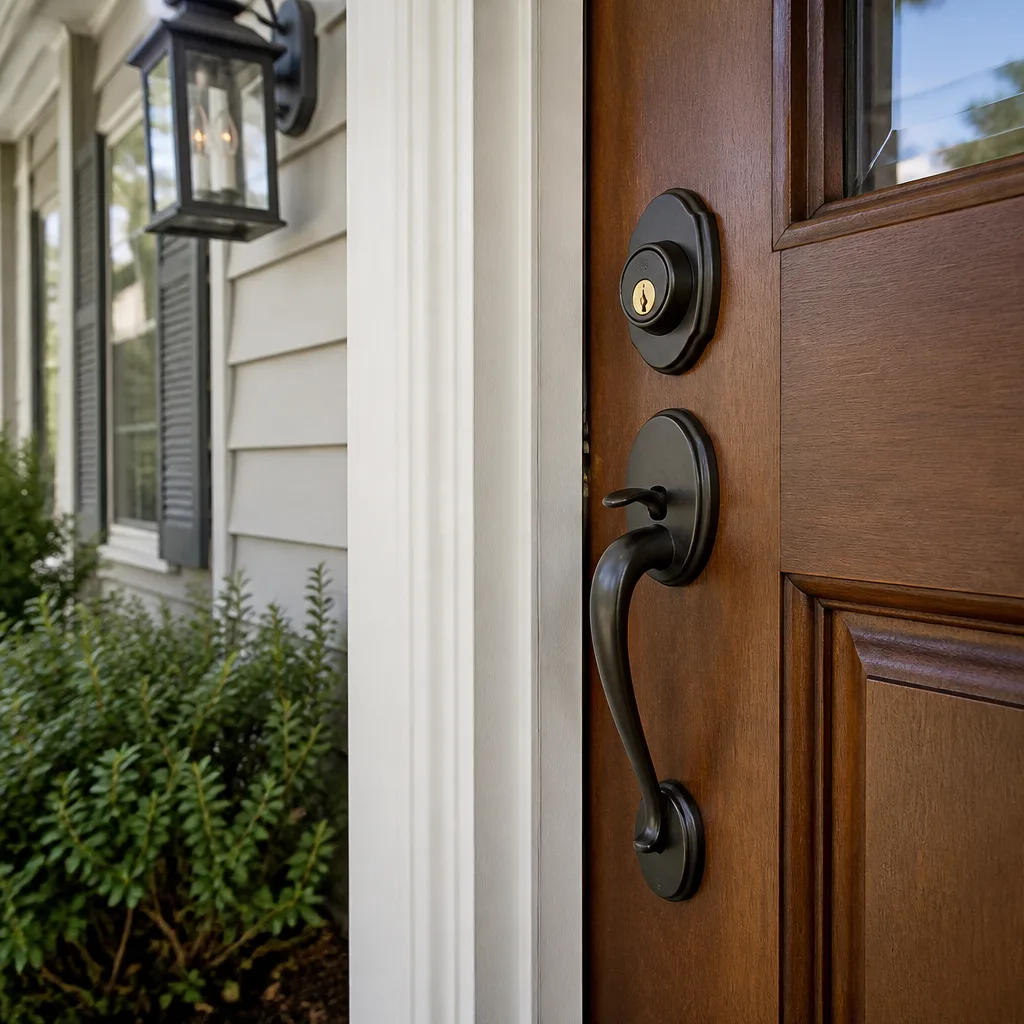
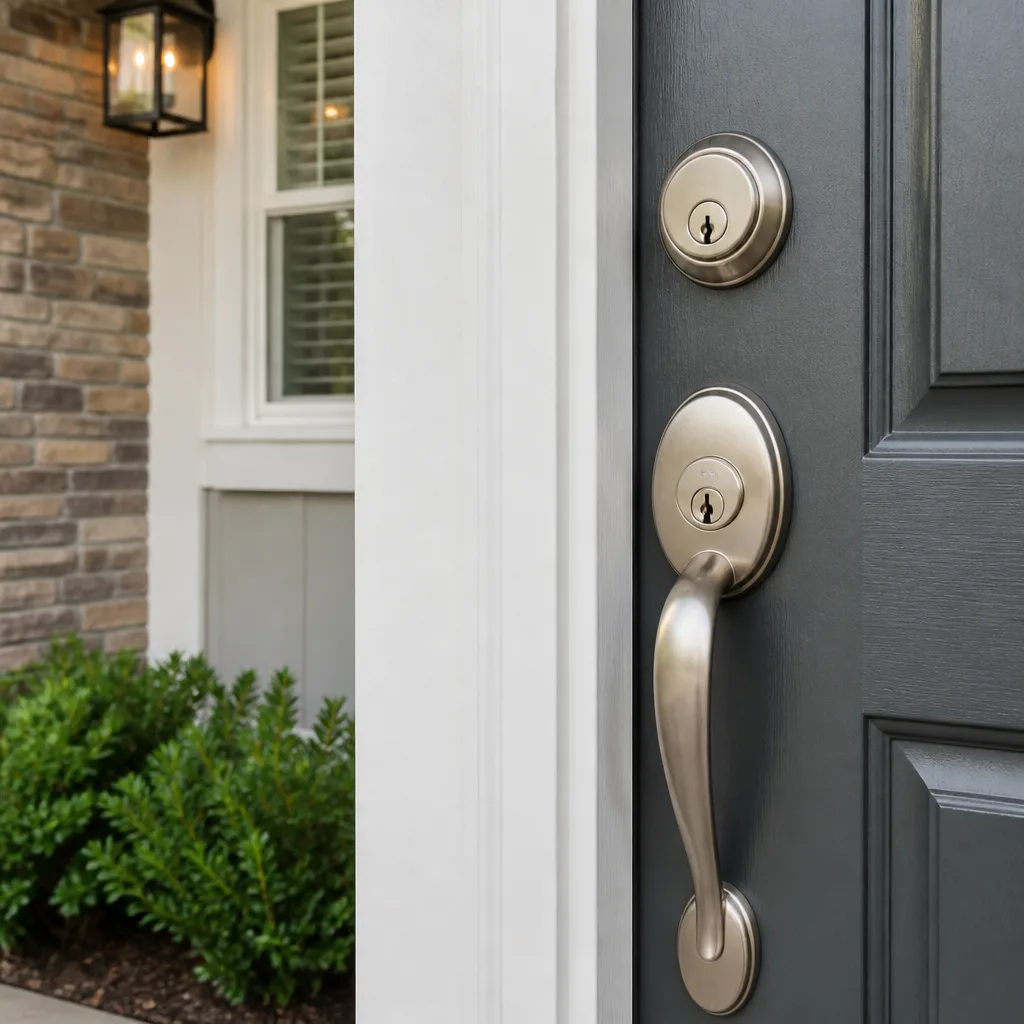
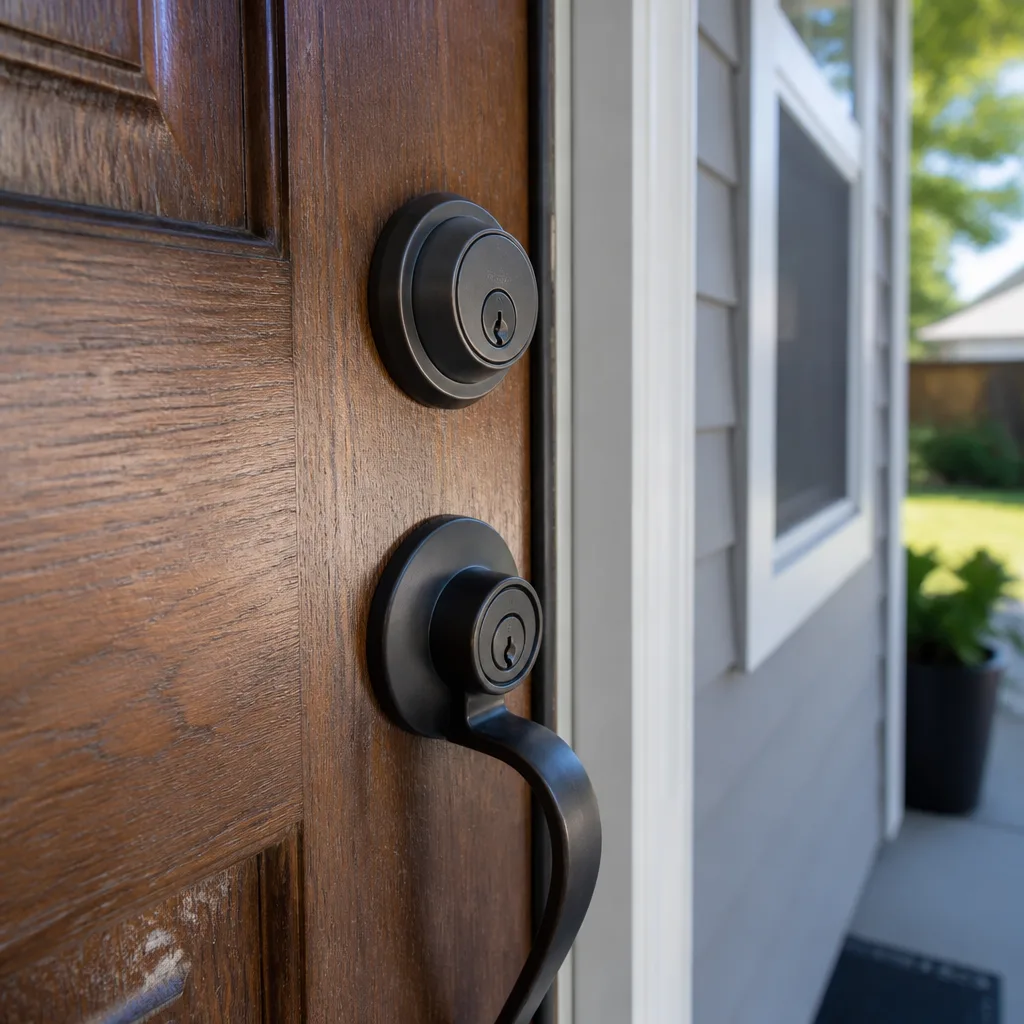
Non-destructive entry first, always - and we re-key Schlage, Kwikset, and Baldwin locks on the spot while you watch
You get a price before we start. It does not change when we arrive. No surprises.
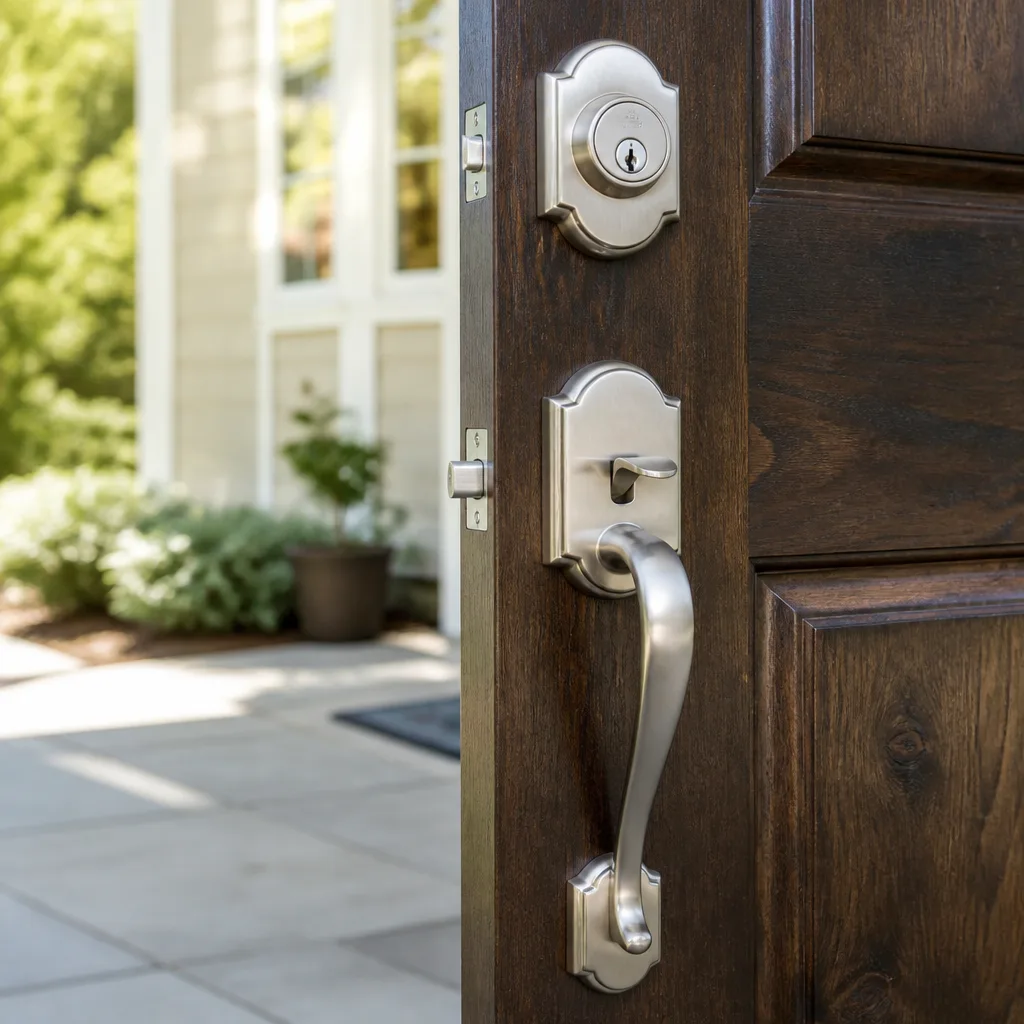
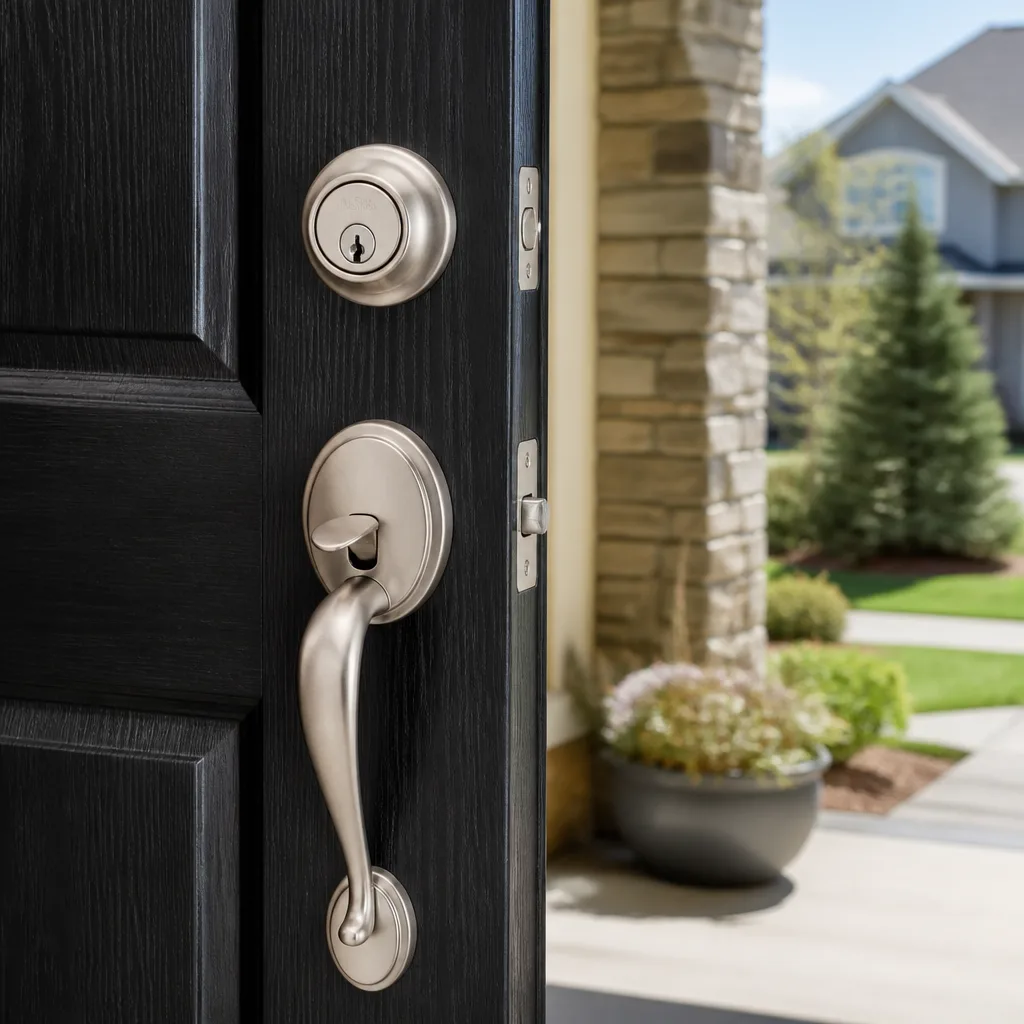
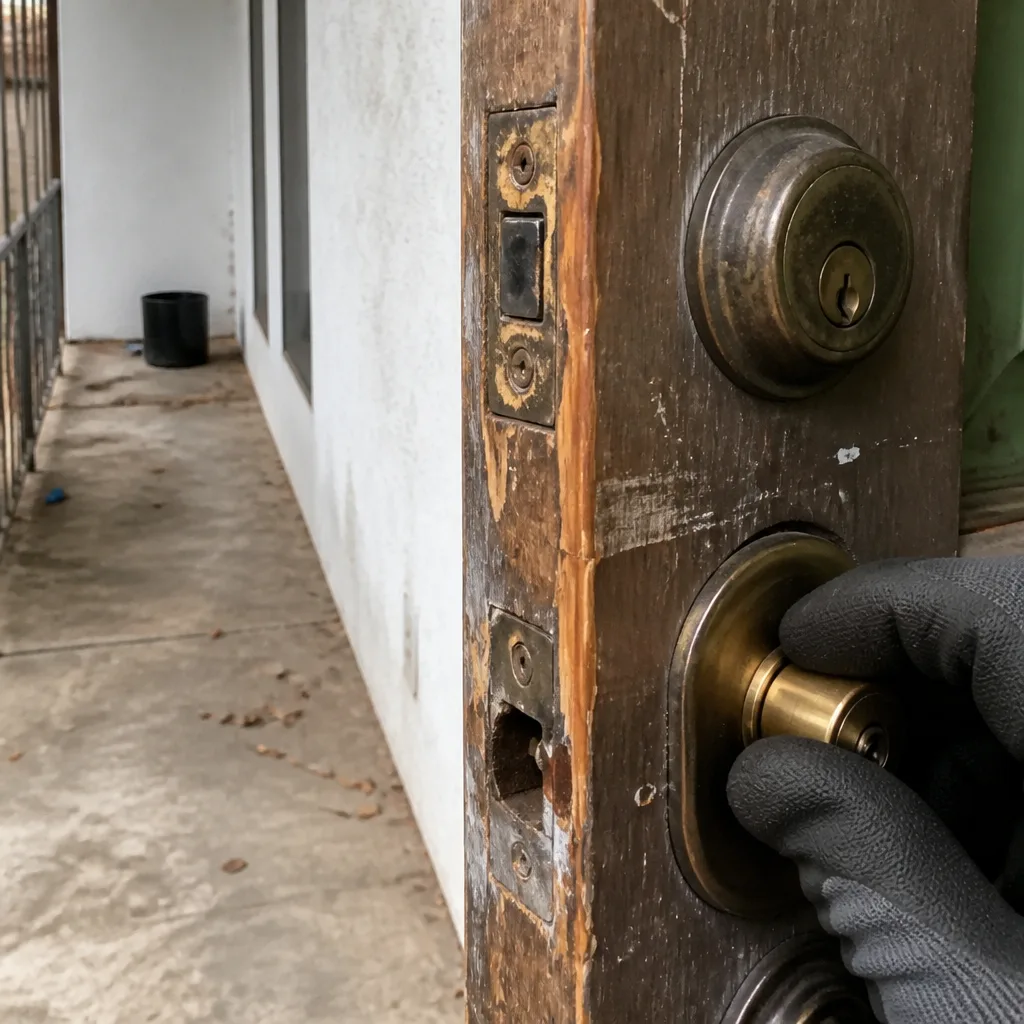 Before
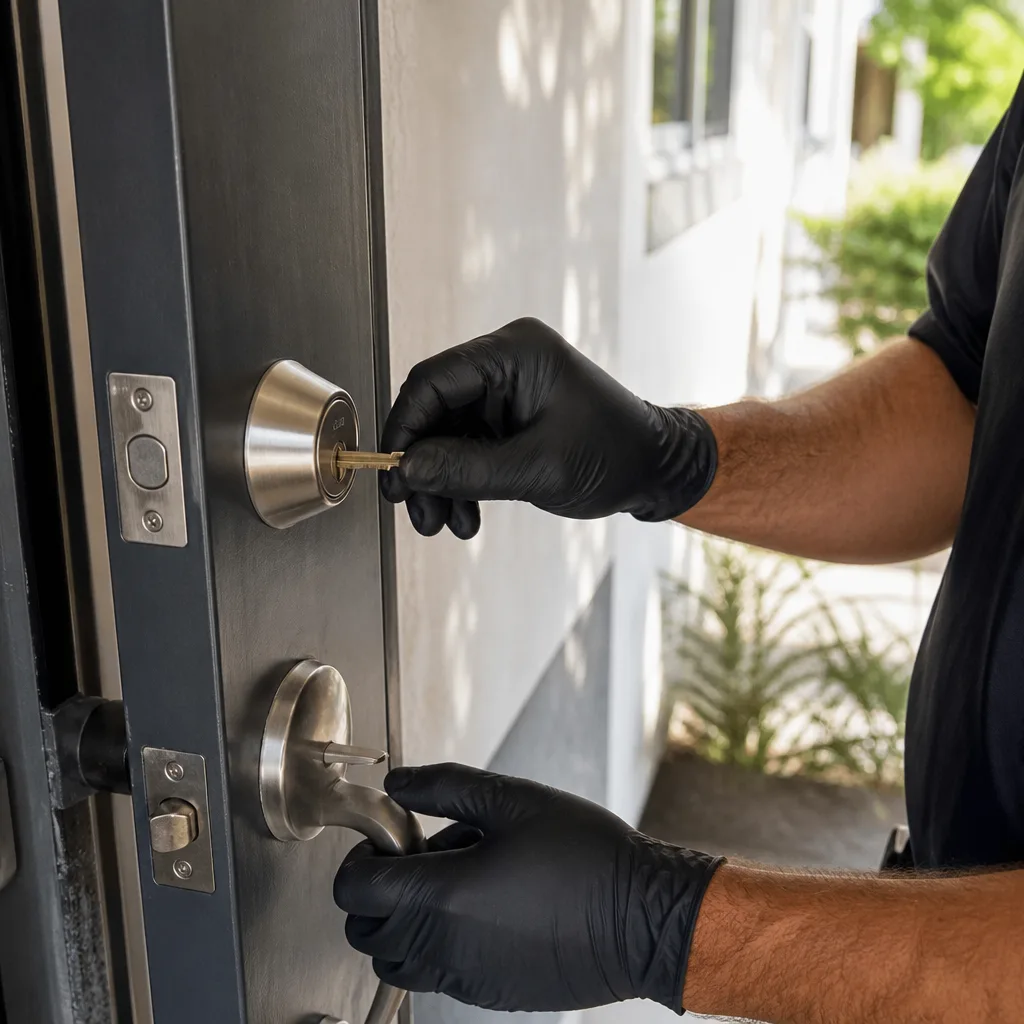 After
AfterLocksmith Permits, Codes & Inspections in CA: What You Need to Know
California runs a two-layer locksmith licensing system that most property owners never see until something goes wrong. The business holds one license, and every employee who touches a lock holds a separate registration. Miss that distinction when you hire someone in Los Angeles, and you can end up paying twice: once for the work, and again to fix what an unregistered technician left behind. This guide walks through the actual rules so you know what requires a licensed hand, what triggers a building permit, and what your obligations are as a property owner before anyone puts a tool to your door hardware. For more guides & resources, see our blog.
Quick Answer
California requires any company performing locksmith work to hold a locksmith business license from the Bureau of Security and Investigative Services (BSIS), and every employee doing that work must carry their own BSIS locksmith employee registration. Locksmith work itself rarely requires a city building permit, but it does when you’re touching fire-rated door hardware, exit devices on commercial doors, or running access-control wiring. Homeowners and landlords who skip verification on either layer can face civil liability, failed property inspections, and denied insurance claims.
Table of Contents
- The BSIS Two-Layer System: Business License vs. Employee Registration
- How to Verify a Locksmith License in California (Step by Step)
- When Locksmith Work Crosses Into Building Permit Territory
- Landlord Obligations Under Civil Code Section 1941: Working Locks as a Habitability Requirement
- HOA and Commercial Properties: Who Owns the Lock, and Who Signs for It
- Unpermitted or Unlicensed Lock Work: What Happens at Sale or Insurance Claim
- Fire-Rated Hardware and Egress Codes: The Part Most People Miss
- Common Mistakes to Avoid
- When to Call a Professional
- Frequently Asked Questions
The BSIS Two-Layer System: Business License vs. Employee Registration
California is one of the few states that regulates locksmiths at both the company level and the individual worker level. The locksmith business license is issued by the Bureau of Security and Investigative Services to the company itself. It means the business has passed a background check at the ownership level, carries the required insurance, and has registered with the state. The locksmith employee registration is a separate BSIS credential issued to each individual technician. That registration requires a fingerprint-based criminal history check through the California Department of Justice and the FBI.
Here’s the part that trips up most customers: a company can hold a valid business license while sending an unregistered employee to your door. That’s a violation of California Business and Professions Code Section 6980.14, and it means the person standing in your doorway has never been fingerprinted or screened by the state. In Los Angeles, where the locksmith market is crowded and referral networks are loose, this happens more often than most property owners assume. Our Locksmith Warning Signs: A Los Angeles Homeowner’s Reference Guide covers red flags to watch for.
The distinction matters because the employee registration is the layer that gets closest to your security. The business license tells you the company is legitimate. The employee registration tells you the specific human being holding your keys has passed a state background check. You want both. At Ridley Locksmith & Security, every technician dispatched to a residential or commercial call in Los Angeles carries a current BSIS employee registration, and our business license is verifiable through the BSIS public lookup. We don’t subcontract lock work to third parties, which is where the verification chain usually breaks.
When a job involves high-security hardware from manufacturers like Medeco or Abloy, the stakes are higher. Those systems use restricted keyways and patented key blanks, and the manufacturer only sells to licensed, vetted partners. An unregistered technician simply cannot obtain those blanks through legitimate channels, which is one practical way the two-layer system self-enforces.
How to Verify a Locksmith License in California (Step by Step)
Verifying a California locksmith takes about four minutes if you know where to look, and it’s the single highest-value check you can make before letting anyone touch your locks. Here’s the sequence we recommend to every Los Angeles homeowner and business operator who calls us after a bad experience with another provider.
- Go to the BSIS license lookup. The Bureau of Security and Investigative Services maintains a free online verification tool at the California Department of Consumer Affairs website. Select “Locksmith Company” and enter the business name or license number.
- Check the license status. Look for “Current” or “Active.” A license listed as “Canceled,” “Suspended,” or “Expired” means the company cannot legally perform locksmith work in California. Do not proceed if the status is anything other than Current.
- Cross-check the address. The BSIS record lists the company’s registered address. A Los Angeles business that has no verifiable physical address in the record is a red flag, because BSIS requires one for the background-checked “qualified manager” who oversees the operation.
- Ask the technician for their personal registration card. Every employee performing locksmith work must carry their BSIS locksmith employee registration card on their person while working. It looks like a state-issued ID with a photo and registration number, and it expires every two years. A technician who cannot produce it on-site is operating illegally.
- Verify the employee registration. Use the same BSIS lookup tool, select “Locksmith Employee,” and enter the registration number or the individual’s name. Confirm the registration is current and matches the name on the card the technician handed you.
In Los Angeles, we’ve replaced hardware on doors that were previously “rekeyed” by unregistered workers, and the telltale signs are usually the same: no registration card on arrival, no written invoice, and a cash-only preference. The verification process above eliminates that entire category of risk before it starts.
When Locksmith Work Crosses Into Building Permit Territory
Plain rekeying and lock replacement on existing doors almost never require a building permit in California. But there are three specific situations where locksmith work steps over the line into permitted territory, and property owners who miss those lines end up with unpermitted work on their hands.
- Fire-rated door hardware. In Los Angeles, any commercial or multifamily door with a fire rating (typically 20-minute, 45-minute, 60-minute, or 90-minute) must carry hardware that matches the door’s original fire listing. Swapping a lever, a closer, or a panic bar on a fire-rated door for a non-listed component changes the door’s fire rating in a way that the Los Angeles Department of Building and Safety (LADBS) treats as a modification to a life-safety assembly. That work falls under permitted scope and often requires a licensed contractor, not just a locksmith.
- Egress-compliant exit devices. Commercial spaces in Los Angeles are subject to California Building Code Chapter 10 exit requirements. If a door serves as a required exit and you change how it latches, locks, or releases, the new hardware must comply with the egress rules that applied when the building was permitted. A locksmith can install the hardware, but the configuration change may need plan review if the door’s egress path is being altered.
- Access-control wiring. Running low-voltage wire for an electronic access system through walls, above ceilings, or across fire-rated assemblies can require an electrical permit and inspection. The City of Los Angeles treats low-voltage access control differently than plug-and-play battery-powered locks, and the distinction is whether the installation penetrates a wall or ceiling assembly.
Most residential lock work in Los Angeles never touches any of these three categories. A rekey on a single-family home in Silver Lake or a deadbolt replacement in the San Fernando Valley is straightforward, unpermitted maintenance. The permit questions start when the door is fire-rated, the building is commercial or multifamily, or wire is being pulled.
Landlord Obligations Under Civil Code Section 1941: Working Locks as a Habitability Requirement
California Civil Code Section 1941 defines what makes a rental unit habitable, and working locks are on that list. Specifically, a landlord must provide and maintain “locking mailboxes” as required, and the broader habitability framework in Section 1941.1 includes “adequate locking devices” as a factor in whether the unit is tenantable. In Los Angeles, the city’s Rent Stabilization Ordinance and the state’s Tenant Protection Act add enforcement weight to this: a unit without a functioning deadbolt or entry lock is a habitability violation, not just an inconvenience.
What does this mean practically for a Los Angeles landlord? If a tenant’s entry lock fails and the landlord delays repair, the tenant has legal remedies that include repair-and-deduct (the tenant pays a locksmith directly and deducts the amount from rent, under Civil Code Section 1942), withholding rent in some cases, or reporting the unit to the Los Angeles Housing Department, which can cite the property. The longer the lock is broken, the larger the landlord’s exposure.
Deadbolts matter specifically because they’re often required by the lease itself or by local habitability standards. A door that only latches but doesn’t deadbolt can still be considered insecure, especially for ground-floor units or units with external entrances in neighborhoods like Koreatown or Westlake, where burglary rates make a functioning deadbolt a practical minimum for tenant safety and landlord defensibility.
For landlords managing multiple units in Los Angeles, the obligation scales. A 12-unit building in North Hollywood has 12 entry locks, 12 deadbolts, and likely common-area hardware that all fall under the same habitability requirement. The fix is rarely one lock; it’s a maintenance posture. We rekey locks for Los Angeles property managers regularly, and the ones who stay out of housing-department trouble treat lock repair as a same-day item, not a scheduled maintenance task. A Rekey Locks Maintenance Checklist for Los Angeles Homeowners can help keep properties compliant. A landlord’s failure to maintain working locks is one of the most avoidable habitability citations in the city.
HOA and Commercial Properties: Who Owns the Lock, and Who Signs for It
In a homeowners association, the legal responsibility for common-area locks usually falls on the HOA’s board and its property management company, while unit owners are responsible for their own front-door hardware. The line is drawn by the governing documents: typically, anything inside the unit’s defined boundaries is owner responsibility, and anything outside (gates, pool doors, laundry rooms, gym entrances, garage access) is association responsibility. In Los Angeles, where many condominium complexes and townhome communities mix both types of hardware, the line gets blurry when a gate serves a subset of units or when a unit door provides the only egress from a common area.
When a Los Angeles HOA hires a locksmith for common-area work, the board should require a written quote that specifies: the exact hardware being installed or rekeyed, the per-door labor cost, the brand and grade of the cylinders (we commonly see Schlage and Baldwin hardware in Los Angeles HOAs), and a written guarantee covering the work. The board should also confirm that the technician doing the work carries a BSIS employee registration, not just that the company holds a business license. If the HOA’s property manager cannot produce both layers of verification, the association is gambling with common-area security.
Commercial properties in Los Angeles carry an additional documentation layer. If the work involves a master key system, access control, or any hardware tied to a certificate of occupancy, the property owner should receive a written record of the work performed: which doors were rekeyed, which cylinders were replaced, what the new key-control structure is, and whether any fire-rated hardware was altered. That documentation becomes material during a sale, a refinance, or an insurance claim after a break-in. We provide that written record on every commercial job because we’ve seen what happens when a building is sold and the buyer discovers the previous owner can’t account for who holds keys to the mechanical room.
Unpermitted or Unlicensed Lock Work: What Happens at Sale or Insurance Claim
Unlicensed lock work has a way of surfacing at the worst time: during escrow, when the buyer’s home inspector checks every door and asks for documentation, or during an insurance claim, when the adjuster questions whether the hardware was installed by a licensed provider. Here’s what happens in Los Angeles in each scenario.
At sale. A buyer’s home inspector in Los Angeles will typically check that all exterior doors latch and deadbolt correctly, that garage access doors are secure, and that any electronic access systems function. If a door has hardware that was installed without a permit where a permit was required (for example, a new electronic access system wired through a wall in a multifamily building), the disclosure process forces the seller to either disclose the unpermitted work or fix it before close. An undisclosed, unpermitted access-control installation can blow up a deal or trigger a post-sale claim.
At insurance claim. If a homeowner files a burglary claim and the insurer determines that a prior locksmith repair left the entry door non-functional or the deadbolt was improperly installed, the claim can be reduced or denied. Insurers in California have denied claims where the door hardware didn’t lath or deadbolt properly, arguing that the homeowner failed to maintain the property in a secure condition. A written work order from a licensed locksmith showing the hardware was installed and working is the homeowner’s best defense.
The pattern we see in Los Angeles is simple: property owners who use unlicensed workers for lock work almost never get a written record of what was done, because the unlicensed worker doesn’t want a paper trail. That missing paper is what costs them at sale or claim time. The repair itself might hold up fine, but the documentation is what the transaction demands. A licensed locksmith provides a written record as a matter of course, and that’s part of what you’re paying for.
Fire-Rated Hardware and Egress Codes: The Part Most People Miss
Here’s a scenario we see in Los Angeles commercial buildings more often than we’d like: a business owner replaces a broken lever on a fire-rated back door with whatever handle the hardware store had in stock. The new lever works fine, the door opens and closes, and everyone moves on. What the owner doesn’t know is that the replacement lever isn’t listed for that door’s fire rating. The door’s fire-resistant assembly is now compromised, and the LADBS or the fire marshal can flag it during a routine inspection.
California fire code matters here because fire-rated doors are tested as a complete assembly: door, frame, hinges, closer, latch, and lever. Swap any one component for a non-listed part and the assembly’s rating is no longer valid. The same applies to exit devices, panic bars, and electromagnetic locks on doors that serve as required exits.
For Los Angeles commercial property owners, the practical rule is this: if the door has a metal tag on the hinge edge with a fire rating, or if you’re in a building that the fire department inspects, the hardware on that door needs to match the original listing. That work should be documented. Sargent and other commercial-grade manufacturers build hardware specifically for these assemblies, and the paperwork matters as much as the metal.
Egress requirements add another layer. Doors along an exit path in a commercial building must open with a single motion without a key, a keycard, or special knowledge. Deadbolts on those doors are generally prohibited. If a tenant asks us to add a deadbolt to a commercial door that serves as a required exit, we decline unless the building’s egress configuration is being formally revised, and we explain why in writing. That refusal is the difference between a locksmith who knows the code and one who just does what the customer asks.
Common Mistakes to Avoid
- Hiring a company without verifying the business license. A logo on a van is not a license. In Los Angeles, unlicensed operators buy magnetic signs online and run ads that make them look legitimate. Check the BSIS lookup before you book, not after the work is done.
- Accepting a technician who can’t produce an employee registration card. The card is the size of a driver’s license, carries a photo and registration number, and must be produced on-site. No card means no state background check, full stop.
- Assuming a building permit is never needed. For a standard residential rekey, that’s true. For fire-rated hardware, exit devices on required egress doors, or access-control wiring that penetrates walls, the permit conversation starts. Los Angeles commercial and multifamily properties carry this risk most.
- Not getting a written record of the work. A receipt that says “rekeyed two locks, $90 cash” will not help you in an insurance claim or a property sale. A detailed work order from a licensed provider will. One is a paper trail; one is a memory.
- Letting a landlord lock problem slide. If you’re a tenant in Los Angeles and your deadbolt has been broken for weeks, you have legal remedies under Civil Code Section 1941 and Section 1942. Document the issue in writing, then pursue repair-and-deduct or housing department enforcement if the landlord doesn’t act.
- Replacing fire-rated hardware with off-the-shelf parts. The $40 lever from the big box store can invalidate a $4,000 fire-rated door assembly. In LADBS and fire marshal inspection territory, that’s a citation waiting to happen.
- Using a master key system without documented key control. Whoever created your master key system should have left you with a written key hierarchy and a record of who holds which keys. Without it, a departing employee with a grand master means you’re rekeying the entire building in a panic.
When to Call a Professional
There are moments when the right move is to call someone who already knows the answer, and lock work gives you plenty of them. Call a licensed locksmith when your entry deadbolt is jammed and you can’t secure the door, when a lock has been damaged in a break-in attempt, when you need a rekey after a tenant or employee departs and you don’t know who might hold copies of the key, when you’re installing high-security hardware from brands like Mul-T-Lock or Baldwin that require specific expertise, or when a commercial door on a fire-rated assembly needs hardware matched to its listing. In Los Angeles, the cost of guessing wrong is a door that doesn’t secure, a code violation, or a claim you can’t defend. Ridley Locksmith & Security offers free estimates in Los Angeles: call (956) 275-7388 and a licensed technician will assess the work and give you a written price before anything starts.
Frequently Asked Questions
Yes. California requires any company performing locksmith work to hold a locksmith business license from the Bureau of Security and Investigative Services, and every employee performing that work must carry an individual BSIS locksmith employee registration. Both layers are mandatory, and operating without either is a violation of the Business and Professions Code.
Residential rekeying in Los Angeles typically ranges from $80 to $180 per lock for labor plus per-cylinder hardware, a deadbolt replacement usually runs $120 to $250 installed, and commercial service calls with rekeying or hardware replacement commonly land between $150 and $400 depending on hardware grade and door condition. The exact price depends on the specific hardware and the condition of the door, and a written quote before work starts is standard for a legitimate provider.
Yes, a homeowner or business owner can legally rekey their own locks on property they own or control. The licensing requirements apply to companies and individuals offering locksmith services for compensation, not to property owners working on their own hardware. That said, rekeying standard Schlage or Kwikset cylinders requires pinning tools and some patience, and high-security cylinders from Medeco, Mul-T-Lock, or Abloy are not rekeyable without manufacturer-specific tooling and authorized pins.
For a standard lock replacement or rekey on a single-family home or a standard commercial door, no building permit is required. A permit may be required when the work involves fire-rated door hardware, exit devices on required egress doors, or access-control wiring that penetrates wall or ceiling assemblies. Los Angeles commercial and multifamily properties should have a licensed professional assess the door type before any hardware change.
Use the BSIS license lookup on the California Department of Consumer Affairs website. Search for the company name under “Locksmith Company” and confirm the status is Current. Then ask the technician to show their BSIS employee registration card and verify that number under “Locksmith Employee.” Both checks together confirm the two-layer licensing requirement has been met.
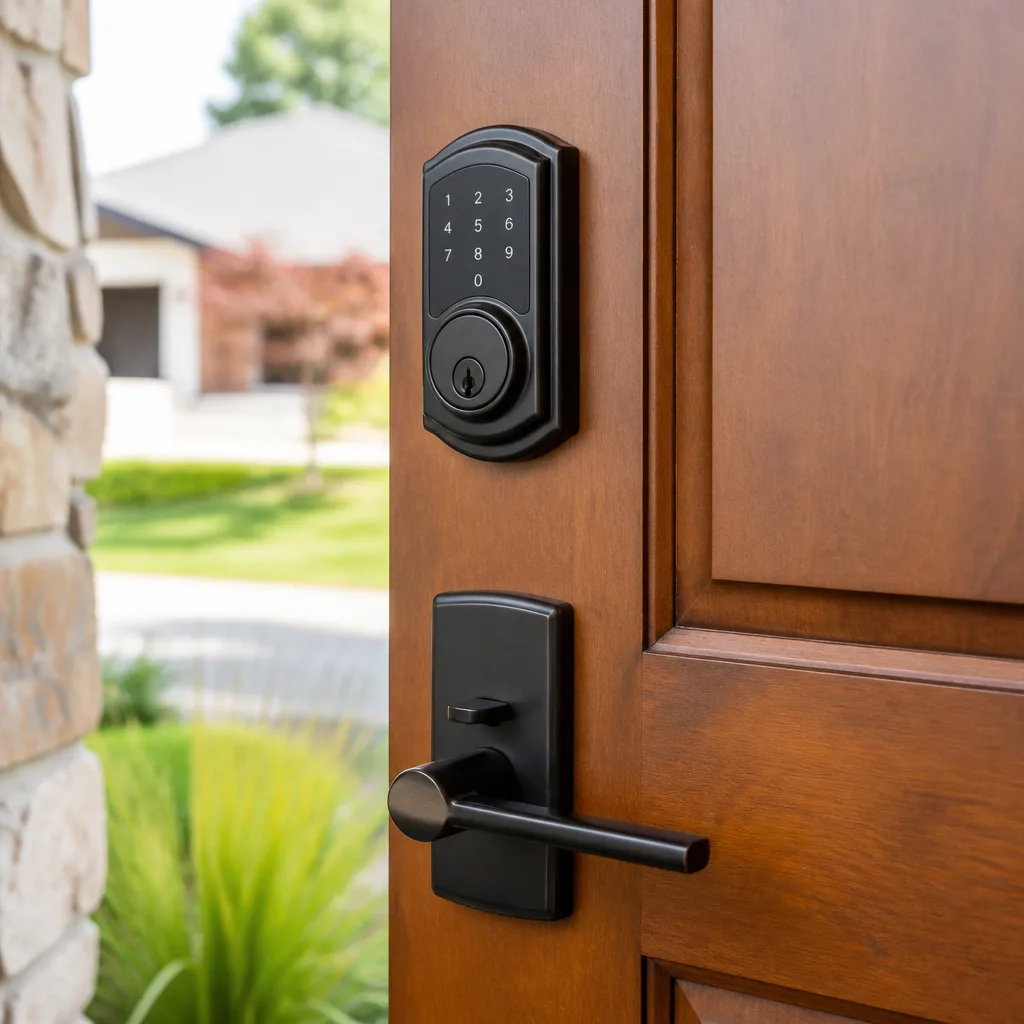
It depends on the scope. A battery-powered keypad lock or a simple card reader mounted on a door is locksmith work. Running wire through walls, above ceilings, or across fire-rated assemblies for an electronic access system may require a licensed contractor and an electrical or low-voltage permit, especially in commercial buildings subject to Los Angeles inspection. A licensed locksmith will tell you the difference up front, and in our experience, the permitting conversation should happen before any wire is pulled.
Need an exact quote for your lock or access-control work in Los Angeles? Call (956) 275-7388 for a free estimate, and a licensed technician will give you a written price before any work begins.
The Bottom Line
California’s locksmith licensing framework is two layers deep: a business license for the company and an employee registration for every technician who touches your locks. Property owners in Los Angeles who verify both layers before any work begins eliminate most of their risk. The permit conversation matters only in specific circumstances: fire-rated doors, egress hardware, and access-control wiring. And for landlords, the obligation to maintain working locks is not a courtesy; it’s a legal duty under Civil Code Section 1941, enforceable by tenants and the housing department. The fix for all of this is the same: hire a licensed, registered provider who gives you a written price before the work and a written guarantee after. For ongoing care, follow a Rekey Locks Maintenance Schedule: What to Do and When. That paper trail is what protects you when the sale, the inspection, or the claim shows up.
If you need a Residential Locksmith in Los Angeles or Commercial Locksmith in Los Angeles, Ridley Locksmith & Security is part of the Garrison Partners family, operating to The Garrison Standard since 2007. We rekey locks for Los Angeles property owners every day, and every job carries a written price before work begins and a written one-year guarantee under our 365-Day Done Right Promise. For more on our rekeying work, see Rekey Locks in Los Angeles or return to our Ridley Locksmith & Security home page.
Written by Drew Kowalski, Owner at Ridley Locksmith & Security, serving Los Angeles since 2007.