
Last updated October 9, 2026
Non-destructive entry first, always - and we re-key Schlage, Kwikset, and Baldwin locks on the spot while you watch
You get a price before we start. It does not change when we arrive. No surprises.
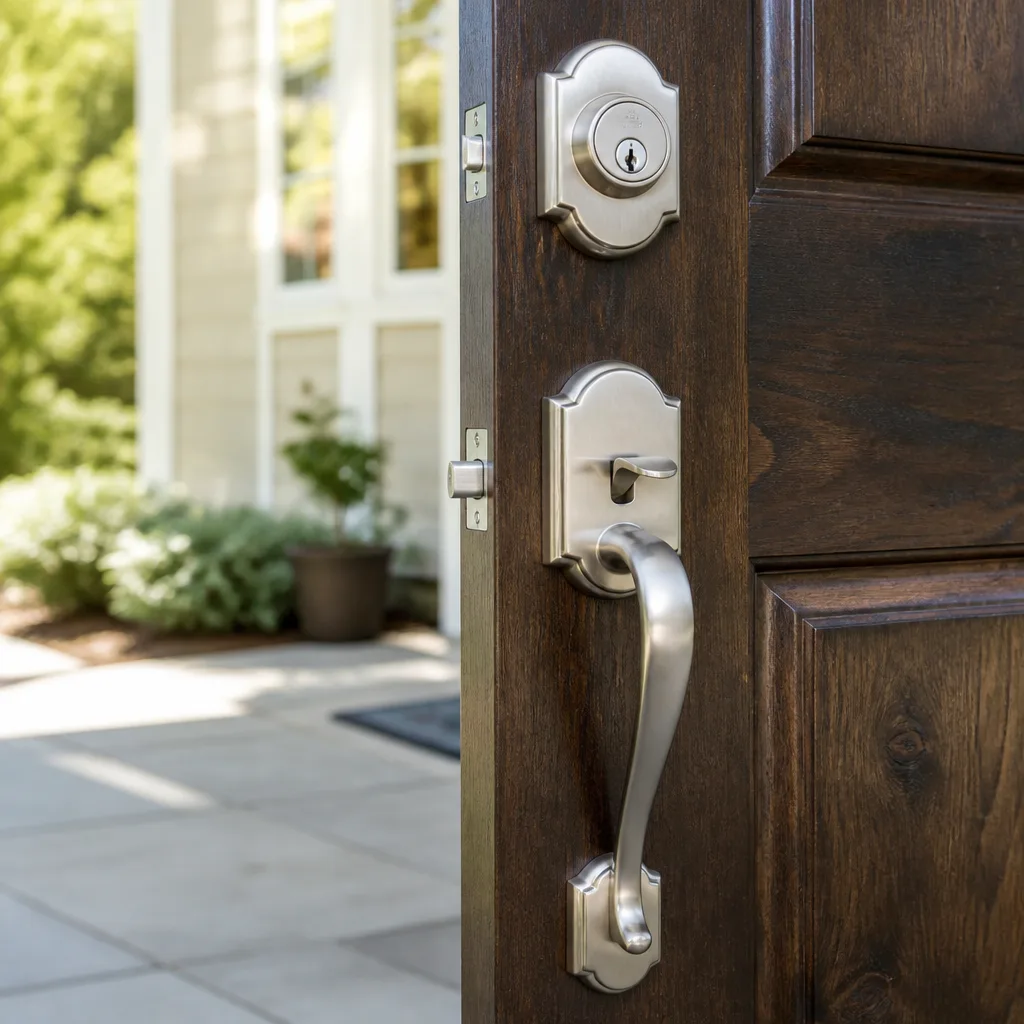
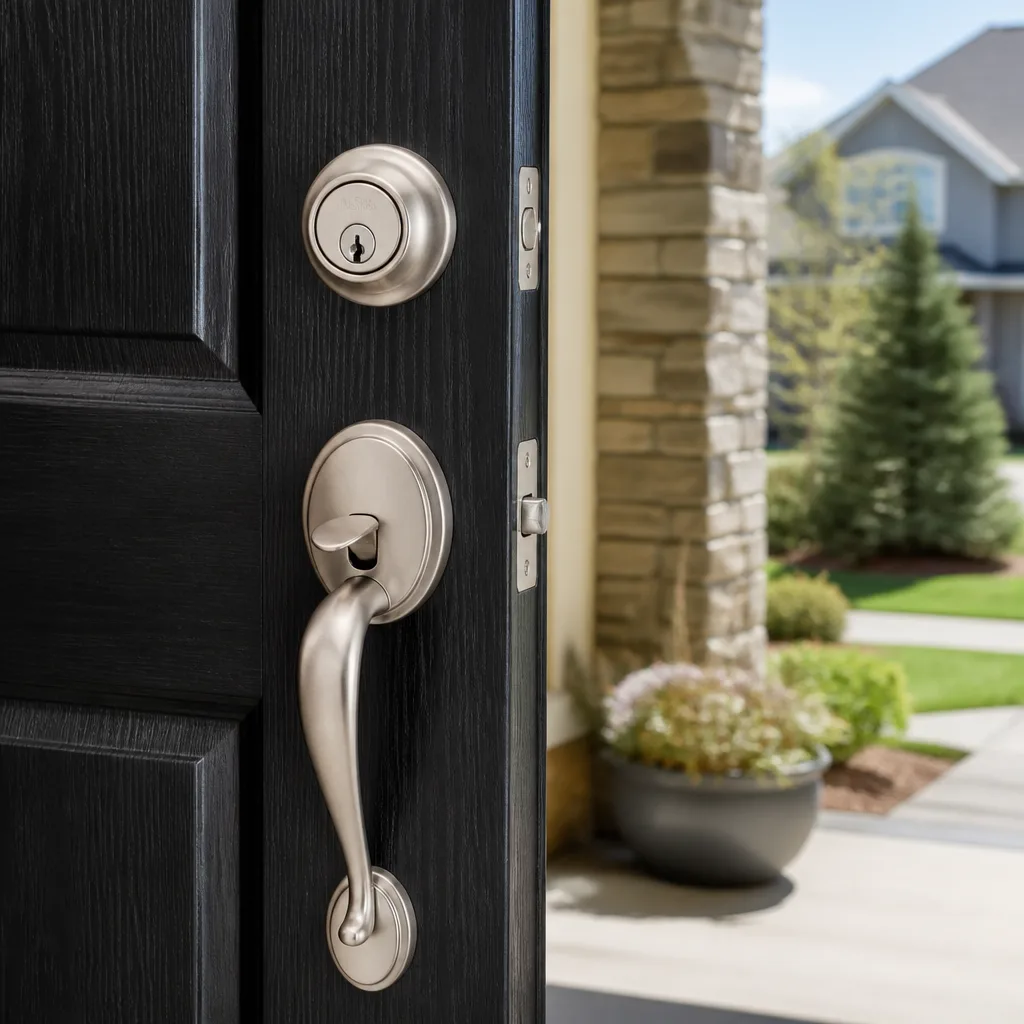
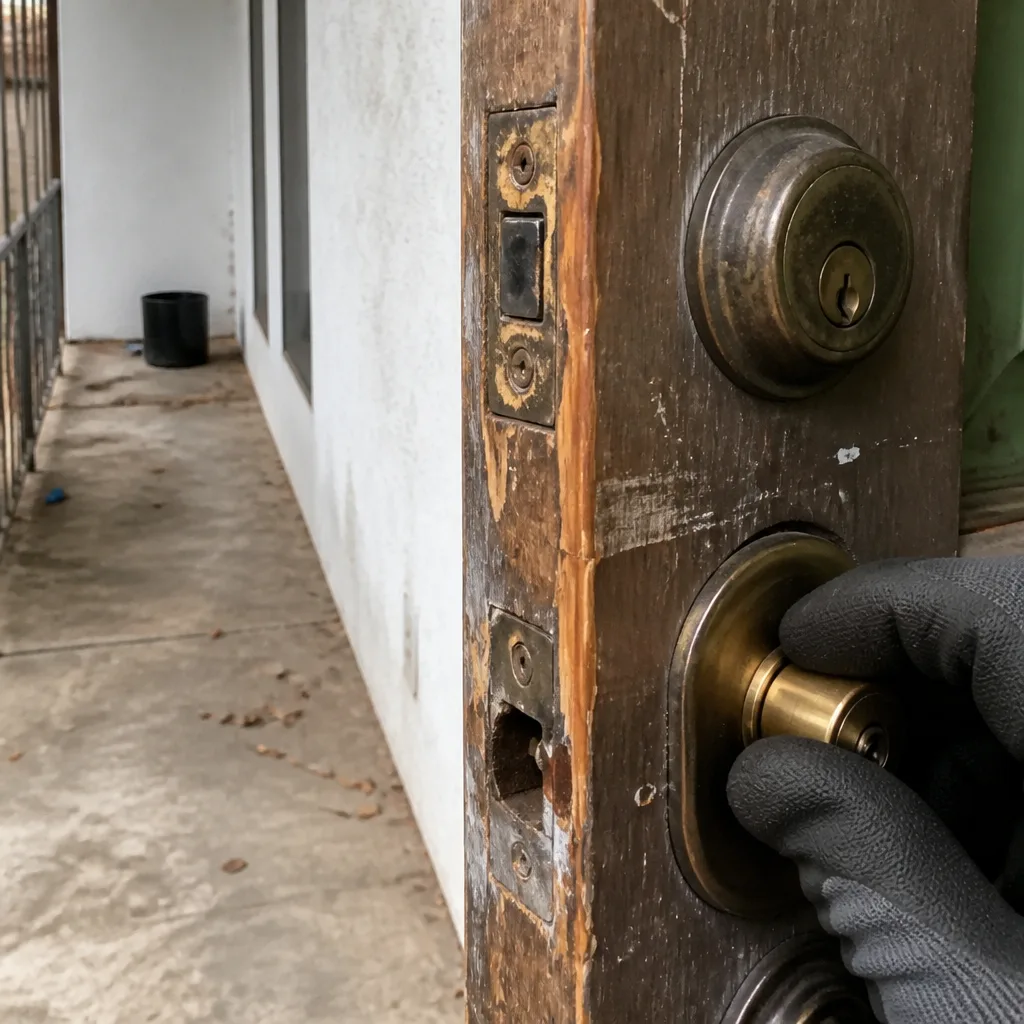 Before
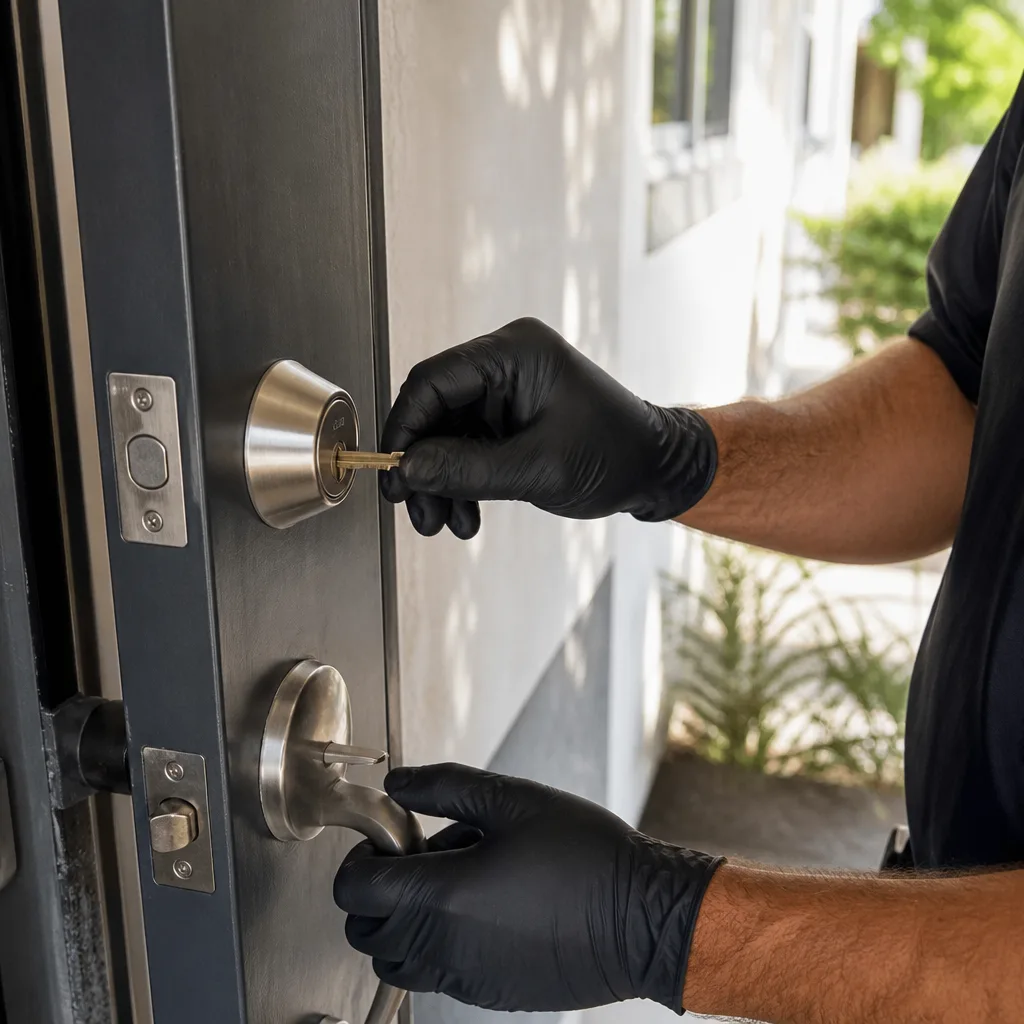 After
AfterHow to Hire a Locksmith Contractor in Los Angeles: A Step-by-Step Guide
Most people choose a locksmith by typing a search query, clicking the first result with decent reviews, and calling. That sequence puts price and proximity first and licensing last, which is exactly why locksmith fraud complaints to the California Attorney General’s office spike every year after major storms, earthquakes, and holiday weekends when people are stressed and moving fast. This guide reverses that order. You’ll learn how to vet a locksmith contractor in Los Angeles the way a security professional would: credentials first, accountability second, price third. By the time you reach the phone call, you’ll know exactly what questions to ask and which answers separate a legitimate operation from a broker with a rented ad slot.
Quick Answer
To hire a locksmith contractor in Los Angeles, verify their California BSIS locksmith license on the state’s public lookup portal before calling, confirm they have a physical business address you can visit, require a written price before any work starts, and check that the technician who arrives carries ID, a license copy, and drives a marked vehicle. A legitimate Los Angeles locksmith will pass all four checks without hesitation. Anyone who stalls on any of them should be crossed off the list.
Table of Contents
- Step 1: Verify the BSIS License in Real Time
- Step 2: Confirm the Physical Business Address Is Real
- Step 3: Understand the Quote Structure Before a Tech Arrives
- Step 4: Know What the Technician Should Present at the Door
- Step 5: Ask About Guarantees and Accountability Structures
- Step 6: Compare Pricing the Right Way
- Step 7: Read the Scope Before You Sign
- Common Mistakes to Avoid
- When to Call a Professional
- Frequently Asked Questions
- The Bottom Line
Step 1: Verify the BSIS License in Real Time
California requires every locksmith company to hold a license from the Bureau of Security and Investigative Services, known as BSIS, and there are specific Locksmith Permits, Codes & Inspections in CA: What You Need to Know that govern how they operate. This is not optional, and it’s not something you take a contractor’s word for. The license number should be printed on the company’s website, their business cards, and their invoices. But a printed number proves nothing. Anyone can type ten digits into a footer.
What you actually do is open the BSIS public license lookup portal at search.dca.ca.gov, select “Locksmith Company” from the license type dropdown, and enter the business name or license number. The portal shows you the license status in real time: active, expired, suspended, or revoked. It also shows the license issue date and any disciplinary actions on file. A license that’s been active since 2010 with zero actions tells you something different than one issued three months ago under a name that’s already been flagged.
In Los Angeles specifically, the locksmith broker ecosystem is dense. Brokers are companies that hold a license themselves but then dispatch independent contractors who may not be licensed at all. You call a number, get a call center, and a tech shows up in an unmarked car. The BSIS lookup will confirm the company’s license exists. What it won’t tell you is whether the person at your door actually works for that company. That’s what Steps 2 and 4 are for.
If a locksmith refuses to give you a license number, or gives you one that doesn’t match the business name, or their license status shows anything other than active, stop there. Do not call them. Do not let them send anyone to your home in Los Angeles. A revoked license means the state has already found cause to pull their authorization. An expired one means they’re operating illegally right now.
Step 2: Confirm the Physical Business Address Is Real
A surprising number of locksmith listings in Los Angeles trace back to virtual offices, coworking mailbox suites, or addresses that turn out to be a UPS Store on Wilshire. That’s a red flag for how the operation handles accountability. If there’s no physical shop, there’s no place to walk into when something goes wrong. There’s no storefront where a manager has to face you. There’s just a phone number and a dispatcher who may or may not answer after the job is done.
Open Google Maps and look at street view. Is the address a storefront with signage, or a strip-mall suite with no markings, or a residential building? A legitimate locksmith serving the Los Angeles market will have a real location. In our experience, the shops worth hiring are the ones where you could drive over, stand at the counter, and talk to a human being about your lock hardware. That doesn’t mean every good locksmith has a retail showroom, but they all have a verifiable operating address that isn’t a mailbox rental.
Call the number and ask a simple question: “Can I stop by your shop to drop off a lock for rekeying?” If the answer is that they’re mobile-only and don’t have a location you can visit, that’s the broker pattern. It doesn’t automatically mean fraud, but it does mean you’re dealing with a dispatch layer, and dispatch layers are where Los Angeles locksmith complaints originate. You want a contractor with skin in the local geography.
Ridley Locksmith & Security is part of the Garrison Partners family, independently owned and operated under The Garrison Standard since 2007. That standard includes a physical presence and technicians who are background-checked, uniformed, and dispatched directly, not subcontracted to whoever’s nearest. The difference shows up at your door in Los Angeles before the work even starts.
Step 3: Understand the Quote Structure Before a Tech Arrives
The single biggest source of locksmith complaints in Los Angeles is not bad workmanship. It’s the price that changes between the phone call and the invoice-something we break down in our Locksmith Cost Breakdown: The Los Angeles Homeowner’s Reference for 2026. Here’s how the two quote structures work so you can tell them apart before anyone shows up.
A bait-and-switch quote sounds like this: “Service call is $19, plus parts and labor.” That $19 is the bait. The tech arrives, looks at your lock, and suddenly the job is $400 because the parts are “special” or the lock is “high security” or your door is “non-standard.” The parts were never going to be $19. The price was designed to get a body to your door where the real negotiation begins and you’re already invested.
A legitimate quote works differently. It’s either a flat rate for the job, given in a range on the phone and confirmed in writing before any work starts, or it’s an itemized scope: labor, hardware, and any trip fee spelled out as line items. In Los Angeles, residential rekeying typically runs $80 to $160 for the first cylinder and $15 to $30 per additional cylinder, depending on the lock brand. Deadbolt installation with a new lock typically runs $120 to $250, including the hardware. A full home rekey of five to seven locks typically lands in the $200 to $400 range. These are the numbers you should expect.
Every job that Ridley Locksmith & Security performs in Los Angeles carries a written price delivered before any work starts. Not an estimate that moves. The price on the phone is the price on the invoice. This is written into the standing offer, not buried in fine print. If a contractor won’t commit to a written price before dispatching, that’s the conversation ending.
Step 4: Know What the Technician Should Present at the Door
When a legitimate locksmith technician arrives at your home in Los Angeles, three things should be immediately visible before you let them touch a lock.
- A marked vehicle. The van or truck should carry the company’s name and logo. An unmarked personal car is the signature of a subcontractor working under a broker’s license. You called a company. A company should show up.
- Company ID. The technician should present a badge or photo ID with their name and the company’s name on it. Not just a business card. An actual identification credential. In the Garrison Partners system, every technician carries company ID and wears a uniform, because the person at the door is the company, not a stranger with a drill.
- A copy of the BSIS license. State law requires locked-and-bolt companies to have their license available. A technician who can produce a copy on request is operating inside the system. A technician who gets vague when you ask is not.
What do you do if any element is missing? You don’t have to make it confrontational. You simply say, “I’m going to need to see your company ID and license before we proceed.” A professional will have those in hand. A broker’s subcontractor will have a phone call to make. That hesitation is your answer. In our experience across Los Angeles neighborhoods, the techs who can’t produce credentials are exactly the ones whose work you’ll be paying someone else to fix within a year.
Step 5: Ask About Guarantees and Accountability Structures
Here’s the question that separates a contractor from a transaction: “What happens if the work fails six months from now?” Listen carefully to the answer, because the structure of the answer tells you everything about the structure of the company.
A solo operator’s answer is usually a verbal promise: “We’ll take care of you.” That’s not a guarantee. That’s a mood. A week later, the solo operator’s phone rings and rings. There’s no dispute resolution path because there’s no organization behind the promise.
A structured operation answers with a document. Ridley Locksmith & Security operates under The Garrison Standard, which includes the 365-Day Done Right Promise. Every repair carries a written guarantee covering the work for one full year. If the repair fails inside that window, Ridley returns and makes it right at no charge. The second visit isn’t a courtesy. It’s automatic. It’s written down, and the document follows every invoice. That’s the difference between a person’s word and a system you can hold.
Ask about background checks, too. In Los Angeles, a locksmith contractor is someone you hand physical access to your home or business. You want to know that the company runs background checks on every technician, not just the owner. Ask whether the technicians are employees or subcontractors. Ask who you call if the work fails at 11 p.m. on a Tuesday. The Garrison Code, which governs how Ridley Locksmith & Security operates in Los Angeles, exists so there’s a named standard behind every answer, not a shrug.
Step 6: Compare Pricing the Right Way
By now you’ve verified the license, confirmed the address, understood the quote structure, and seen the credentials. Only now does price enter the conversation. Most people do this backwards, comparing three quotes before checking a single license, which is how a low price from an unlicensed operator ends up looking like a deal.
When you reach the pricing conversation with a vetted contractor, ask these three questions in this order:
- Is the price you’re giving me now the exact price I’ll pay when the job is done? If the answer is anything but yes, in writing, keep moving.
- Does the price include all labor, hardware, and trip fees? Legitimate contractors in Los Angeles itemize this without being asked. If you have to drag it out of them, that’s a negotiation, not a quote.
- What happens if I have a problem after you leave? The guarantee question again, because it’s the cheapest insurance you’ll ever buy.
We’ve worked on Schlage, Kwikset, Yale, and Baldwin hardware every week in Los Angeles homes, and we also service and install high-security cylinders from Mul-T-Lock, Sargent, and Medeco. Different hardware carries different price points. A Kwikset deadbolt install costs less than a high-security Sargent cylinder replacement. A legitimate contractor explains those differences upfront instead of discovering them at your door. The moment a contractor’s price shifts without a written change order, the conversation has moved from sales to something else.
Step 7: Read the Scope Before You Sign
The written price should come with a written scope of work. Read it. Every line. The scope is your evidence if the job goes sideways, and it’s the contractor’s instruction set for what “done” means.
A proper scope for a residential rekey in Los Angeles reads something like: “Rekey four entry cylinders, two Schlage deadbolts, one Baldwin entry handle, one Kwikset passage knob. Key all four cylinders to new key set. Provide four copies of each key. Remove all old pins, install new pin stacks. Test all locks for smooth operation. All work guaranteed for one full year.” That’s a scope. A scope that reads “fix locks” is a blank check with your signature on it.
For commercial work, the scope should include the door schedule: which doors, which cylinders, what keying hierarchy if it’s a master key system. Master keying means one key opens all doors while individual keys open only assigned doors. If your commercial contractor can’t explain the hierarchy they’re proposing in plain English, they don’t understand it well enough to build it. In Los Angeles, commercial locksmith work on older buildings often means working with Yale and Sargent legacy hardware that requires real training to service correctly. That training shows up in the scope, not the sales pitch.
Common Mistakes to Avoid
- Hiring in a panic. Lockouts create urgency, and urgency creates bad decisions. If you’re locked out, the same vetting rules apply. Know a vetted contractor before you need one. Save the number.
- Trusting the first search result. Paid ads dominate locksmith search results in Los Angeles. A top ad slot is a marketing budget, not a credential. Start with the BSIS lookup before you click.
- Accepting a “service call fee plus parts” structure. That’s the bait. Legitimate contractors quote the job, not the arrival. Require a written all-in price before anyone dispatches.
- Skipping the license check because reviews look good. Reviews can be purchased. Licenses can’t. Verify the BSIS number every single time, even for a contractor your neighbor recommended.
- Letting an unmarked car and unbadged tech proceed. You wouldn’t let an unmarked car “police officer” into your home. Why let an unmarked locksmith touch your locks? Credentials at the door, every time.
- Signing a blank work order. Without a scope, you’ll have no documentation if the work fails. A written scope is your leverage. Refuse to sign anything that doesn’t describe the work in specific terms.
- Choosing the lowest bid by default. In locksmithing, the lowest bid is often a loss leader designed to recover margin at the door. Compare vetted contractors on price, never unvetted contractors on vibes.
When to Call a Professional
Some jobs are never DIY. If you’re locked out and considering forcing a window, call a professional. If a deadbolt won’t throw and your home security depends on it, call. If you’ve moved into a new home in Los Angeles and don’t know how many previous tenants or owners have keys to the existing locks, that’s the textbook moment to rekey locks in Los Angeles so old keys stop working without replacing the hardware. Rekeying means changing a lock’s internal pins so existing keys no longer turn the cylinder. It’s the fastest way to reset physical access to a property when you don’t know who else holds a key. Commercial properties with employee turnover face the same issue on a larger scale, and a commercial locksmith in Los Angeles can build a key control system that documents every key and every holder. For residential work, a residential locksmith in Los Angeles handles lockouts, deadbolt upgrades, and whole-home rekeys. Ridley Locksmith & Security offers free estimates in Los Angeles. Call (956) 275-7388 and you’ll get a live person, 24 hours a day, seven days a week, who can give you a written price before any technician is dispatched. No voicemail, no answering service.
Frequently Asked Questions
Go to the BSIS public license lookup portal at search.dca.ca.gov, select “Locksmith Company” as the license type, and search by business name or license number. The portal shows the license status, issue date, and any disciplinary actions. Never accept a printed license number without verifying it on the portal yourself. A live, active status is the minimum standard for any locksmith contractor working in Los Angeles.
Residential rekeying in Los Angeles typically runs $80 to $160 for the first cylinder and $15 to $30 per additional cylinder. Deadbolt installation with new hardware typically runs $120 to $250. A full home rekey of five to seven locks lands between $200 and $400. Anyone quoting far below that is carrying a bait price, and anyone far above it should be explaining exactly why. Call (956) 275-7388 for an exact written quote. Estimates are free.
With a legitimate contractor, yes. The written price is the price on the invoice, full stop. Ridley Locksmith & Security delivers a written price before any work starts, on every single job in Los Angeles, and there is no call-out surcharge added at the door. If a contractor’s price shifts after they arrive, you are not obligated to proceed. Send them away.
A marked company vehicle, a company photo ID with their name on it, and a copy of the company’s BSIS license. All three should be present before any work begins. Background-checked, uniformed technicians are the standard at Ridley Locksmith & Security in Los Angeles. Missing credentials at the door are a reason to end the visit, not a minor inconvenience.
Rekeying is almost always the right first move. Rekeying changes the lock’s internal pins so old keys no longer work, and it costs less than replacing hardware that’s still in good condition. If the hardware is worn, damaged, or you want upgraded security, replacement makes sense. A rekey service in Los Angeles can evaluate each lock and tell you which cylinders are worth saving. Call (956) 275-7388 for a written quote before you decide.
The Garrison Standard is the operating code that governs every Garrison Partners location, including Ridley Locksmith & Security in Los Angeles. It includes the 365-Day Done Right Promise, a written guarantee on every repair covering one full year, background-checked and uniformed technicians, and a written price before any work starts. It exists so there’s a named, documented standard behind every job, not a handshake and a hope. Learn more about the standard on the Ridley Locksmith & Security home page.
The Bottom Line
Hiring a locksmith contractor in Los Angeles is a vetting exercise before it’s a price comparison. Verify the BSIS license in real time. Confirm the physical address exists. Understand the quote structure and demand a written price. Check credentials at the door. Ask about the guarantee and the accountability structure behind it. Only then does price belong in the conversation. Do those steps in that order and you’ll end up with a contractor who gives you a written price, a written guarantee, and a name you can call if anything fails inside a full year. That’s the standard every locksmith should meet in Los Angeles, and the one we’ve held since 2007. For more guides & resources on protecting your home or business, visit our blog.
Written by Drew Kowalski, Owner at Ridley Locksmith & Security, serving Los Angeles since 2007.