
Last updated October 9, 2026
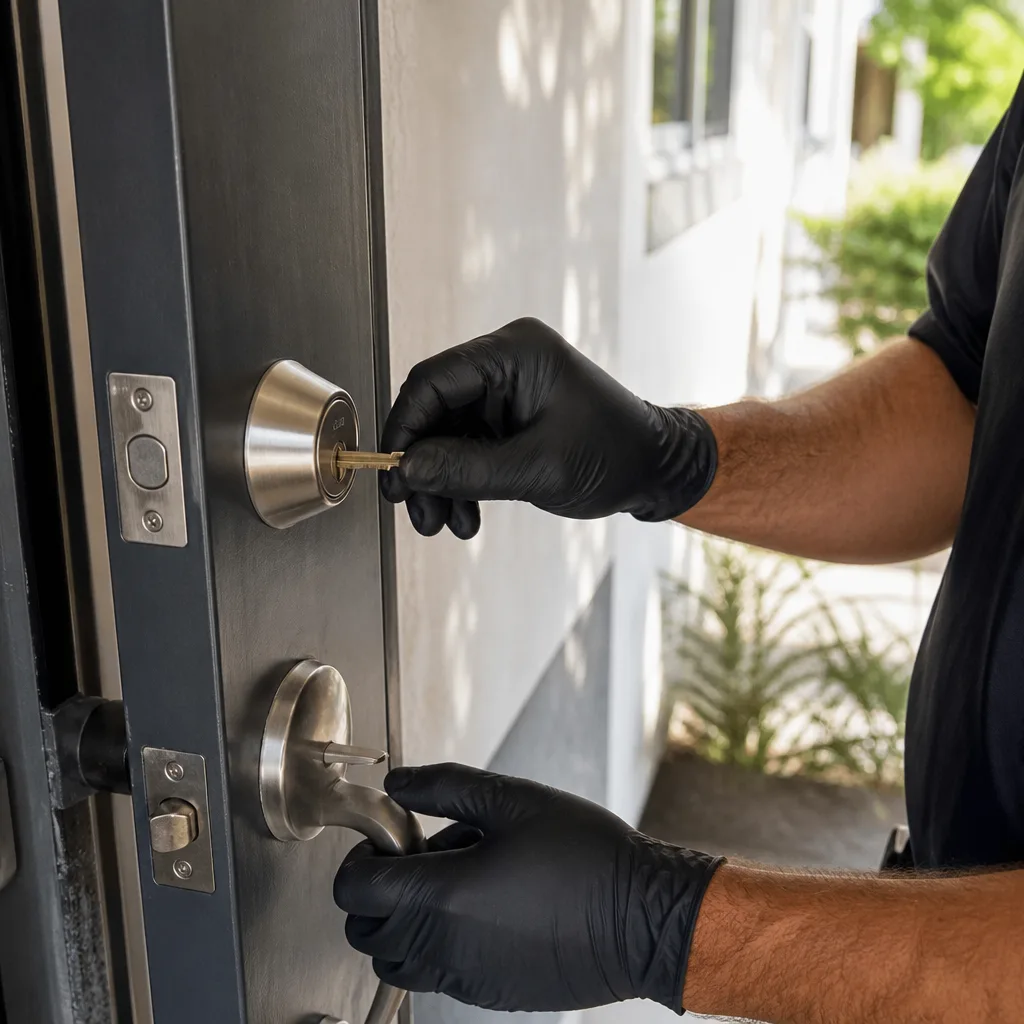
Non-destructive entry first, always - and we re-key Schlage, Kwikset, and Baldwin locks on the spot while you watch
You get a price before we start. It does not change when we arrive. No surprises.
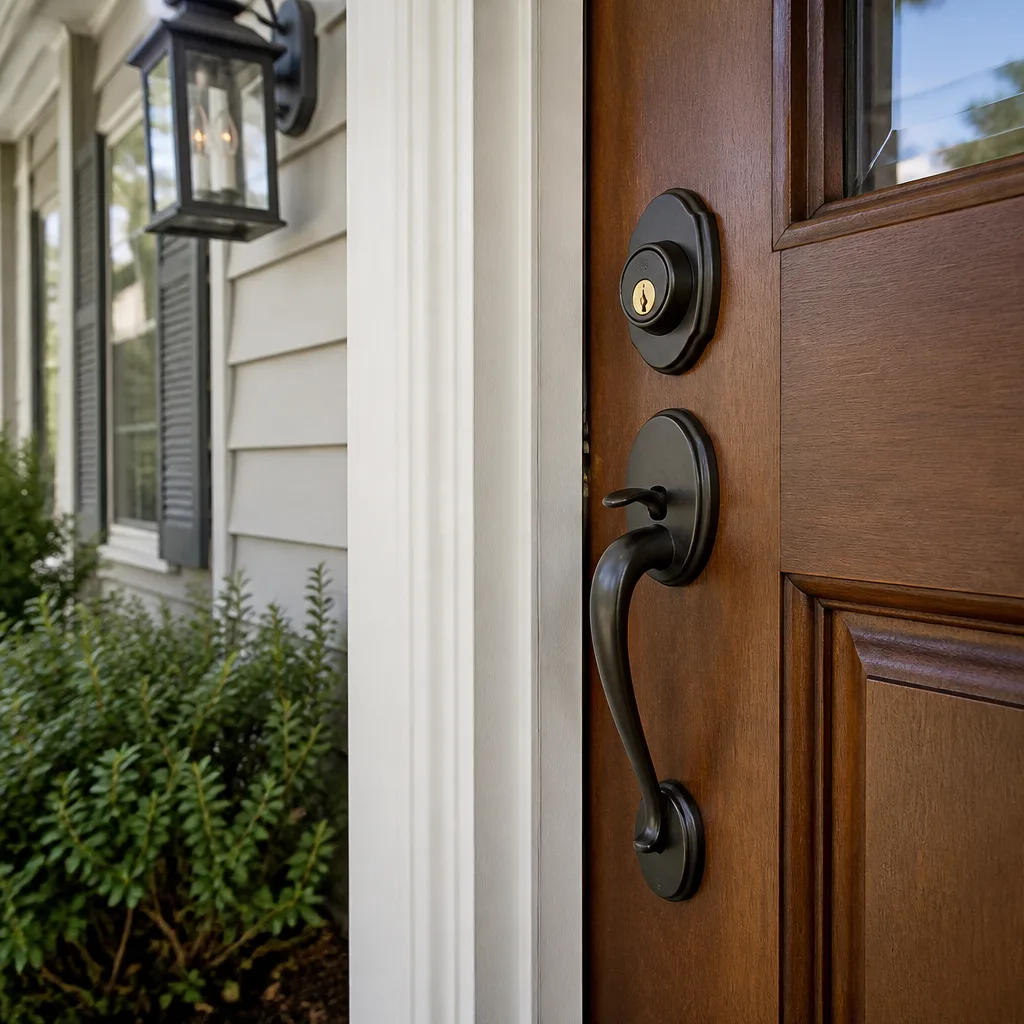
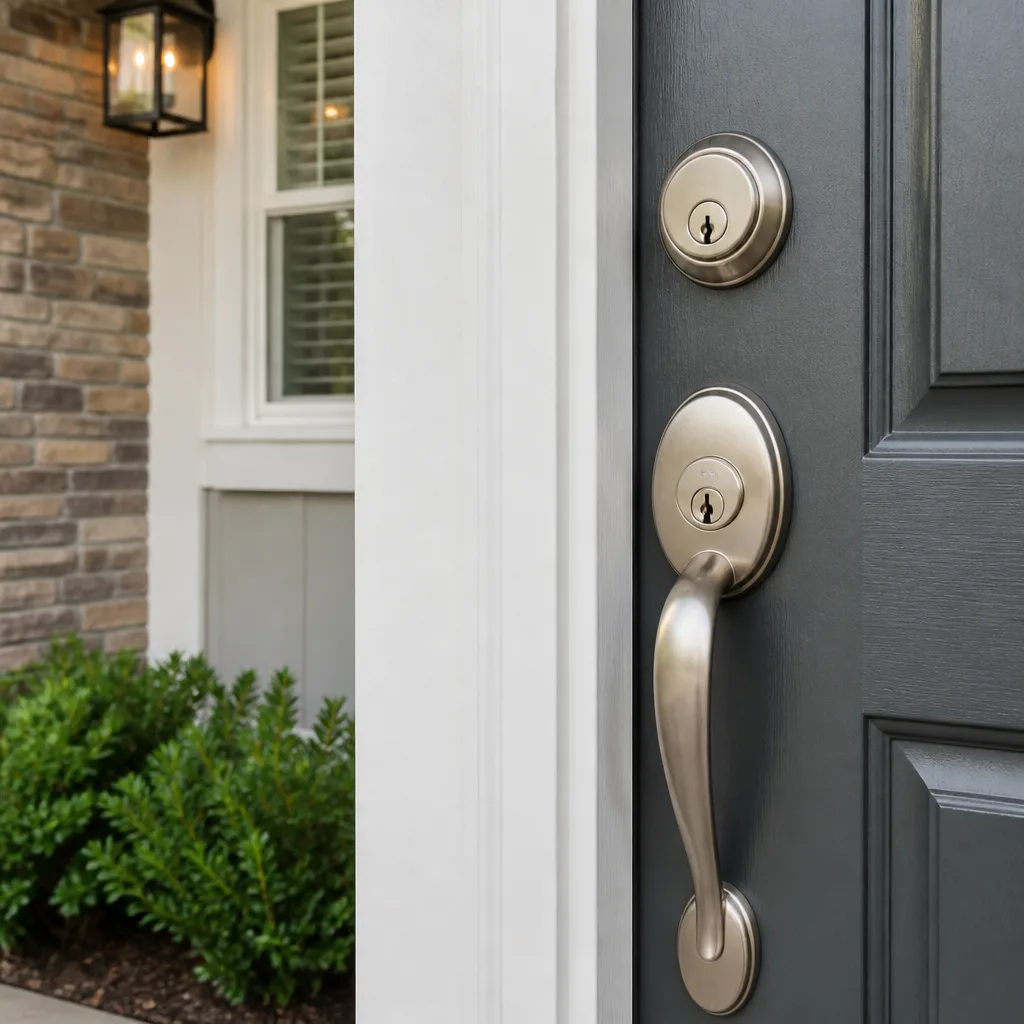
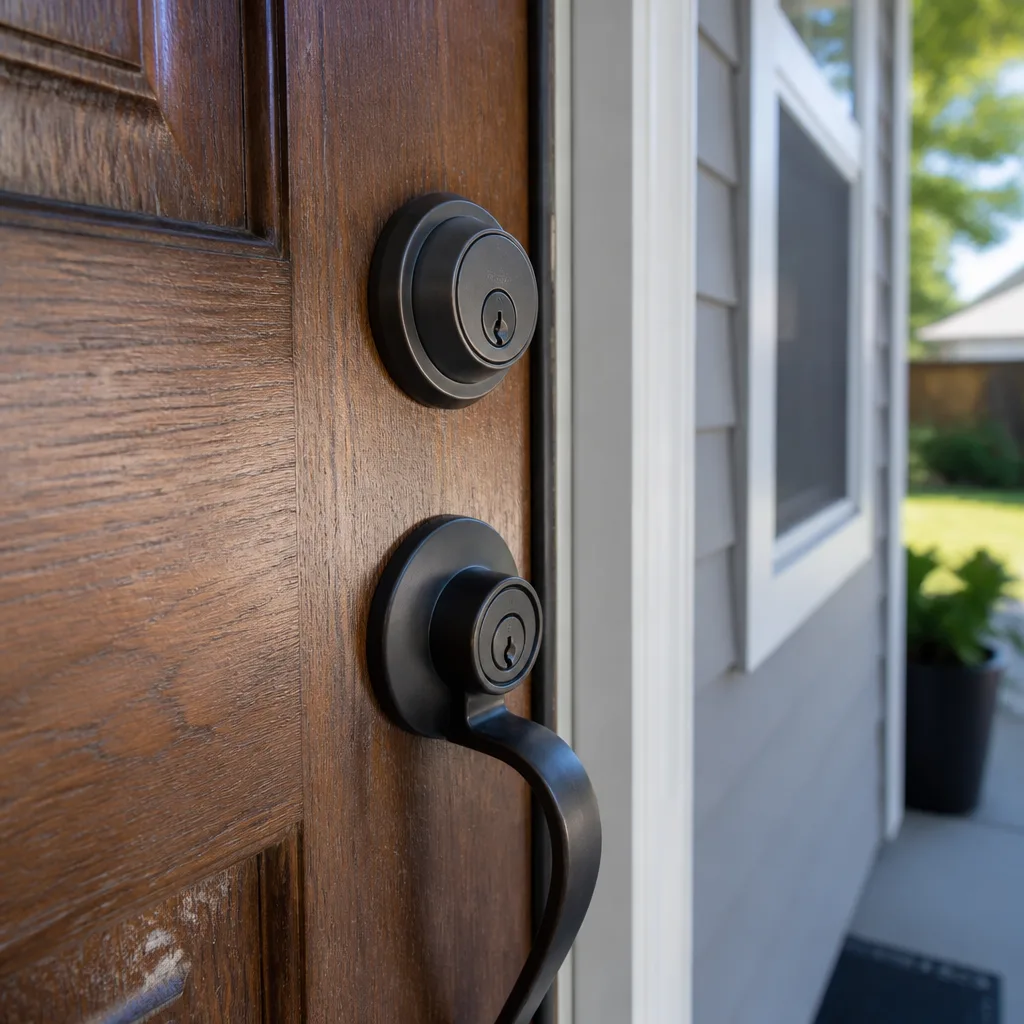
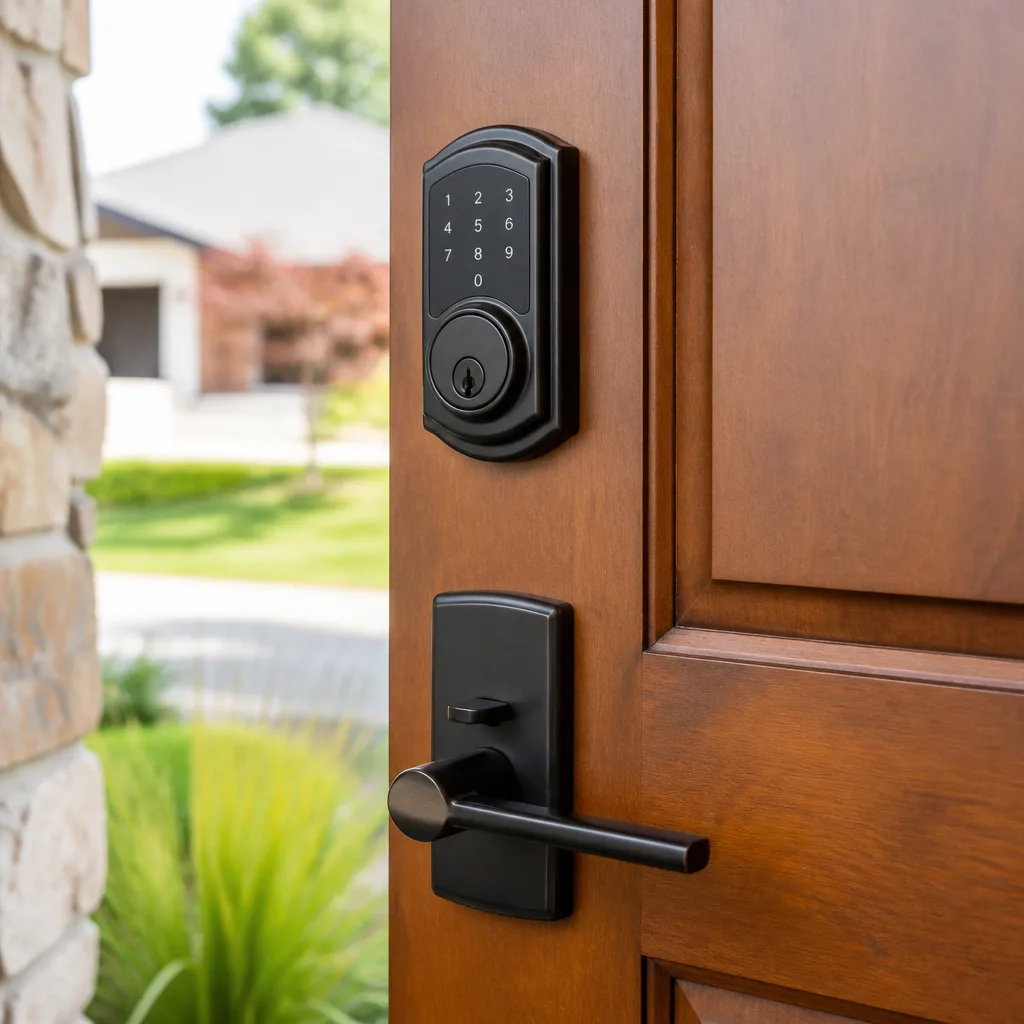
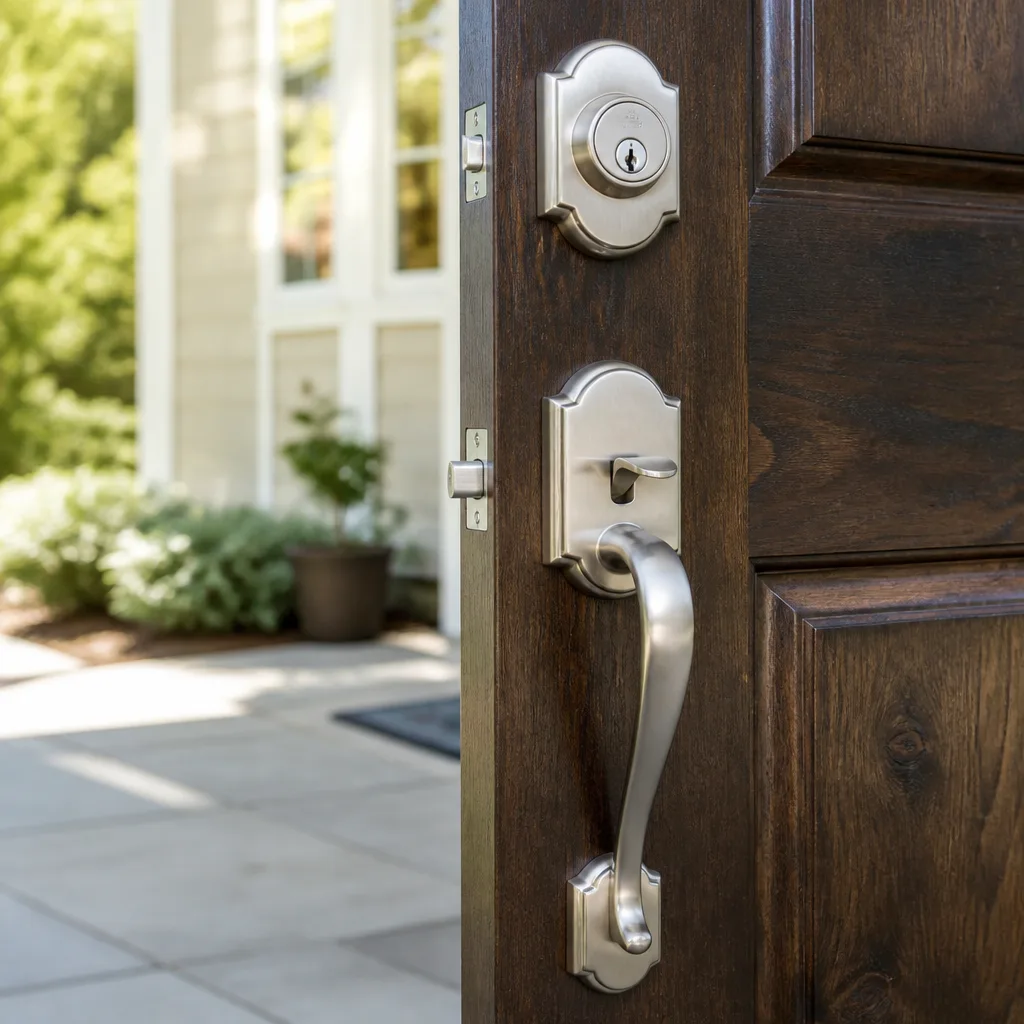
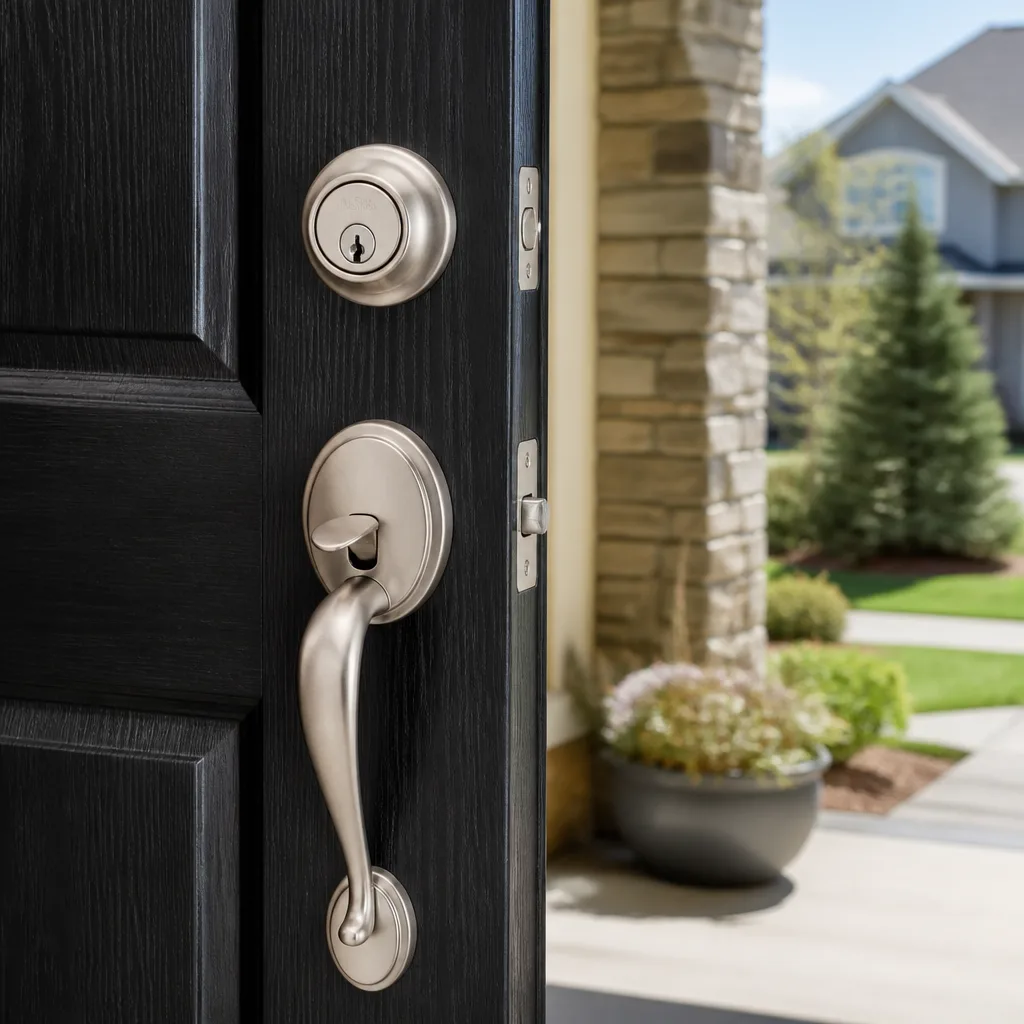
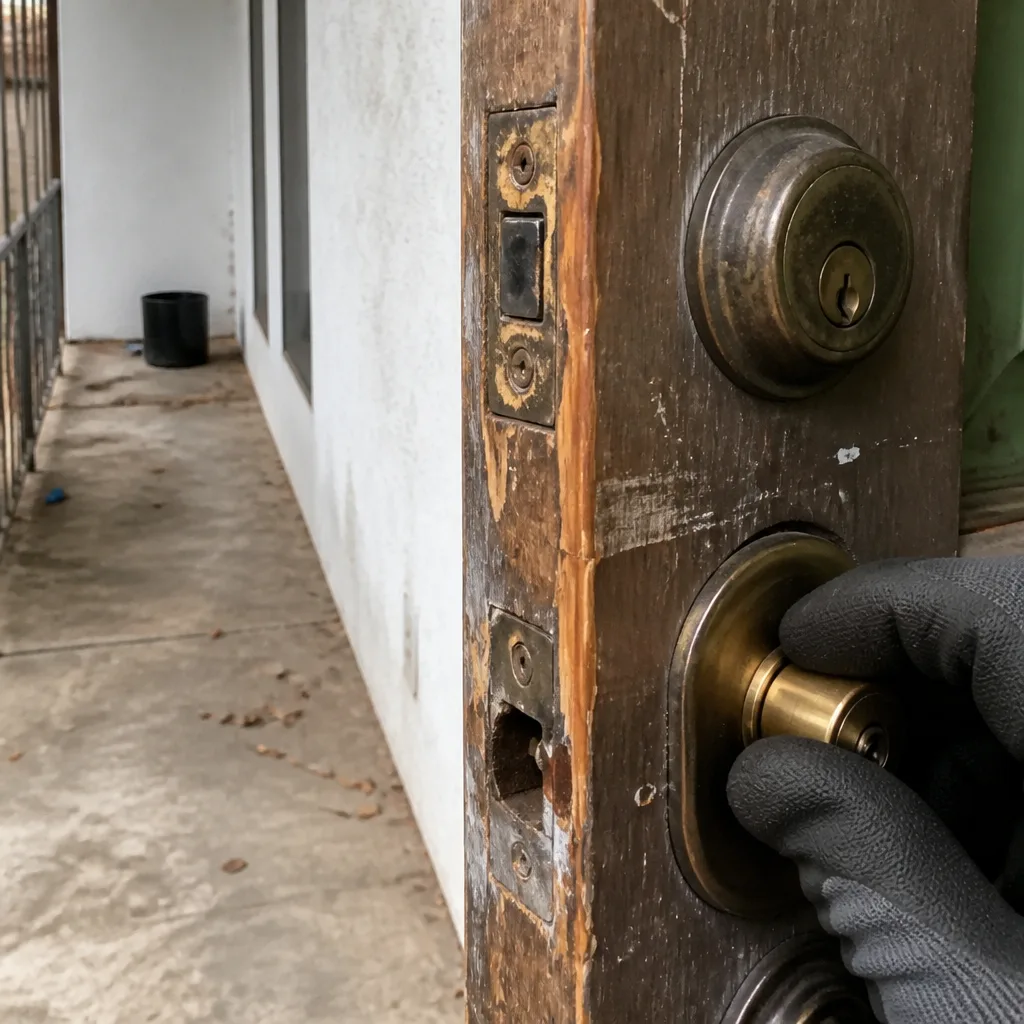 Before
 After
AfterChoosing the Right Locksmith Brand: A Buyer’s Guide for Los Angeles
There are three dominant residential lock hardware tiers, builder-grade, mid-grade, and high-security, and the difference between a $30 Kwikset and a $180 Medeco is not just price. It is pick resistance, bump resistance, drill resistance, and key control, which means who can copy your key and where. Most Los Angeles homeowners have never had a single conversation about any of these distinctions before a technician stands at their front door with a hardware catalog. This guide gives you the product literacy to have that conversation on equal footing, and you can explore more guides & resources on our blog. A locksmith who does not explain these distinctions when recommending hardware is not advising you, they are selling to you.
Quick Answer
The best lock brand for your Los Angeles home depends on your security exposure, not on whatever the locksmith happens to have in the van. Schlage and Kwikset dominate the residential mid-grade market and handle most entry-door needs well. For homes with higher risk profiles, a restricted-keyway brand like Mul-T-Lock or Medeco changes the entire security equation by controlling where keys can be duplicated. A reputable technician will walk you through ANSI grades, key control, and price before handing you any recommendation.
Table of Contents
- What ANSI Grades Actually Mean for Lock Hardware
- Key Control: The Difference Between a $2 Copy and a Restricted Keyway
- Brand Breakdown: Schlage, Kwikset, Yale, Baldwin, and the High-Security Tier
- Smart Locks in Los Angeles: What Actually Matters Here
- Matching Hardware Grade to Your Actual Risk in Los Angeles
- What a Technician’s Brand Recommendation Should Include
- Common Mistakes to Avoid
- When to Call a Professional
- Frequently Asked Questions
- The Bottom Line
What ANSI Grades Actually Mean for Lock Hardware
The American National Standards Institute tests lock hardware in three grades based on cycles, force resistance, and material durability. A cycle is one full turn of the latch or bolt. ANSI Grade 3 locks must survive 200,000 cycles, which sounds like a lot until you do the math on a busy front door in a Los Angeles household with teenagers and dogs. That is about five years of normal use before the mechanism shows wear.
ANSI Grade 2 locks must survive 400,000 cycles and pass more aggressive force tests, including a door strike test that simulates someone shoulder-checking the door. This is the minimum grade we recommend for any exterior door in Los Angeles. The cost difference between Grade 3 and Grade 2 is usually $15 to $30 per lock. Over a decade of use, that comes out to pennies per additional cycle of durability.
ANSI Grade 1 locks must survive 800,000 cycles and withstand substantially more force in every test category. Most Grade 1 locks are commercial hardware, but brands like Schlage and Baldwin sell Grade 1 rated deadbolts and handlesets into the residential market. A Grade 1 deadbolt from Schlage typically runs $70 to $120 more than its Grade 2 equivalent. Whether you need that depends on your exposure, which we will get into shortly.
Here is the practical translation in plain language:
- ANSI Grade 3: Builder-grade. Fine for interior doors, closet doors, and apartments where the building has a secured perimeter. Not appropriate for a street-facing entry door in a Los Angeles single-family home.
- ANSI Grade 2: Residential quality. The correct starting point for most Los Angeles front and back doors. Balances cost against real-world performance.
- ANSI Grade 1: High-security or light-commercial grade. The correct choice for homes in higher-crime neighborhoods, properties with long driveways or limited visibility from the street, and any door protecting significant assets.
In our experience across Los Angeles neighborhoods from West Adams to Woodland Hills, most homes we see have at least one exterior door running Grade 3 hardware. It gets installed by builders who make a margin decision, not a security decision. If you have never checked the grade of your existing hardware, that is a better first step than shopping for a brand.
Key Control: The Difference Between a $2 Copy and a Restricted Keyway
Key control is the single most misunderstood concept in residential lock hardware, and it matters more in Los Angeles than almost anywhere else in the country. The idea is simple: who can make a copy of your key, and under what conditions.
A standard Schlage or Kwikset keyway can be copied at any hardware store, kiosk, or big-box retailer in Los Angeles for two to five dollars. No proof of ownership. No record of the copy. No control over who now holds a working key to your home. You may not think this matters until you hand a key to a contractor, a cleaner, a dog walker, a neighbor watching the house during a trip, or a property manager in a rental situation. Every one of those copies can become additional copies you never authorized and never knew about.
A restricted keyway works differently. Brands like Mul-T-Lock and Medeco issue key blanks only to licensed, registered dealers. Each key carries a unique code tied to an authorization card. When a duplicate is requested, the dealer checks the card, verifies the requester, and records the copy. Hardware stores and kiosks physically cannot cut these keys because the blanks are not distributed to them.
Here is what key control looks like in practice for a Los Angeles homeowner:
- Standard keyway: You give a key to a contractor during a remodel. The contractor’s helper makes a copy at a kiosk on Vermont Avenue for $3. You never know. Six months later, someone uses that key.
- Restricted keyway: You give a restricted key to the same contractor. The helper takes it to a kiosk. The kiosk cannot duplicate it. The only place in Los Angeles that can cut a copy is an authorized dealer for that brand, and the dealer asks for an authorization card.
When does key control actually matter? If you own a home where you have given keys to anyone outside your immediate household, if you rent property, if you run a business from home, or if you simply want to know for certain that no unapproved copies of your key exist, a restricted keyway is the most meaningful upgrade you can make. It costs less than a smart lock and solves a different problem than a stronger deadbolt.
Mul-T-Lock and Abloy are the two restricted-keyway brands we install most often on Los Angeles single-family homes. Both offer graduated security levels, from basic restricted profiles up to high-security cylinders with pick and bump resistance built into the pin design.
Brand Breakdown: Schlage, Kwikset, Yale, Baldwin, and the High-Security Tier
If you walk into any hardware store in Los Angeles, you will see Schlage and Kwikset dominating the lock aisle. They dominate for a reason. Both companies produce reliable hardware at scale, both maintain wide distribution networks, and both offer locks in every ANSI grade. But they are not interchangeable, and the differences matter when you are standing in the aisle trying to make a call.
Schlage is the safer default recommendation for exterior doors in Los Angeles. Their Grade 2 deadbolts, particularly the B60N series, carry a solid reputation among locksmiths who service the brand every day. The hardware is serviceable, parts are widely available, and the tolerances are consistent. When we rekey a Schlage lock in Los Angeles, we know exactly what we are getting into. That consistency matters when you need a repair five years after install.
Kwikset makes hardware that is easier to install and rekey. Their SmartKey system allows homeowners to rekey a lock themselves in about thirty seconds, which is convenient but creates a trade-off. The SmartKey mechanism uses a different internal design than a traditional pin-and-tumbler cylinder, and in our experience, it is more vulnerable to force attacks than a properly pinned Schlage. We carry Kwikset and install it regularly on interior doors and secondary entry points. For a primary front door in Los Angeles, we typically steer customers toward Schlage unless they specifically ask for Kwikset.
Yale is the brand to watch if you are moving toward smart locks. Their hardware quality sits comfortably in the mid-grade residential tier, and their smart lock engineering is among the more mature on the market. Yale locks pair well with the connected-home ecosystems that are popular in newer Los Angeles construction, including Z-Wave and Zigbee platforms used by commercial property managers.
Baldwin occupies the premium residential space. Their architectural hardware is beautiful, heavy, and expensive, with handlesets that routinely run $300 to $600 per door. Baldwin is the brand you choose when the lock needs to look like it belongs on a $1.8 million home in Los Feliz. Under the finish, Baldwin hardware is generally well-made, but the price is about aesthetics as much as security.
The high-security tier, which includes Mul-T-Lock, Medeco, Abloy, and Sargent, is a different category entirely. These locks are not sold in hardware stores. They are sold through certified dealers who maintain accountability for key control. The cylinders carry pick resistance, bump resistance, and drill resistance that standard residential hardware simply does not have. Pricing for a high-security deadbolt in Los Angeles typically starts around $150 and can run to $400 or more for top-tier cylinders with restricted keyways.
The brand a technician recommends tells you something about how they operate. A technician who defaults to whatever is in the van without explaining trade-offs is selling inventory. A technician who asks about your household, your key distribution, your neighborhood, and then gives you two or three options at different price points with honest pros and cons is advising you. The difference matters.
Smart Locks in Los Angeles: What Actually Matters Here
Smart locks are the fastest-growing segment of the residential hardware market, and Los Angeles is ground zero for adoption, though property managers should also watch for Commercial Locksmith Warning Signs Every Homeowner Should Know. Property managers in apartment buildings across the city use them for turnover efficiency. Homeowners install them for convenience. Airbnb operators depend on them for remote access. But the criteria that matter for a smart lock in Los Angeles are not the same criteria that matter in, say, Chicago.
Here are the three questions we tell Los Angeles customers to ask before buying a smart lock:
- What is the backup mechanical key quality? Every smart lock has a physical key override. If that override is a Grade 3 cylinder, then your $250 smart lock is only as strong as a $30 builder-grade deadbolt. Look for a smart lock built on a Schlage or Yale chassis with at least a Grade 2 mechanical cylinder underneath.
- How does the battery perform in sustained heat? Los Angeles heat is not dramatic, but it is persistent. A deadbolt mounted on a west-facing door in the San Fernando Valley can sit in 100-degree-plus surface temperatures for hours every day from June through October. Alkaline batteries degrade faster in sustained heat. If you are installing a smart lock on a hot exposure, plan on replacing batteries every four to six months rather than the marketed eight to twelve.
- Does the lock meet California Title 24 accessibility requirements? California has the most stringent accessibility standards in the country. If the lock requires a twisting motion to operate from the outside, it may fall short on some commercial and multi-family applications. Lever-style smart locks or models with a push-button operation are better suited to Los Angeles properties where Title 24 compliance applies.
One more point on smart locks that rarely gets discussed. A smart lock without a rekeyable mechanical cylinder is a problem waiting to happen. If the electronic component fails, and they do fail, you are left with a physical key that operates a standard cylinder. You want that cylinder to be a quality Schlage or Yale cylinder that can be rekeyed by any competent locksmith in Los Angeles, not a proprietary mechanism that locks you into a specific service channel.
Matching Hardware Grade to Your Actual Risk in Los Angeles
Los Angeles is not one security environment. A 600-square-foot apartment in a managed building in Koreatown has an entirely different risk profile than a 2,400-square-foot standalone home with a long driveway in the hills above Studio City. Here is how we think about matching hardware to exposure.
Managed building with a secured perimeter: If your building has a locked main entrance, an intercom system, and controlled access, your unit door is the second line of defense. In this scenario, an ANSI Grade 2 deadbolt in any reliable brand (Schlage or Kwikset) is adequate. Your bigger security concern is key distribution to building staff, former tenants, and contractors, which is a key control issue more than a hardware strength issue.
Standalone home with street visibility: A single-family home in neighborhoods like Eagle Rock, Leimert Park, or North Hollywood where the front door is visible from the street gets a different calculation. You want an ANSI Grade 2 deadbolt minimum, preferably Schlage, plus a reinforced strike plate with three-inch screws into the door frame. The strike plate is the most underrated component in a residential deadbolt installation.
Hillside home with long driveway or limited sightlines: Homes in the hillside neighborhoods, Laurel Canyon, Beachwood Canyon, parts of Mount Washington, combine isolation with high property values. These are the homes where we most often recommend stepping up to a Mull-T-Lock or Medeco cylinder with a restricted keyway and Grade 1 rated hardware. The longer the response time from neighbors or security, the more the lock itself matters.
Rental property or short-term rental: If you rent out a unit on any schedule, key control shifts from a nice-to-have to a necessity. Every turnover creates keys in circulation that you cannot account for. A restricted keyway solves this at the mechanical level. A smart lock with per-guest codes solves it at the electronic level. Ideally, you want both, because the smart lock handles convenience while the restricted cylinder handles the physical override.
Business property in a commercial corridor: Commercial locksmith work in Los Angeles involves a different set of priorities, namely master key systems, high-frequency use, and code-required hardware that survives serious abuse. The brands that matter here shift toward Sargent and other light-commercial lines that simply are not priced or designed for residential installs. Our Commercial Locksmith in Los Angeles work runs this full spectrum.
What a Technician’s Brand Recommendation Should Include
When you call a locksmith in Los Angeles and ask for a hardware recommendation, you should expect a conversation informed by a Commercial Locksmith Maintenance Schedule: What to Do and When, not a product pitch. Here is what a complete recommendation sounds like.
First, the technician should ask about your living situation. How many people have keys? Have you ever given a key to a contractor, cleaner, or neighbor? Do you rent the property? Is there anyone with a key who should not have one, like a former roommate or a terminated property manager? These questions tell the technician whether key control matters for your situation.
Second, the technician should present options at different price points, with the pros and cons of each. A recommendation that jumps straight to the most expensive option without explaining what you get for the money is a red flag. A recommendation that defaults to the cheapest option without explaining what you are giving up is equally a red flag. You want the range.
Third, the technician should be willing to answer one question directly: what would you put on your own house? Every experienced locksmith in Los Angeles has a personal answer to this. The answer should be specific, with a brand name and a reason. If the technician hedges, or gives you a vague answer about how “it all depends,” that is an answer. It means they have not thought much about the hardware they install, or they do not want to be held to a real opinion.
Here is what our answer looks like, so you have a benchmark. For our own homes, we install a Schlage Grade 1 deadbolt with a reinforced strike plate on every exterior door, and a Mul-T-Lock high-security cylinder on the front and back entry. Total cost for hardware and install on a typical Los Angeles two-entry home runs roughly $450 to $600. We choose this setup because it combines proven mechanical reliability, excellent durability in the heat, and key control on the entries that see the most key distribution. That is the level of specificity you should expect from any locksmith worth calling.
For standard residential work, a quality Schlage deadbolt professionally installed in Los Angeles typically runs $90 to $150 including the hardware. A full Rekey Locks in Los Angeles service, where the internal pins are changed so old keys no longer work, runs $20 to $45 per cylinder in most cases depending on the hardware. These are the honest ranges we quote over the phone before dispatch, and they are the prices on the invoice.
Common Mistakes to Avoid
- Buying by brand name without checking the grade. Schlage makes Grade 3 locks too. The name on the box does not tell you what you are getting. Check the ANSI grade on the packaging before you buy anything for an exterior door.
- Ignoring the strike plate. The strongest deadbolt in the world is only as strong as the plate it throws into. A reinforced strike plate with three-inch screws costs under $10 and does more for kick-in resistance than a $100 hardware upgrade. Most Los Angeles homes we service have original builder strike plates held in by half-inch screws.
- Installing a smart lock over a cheap cylinder. The electronic mechanism is not the security component. The mechanical cylinder underneath is. If you budget $300 for a smart lock and nothing for the cylinder it mounts to, you have spent your money on convenience, not security.
- Replacing hardware when a rekey solves the problem. If your concern is that someone might have an old key, you do not need new locks. You need a rekey, which changes the internal pins so the old keys stop working while keeping the hardware. This is the most common unnecessary upsell we see in Los Angeles.
- Buying high-security hardware without key control. A high-security cylinder with a standard keyway is just an expensive standard lock. The restricted keyway is the point. If the brand does not maintain strict control over key blanks, you are paying for marketing.
- Forgetting doors beyond the front entry. Side doors, back doors, garage entry doors, and sliding glass doors all matter. We have seen homes in Los Angeles with a Grade 1 deadbolt on the front door and a privacy lock on the side door that a flathead screwdriver could defeat in ten seconds. Walk your whole property, not just the door the guests use.
When to Call a Professional
You should call a locksmith rather than attempting a hardware upgrade yourself when the job involves a deadbolt replacement on an exterior door, a rekey of any lock with security implications, or any work on a smart lock that ties into your home’s automated systems, as covered in our Commercial Locksmith Troubleshooting: Common Problems and How to Fix Them. These jobs require tools and alignment decisions that are easy to get wrong, and a misaligned deadbolt will wear out prematurely even if it looks fine on day one. If you have lost keys, suspect unauthorized copies, or want to understand what an old key might open, that is a service call. Ridley Locksmith & Security offers free estimates in Los Angeles, call (956) 275-7388, and every job receives a written price before work begins and a written one-year guarantee when the work is done.
Frequently Asked Questions
For most Los Angeles single-family homes, Schlage is the best default brand for exterior doors because its Grade 2 and Grade 1 deadbolts offer solid mechanical reliability, wide parts availability, and proven heat tolerance. If you need key control to prevent unauthorized key duplication, Mul-T-Lock is the brand we recommend most often for restricted keyways in residential applications. Call (956) 275-7388 and a Ridley technician can walk you through the right choice for your specific door and risk profile.
A quality Schlage Grade 2 deadbolt installed by a licensed locksmith in Los Angeles typically costs $90 to $150 including hardware and labor. A Grade 1 deadbolt runs $150 to $220 installed. High-security cylinders with restricted keyways from Mul-T-Lock or Medeco add approximately $100 to $250 per door depending on the cylinder. These are the ranges we quote over the phone, and the price is written down before any work starts, so there are no surprises at the door.
Yes, and in most cases a rekey is the right move. Rekeying changes the internal pins of the lock so the old keys stop working while the hardware stays in place. It is faster, cleaner, and roughly half the cost of new hardware. You can read more on our Rekey Locks in Los Angeles page for specifics on how the process works and what it costs.
A smart lock is only as secure as the mechanical cylinder underneath its electronic face. Smart locks built on Schlage or Yale hardware platforms with Grade 2 or better cylinders are secure when properly installed. Smart locks built around cheap cylinders, or installed as a bolt-on over a Grade 3 lock, are convenience features with a security gap. The battery heat issue matters too, and any west-facing door in the Valley will need more frequent battery changes than the marketing materials suggest.
Restricted key control means the key blanks for your lock are only available through authorized dealers, and every key copy requires an authorization card that you control. You need it when you have given keys to people outside your immediate household and cannot account for every copy, which applies to most rental properties, homes with regular contractors or cleaners, and anyone who has ever gone through a roommate or relationship change in Los Angeles. Mul-T-Lock and Abloy are the two restricted keyway brands we install most in residential settings.
Yes, with conditions. We will install customer-supplied hardware as part of our standard Residential Locksmith in Los Angeles service, but we inspect the hardware first and will tell you honestly if what you bought is not suited for the door, is a lower ANSI grade than the situation warrants, or has a mechanical issue. The written price applies regardless of where the hardware came from. For most customers, we find it is simpler and often cheaper to let us source the hardware, since we buy direct from Schlage and Mul-T-Lock distributors and know the product lines well.
The Bottom Line
Lock hardware is one of the few purchases in your home where the difference between a good decision and a bad one is invisible until the moment it matters. A $30 Grade 3 lock and a $90 Schlage Grade 2 deadbolt look almost identical from across the room. They are not. The same goes for a standard keyway and a restricted keyway. The brand matters less than the grade, and the grade matters less than the overall system, which includes the strike plate, the key distribution, and the intelligence of the person installing it. In Los Angeles, where single-family homes, rentals, and managed buildings exist side by side, no single answer fits every address. Ask questions. Expect honest trade-offs in the answer. And if the person on the other end of the line cannot tell you what they would put on their own house, call someone who can. Ridley Locksmith & Security is locally operated, part of the Garrison Partners family, and every job carries a written price and a written one-year guarantee. Call (956) 275-7388 for a free estimate from a team that will tell you the truth about the hardware before we ever pick up a drill.
Written by Drew Kowalski, Owner at Ridley Locksmith & Security, serving Los Angeles since 2007.