
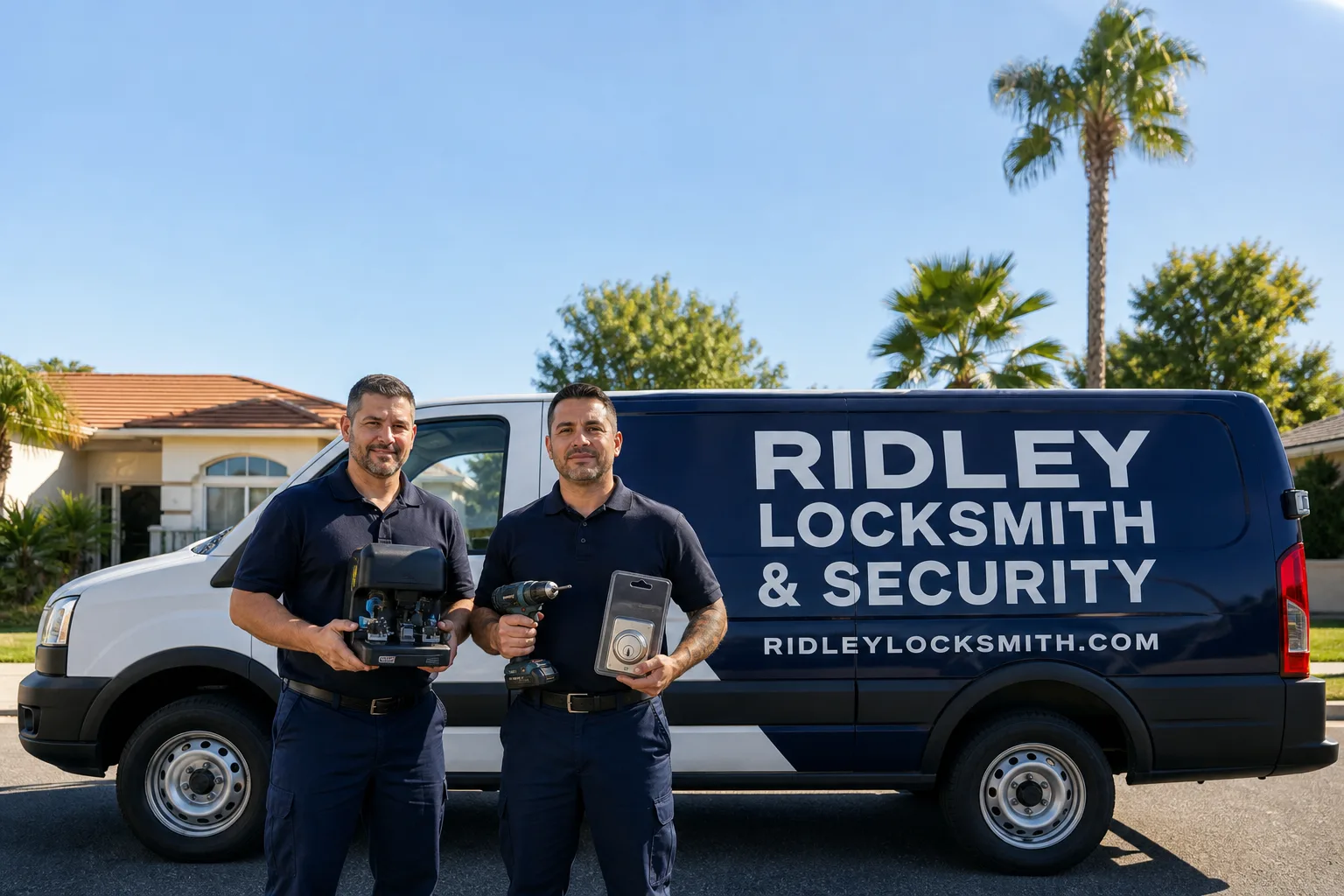
Non-destructive entry first, always - and we re-key Schlage, Kwikset, and Baldwin locks on the spot while you watch
You get a price before we start. It does not change when we arrive. No surprises.
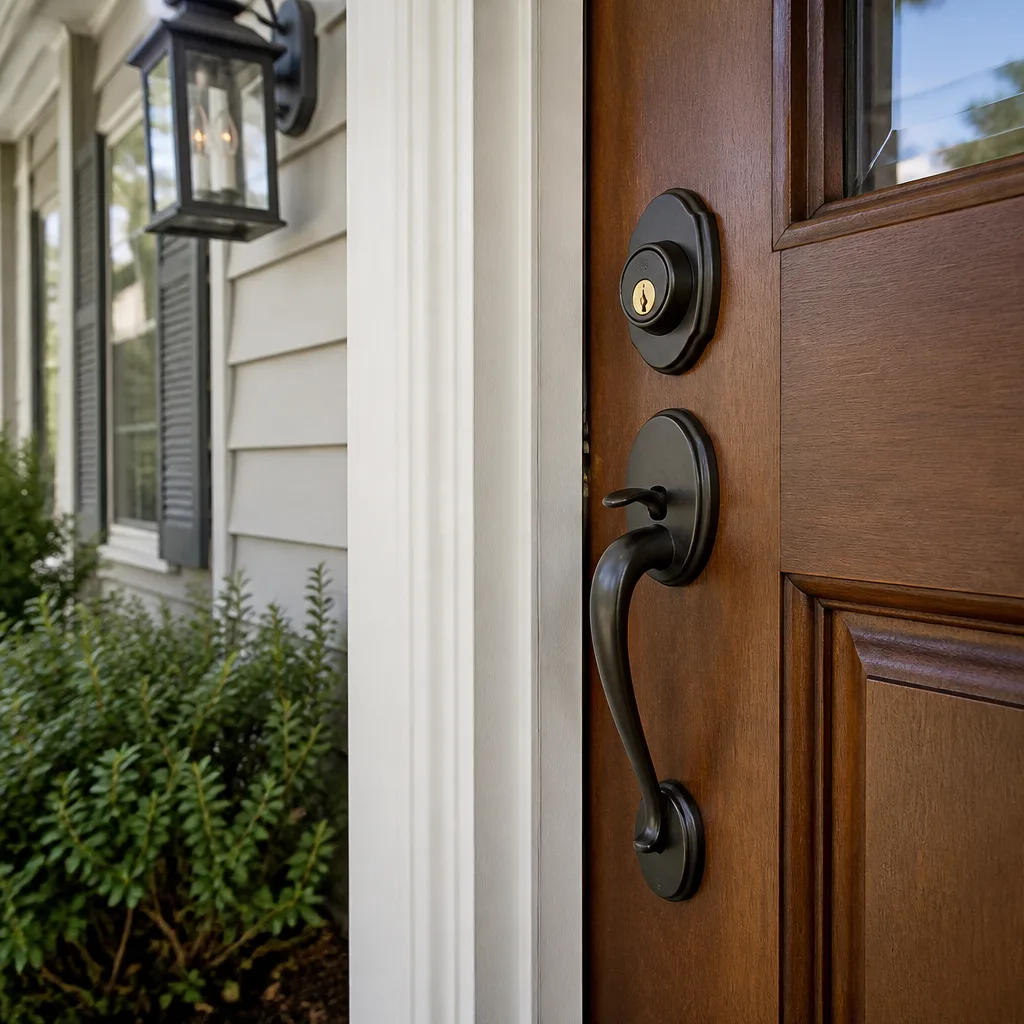
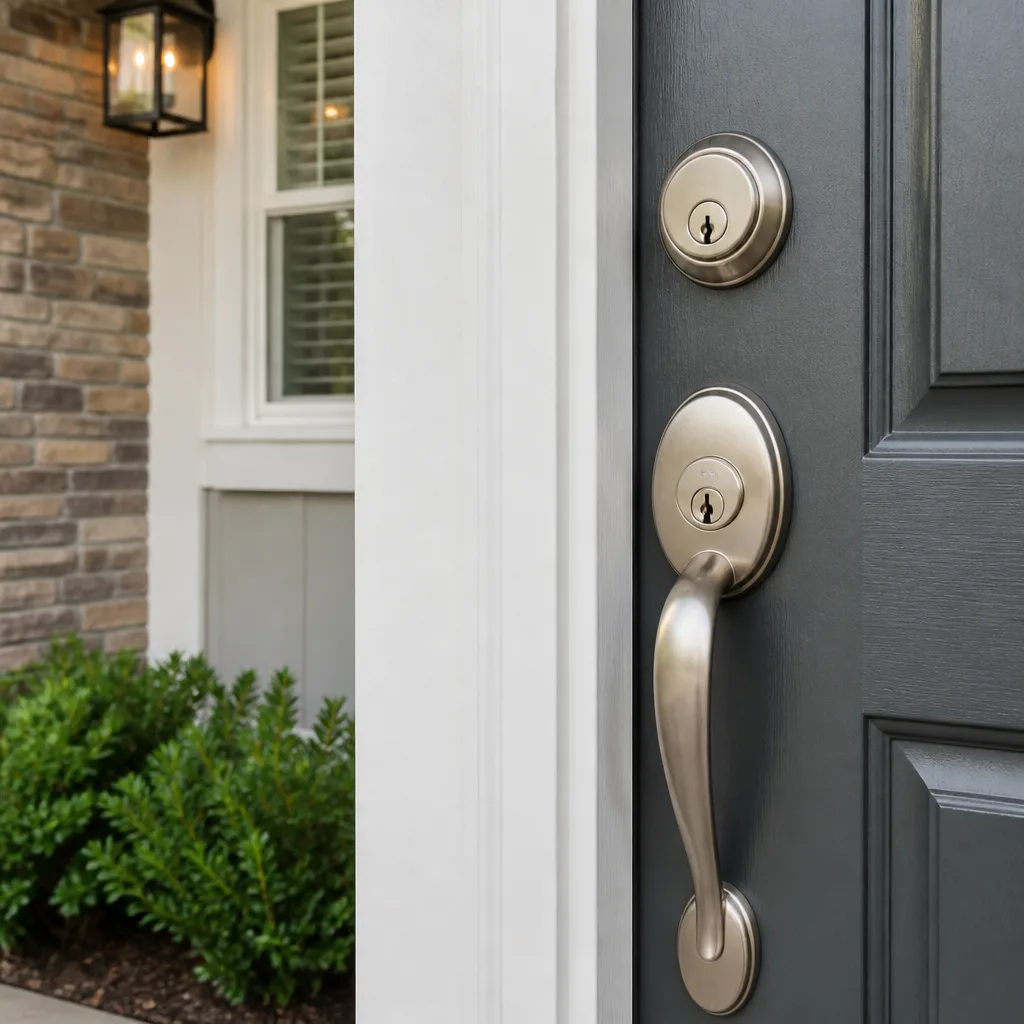
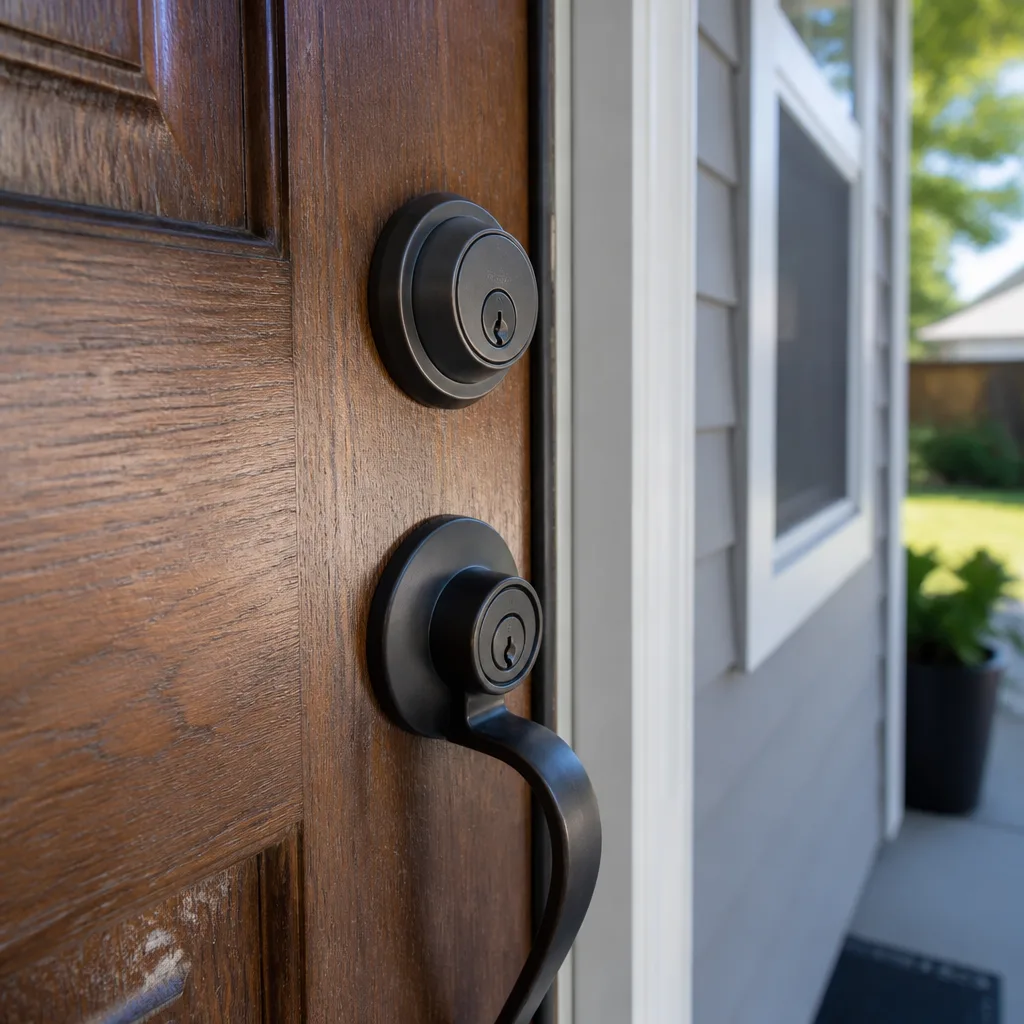
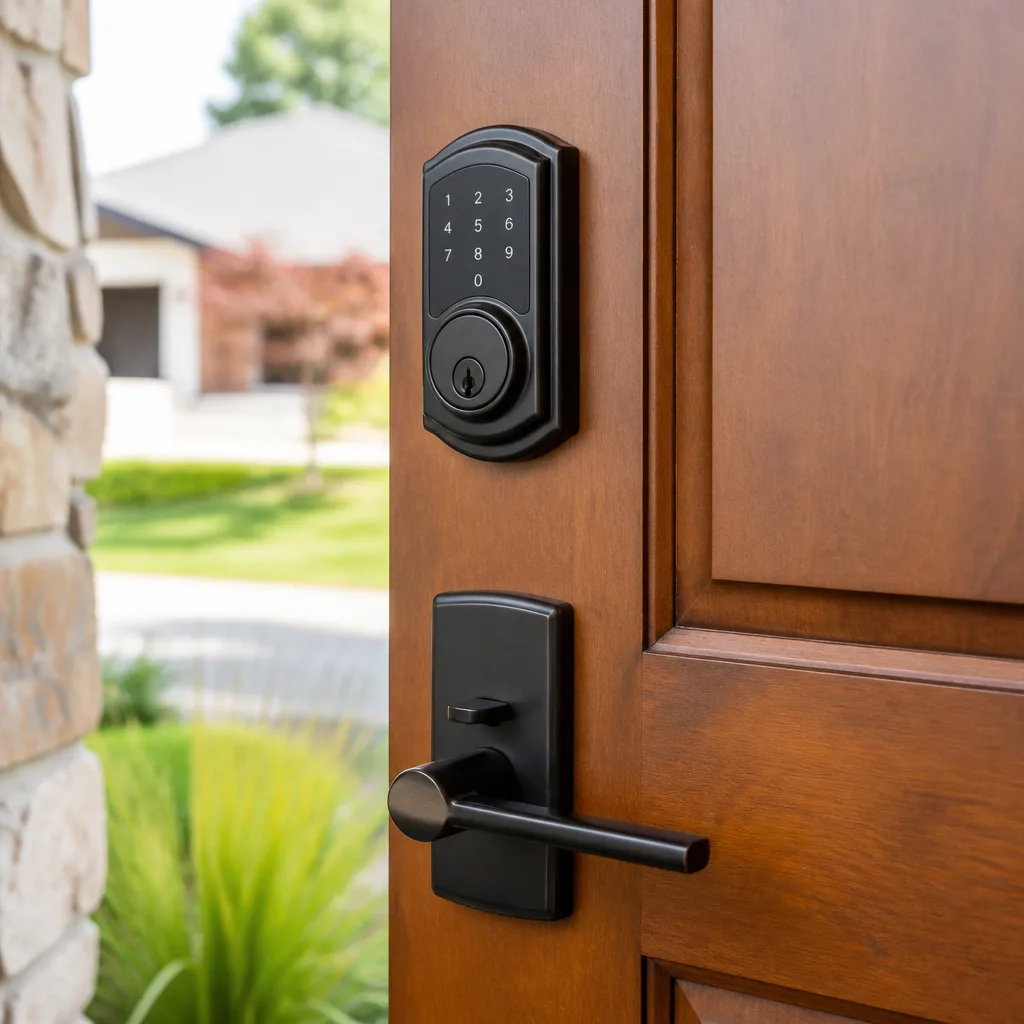
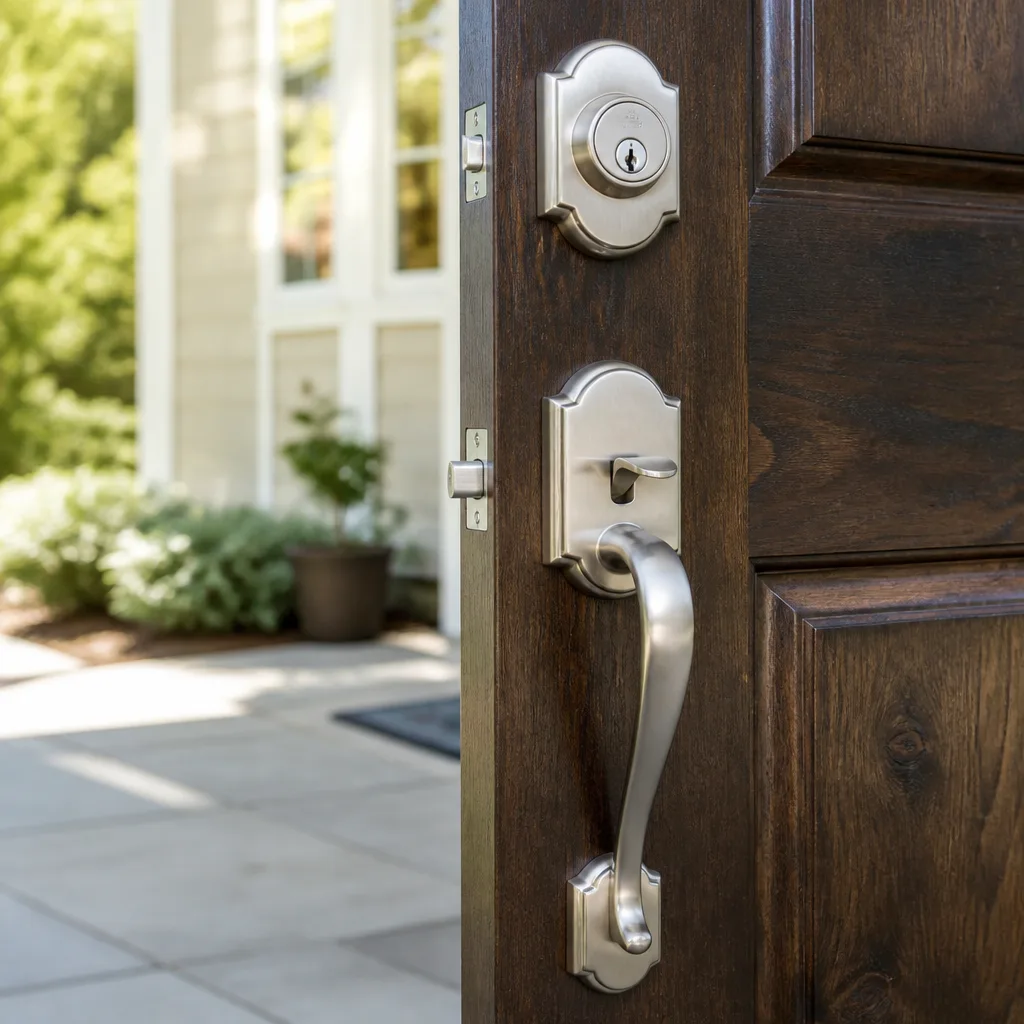
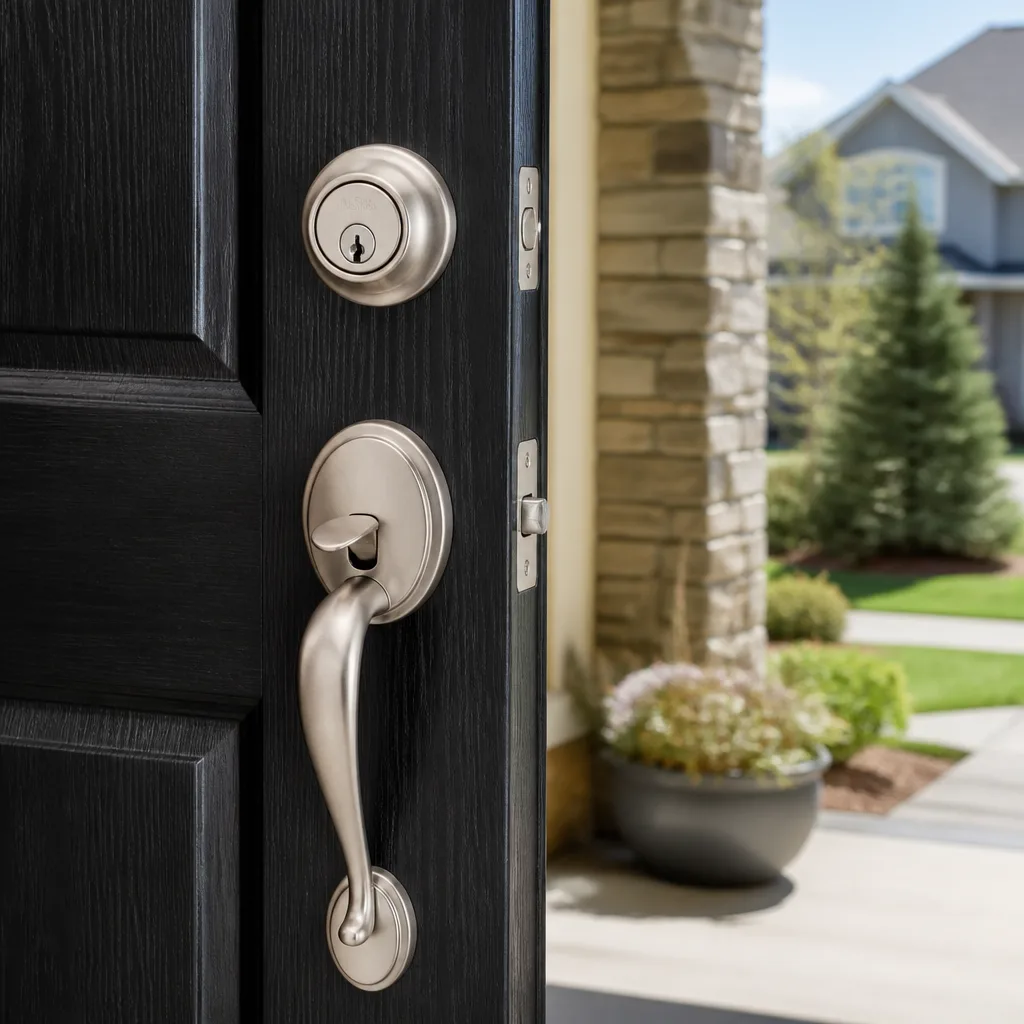
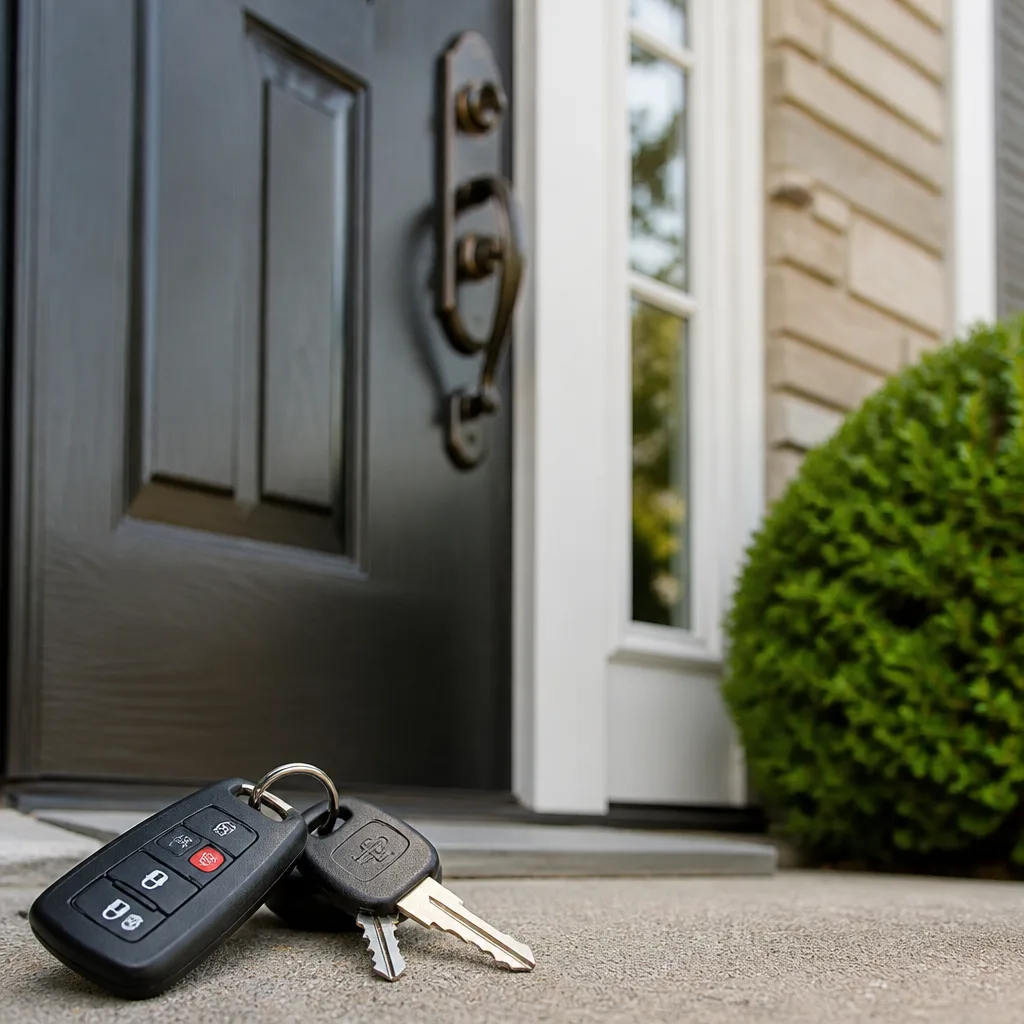
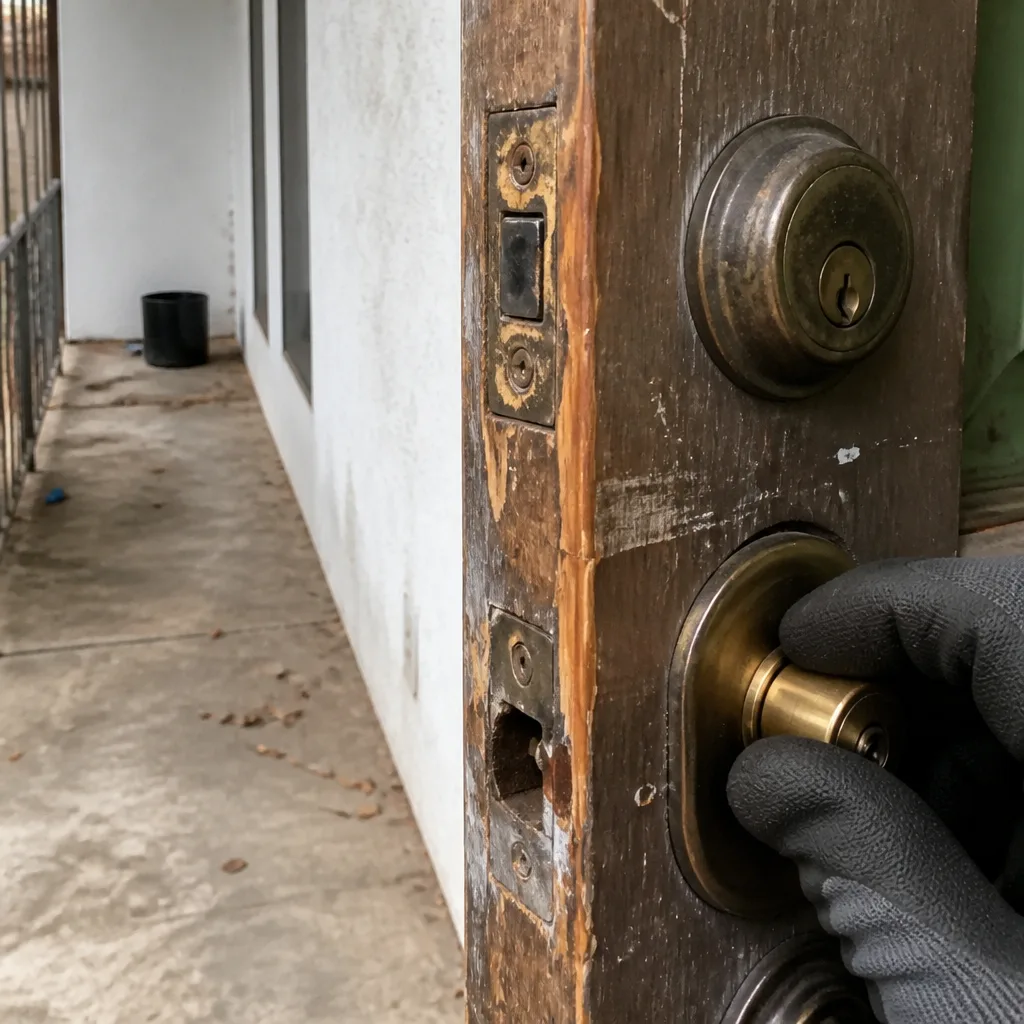 Before
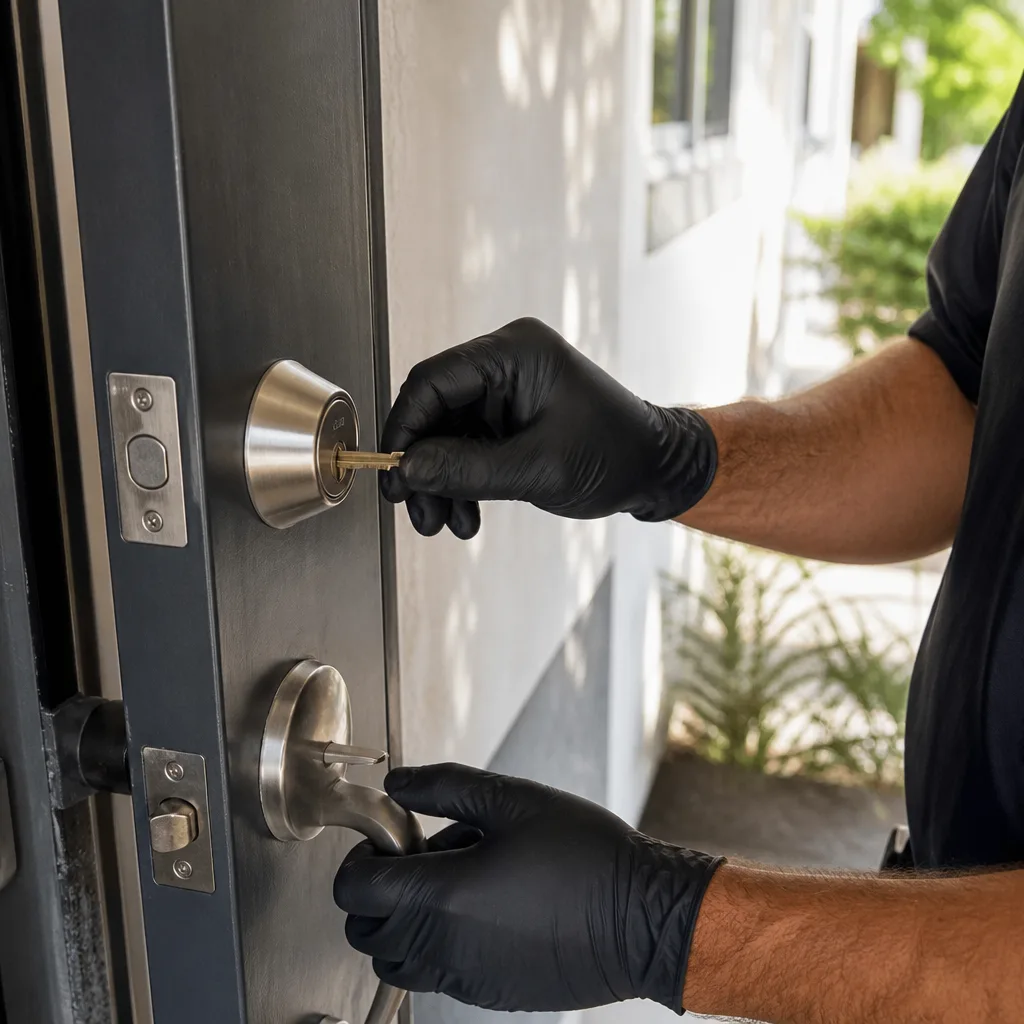 After
AfterKey Broke Off in the Lock
A broken key in the lock means the barrel of your lock is now partially or fully blocked by a metal fragment you can’t grip and probably can’t see clearly. In most cases, a locksmith can extract the broken piece and get you back inside without replacing the lock at all. This is a fixable problem, not a disaster – but the fix needs the right tools, not a pair of tweezers and a YouTube video.
When a key snaps inside a lock, the break almost always happens at the shoulder – the narrow point where the bow (the part you grip) meets the blade (the cut part that enters the cylinder). That stub is now sitting in the keyway, and unless it’s protruding enough to grip cleanly with needle-nose pliers, any attempt to pull it without proper extraction tools usually pushes it deeper. The cylinder can’t turn with a fragment in it, and forcing it damages the pin stacks inside, turning a simple extraction into a costlier repair. The right call is to stop, step back, and get someone on the phone who carries extraction hooks.
Why It Happens
The Key Was Already Fatigued
Keys are stamped from brass or nickel-silver stock, and they develop micro-fractures after years of flexing inside the cylinder. A key that’s been on the ring for six or seven years, especially a duplicate cut from a duplicate, is significantly more brittle than the original. If the break was clean and the key had been getting stiff to turn lately, metal fatigue is almost certainly the cause. Check your other keys – if any of them show visible bends, cracks near the shoulder, or feel noticeably thinner than they used to, they’re candidates for the same failure.
The Lock Was Already Binding
A lock that’s been hard to turn for months puts extra rotational stress on the key every time it’s used. Worn pins, a dry cylinder, or a door that’s shifted in the frame can all cause that binding. You’ll know this is the likely cause if the key had been difficult to turn recently, sometimes requiring a wiggle or a shoulder lift on the door to get it to open. The key didn’t just snap – the lock asked too much of it one too many times.
The Duplicate Key Was a Poor Cut
Box-store key duplicators cut fast and cut cheap, and some cuts land just outside the tolerance the lock was designed for. A key that almost fits makes the cylinder work harder on every turn, and the stress concentrates at the shoulder. If the key that broke was a copy – especially a copy of a copy – and you still have the original, that tells you a lot. A properly cut key on a properly serviced lock shouldn’t snap under normal use.
The Door or Frame Has Shifted
Seasonal wood movement, foundation settling, or a door that’s been hit hard enough to knock the frame slightly out of square can put the lock cylinder under lateral stress it wasn’t designed to handle. When the deadbolt or latch doesn’t line up cleanly with the strike plate, the key has to fight both the pins and the misalignment simultaneously. If you’ve noticed the door sticking at the top or bottom, or the bolt dragging on the strike plate before it seats, that’s the symptom to watch for.
What to Do Right Now
- Stop turning the cylinder. If any part of the broken key is still engaged with the pins, rotating it further will drive the fragment deeper into the keyway. Leave the cylinder exactly where it is.
- Look before you touch. Get a flashlight and look at the keyway. If the broken stub is protruding more than a quarter inch and you can see it clearly, you may be able to grip it with fine needle-nose pliers – but only pull straight out, never twist. If it’s flush or below the keyway opening, leave it alone. Pushing tools in without knowing the keyway profile almost always makes extraction harder.
- Photograph the lock and the broken key pieces. A photo of both halves helps the technician confirm the key profile before arrival and speeds up the job.
- Do not spray lubricant into the keyway. WD-40 in a lock cylinder contaminates the pins and can turn a clean extraction into a much messier repair. If the lock genuinely needs lubrication, a dry graphite lubricant is correct – but at this point, wait for the technician to handle it.
- Secure the opening as best you can. If the lock is on an exterior door, don’t leave it unattended and unlocked while you wait. A chain, a sliding bolt on an interior door, or staying near the entrance are all reasonable steps until your Ridley team arrives.
How We Fix It
When a Ridley technician arrives, the first thing they do is assess the keyway profile and how far the fragment has traveled into the cylinder. Most extractions use a thin hook-shaped tool designed for the specific keyway type – the hook catches the serrations on the broken blade and draws it straight out without disturbing the pins. The job typically takes less time than the drive over.
Once the fragment is out, the technician checks the cylinder for damage. If the pins are intact and the cylinder turns freely, you may need nothing more than a new key cut to code. If the binding that caused the break in the first place was a lock issue rather than a key issue, a rekey – replacing the internal pin stacks so a fresh key operates cleanly – is usually the right next step. That falls squarely under our residential locksmith service, and your local Ridley team carries the hardware to do it on the same visit.
Before any work starts, you get a written price. That’s not a formality – it’s The Garrison Standard, and it’s the same on every job. The price you see in writing before we start is the price on the invoice. The work is covered by the 365-Day Done Right Promise: if anything we touched isn’t right within a full year, we come back and make it right at no charge.
Frequently Asked Questions
If the lock is on an exterior door, don’t leave it. A cylinder blocked by a broken key usually can’t be locked from outside, which means the door may be unsecured until the fragment is removed. Even if the door happens to be locked, the broken stub makes it trivially easy for someone to see the lock is compromised. Get it handled the same day. Call (956) 275-7388 and your local Ridley team will get out to you.
Yes. A live person answers at (956) 275-7388 around the clock, every day of the year – not a voicemail, not an answering service. Tell them what you’re looking at and they’ll give you a realistic arrival window. Broken-key extraction is one of the most common residential calls we handle, and your local Ridley team keeps extraction tools on every truck.
Usually not. Key extraction is its own skill set, and a technician with the right hook tools can remove the broken piece without touching the lock body in most cases. If the cylinder is damaged from the break or from DIY attempts before we arrived, that changes the equation – but we’ll tell you exactly what we find and give you the options in writing before any work starts.
The price you get in writing before work starts is the price on your invoice. We don’t quote one number on the phone and present a different one at the door – that’s a practice we don’t run here. No-hassle upfront pricing is one of the things that makes Ridley different, and it’s baked into The Garrison Standard, not something we do when it’s convenient. For a firm written quote, call (956) 275-7388.
Get It Fixed
Call (956) 275-7388 right now – a live person picks up, day or night, every day of the year. Your local Ridley Locksmith & Security team will give you a written price before anyone starts work and back the repair for a full year. Book online or call – either way, we’ll get it sorted.
Written by Drew Kowalski, Owner at Ridley Locksmith & Security, part of the Garrison Partners family since 2007.
What Our Customers Say
"Rekey on a small office building, five doors. Done in under an hour and the keys are labeled."
- Hugo M."Replaced a broken handle set and matched the finish. No upsell."
- Leon W."Upgraded to grade 1 deadbolts and reinforced the door frames with strike plates and longer screws. Feels solid."
- Nate P.