
Abloy Rekey Locks in Los Angeles: A Homeowner’s Guide
Rekeying an Abloy lock in Los Angeles typically costs between $35 and $65 per cylinder when you hire a locksmith who stocks the proprietary Abloy tooling, plus the cost of new keys through Abloy’s authorized key-control channel. The job is not harder than a standard rekey; it’s just different, and most of the difference comes down to one fact: Abloy locks don’t use pins. If you’d rather skip the research and have someone handle it, call (956) 275-7388.
Most locksmiths carry pin-tumbler rekey kits. Abloy locks don’t have pins. That mismatch, discovered mid-job, is more common than the industry admits. A tech shows up, pops the cylinder out, realizes the kit in the van won’t do it, and now you’re standing there with a disassembled high-security lock and a plan that fell apart. We’ve had to fix enough of those situations across Los Angeles that we wrote this guide so you can avoid one entirely.
Here’s what we’ll cover: what actually happens inside an Abloy cylinder, why rekeying it requires different tooling, how key control affects your options, what a legitimate appointment should look like, and the questions you should ask before anyone touches your hardware.
Why Abloy Locks Are Different: The Disc-Detainer Mechanism
A standard lock, whether it’s a Schlage, Kwikset, or Baldwin on a front door in Silver Lake or Studio City, works on a pin-tumbler mechanism. Inside the cylinder are a series of spring-loaded pins cut at different lengths. Insert the correct key, the pins align at the shear line, the plug turns. Rekeying means swapping those pins so an old key no longer lines them up.
An Abloy lock doesn’t use pins. It uses a disc-detainer mechanism: a stack of rotating discs, each with a notch cut into its edge. The correct key rotates each disc to a specific angle until all the notches form a straight channel. A sidebar drops into that channel, and the cylinder turns. It’s a different kind of engineering entirely, and it’s one reason Abloy cylinders resist picking so well. There’s no spring tension to exploit, and no pin stack to rake.
That difference matters most when it’s time to rekey locks in Los Angeles. Because the discs are not designed to be quickly swapped with a standard pin kit, a tech who has only trained on pin tumblers is working outside their lane. We carry both tooling sets, because Los Angeles is full of homes with mixed hardware: a deadbolt from Schlage on the front, an Abloy on a side gate, maybe a Mul-T-Lock on a back door. Every one of those needs a different set of tools and a different set of habits.
What Actually Happens During an Abloy Rekey
The honest answer: it depends on the specific Abloy line you own. Abloy makes the Classic, the Profile, the Sentry, the Protec, and the newer Protec2. Some of those share tooling and key blanks. Others don’t. A 1990s Abloy Classic cylinder on a garage door in Pasadena rekeys differently than a Protec2 on a front door in Westwood.
In most cases, a legitimate Abloy rekey appointment goes something like this:
- Documentation check. Abloy runs an international key-control system. New key blanks come from authorized channels, and a proper locksmith is going to verify you own the lock or have authority to rekey it before ordering anything. If someone says “no proof needed,” that’s a red flag.
- Hardware inspection. The tech identifies the exact Abloy line, checks the cylinder’s condition, and confirms whether the existing key operates the lock correctly. If the cylinder is worn or damaged, rekeying worn discs onto a new key is a waste of money.
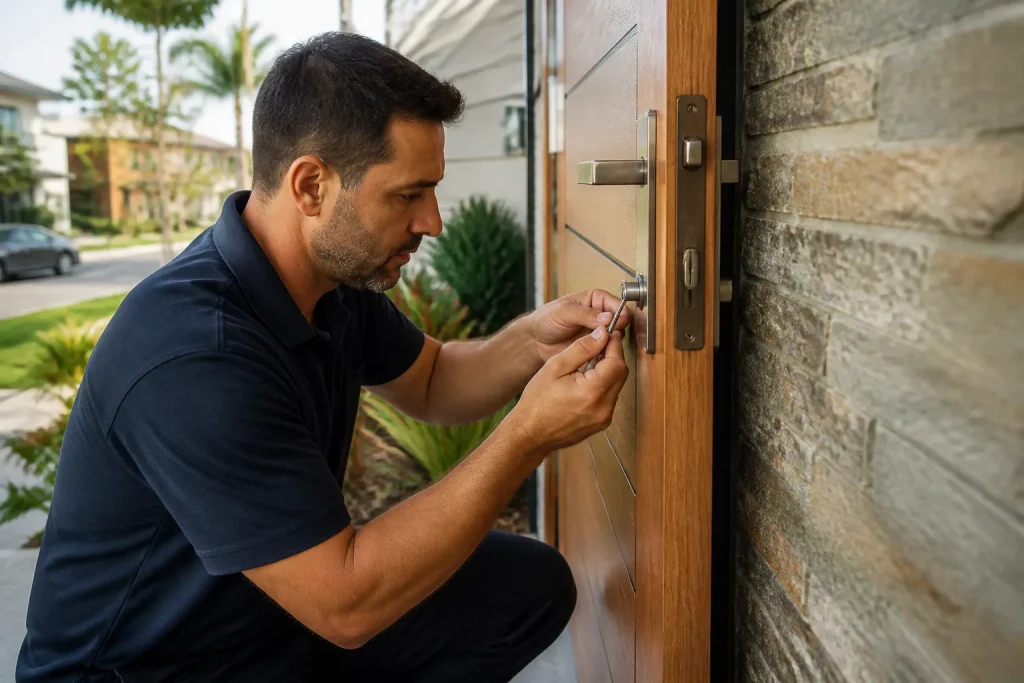
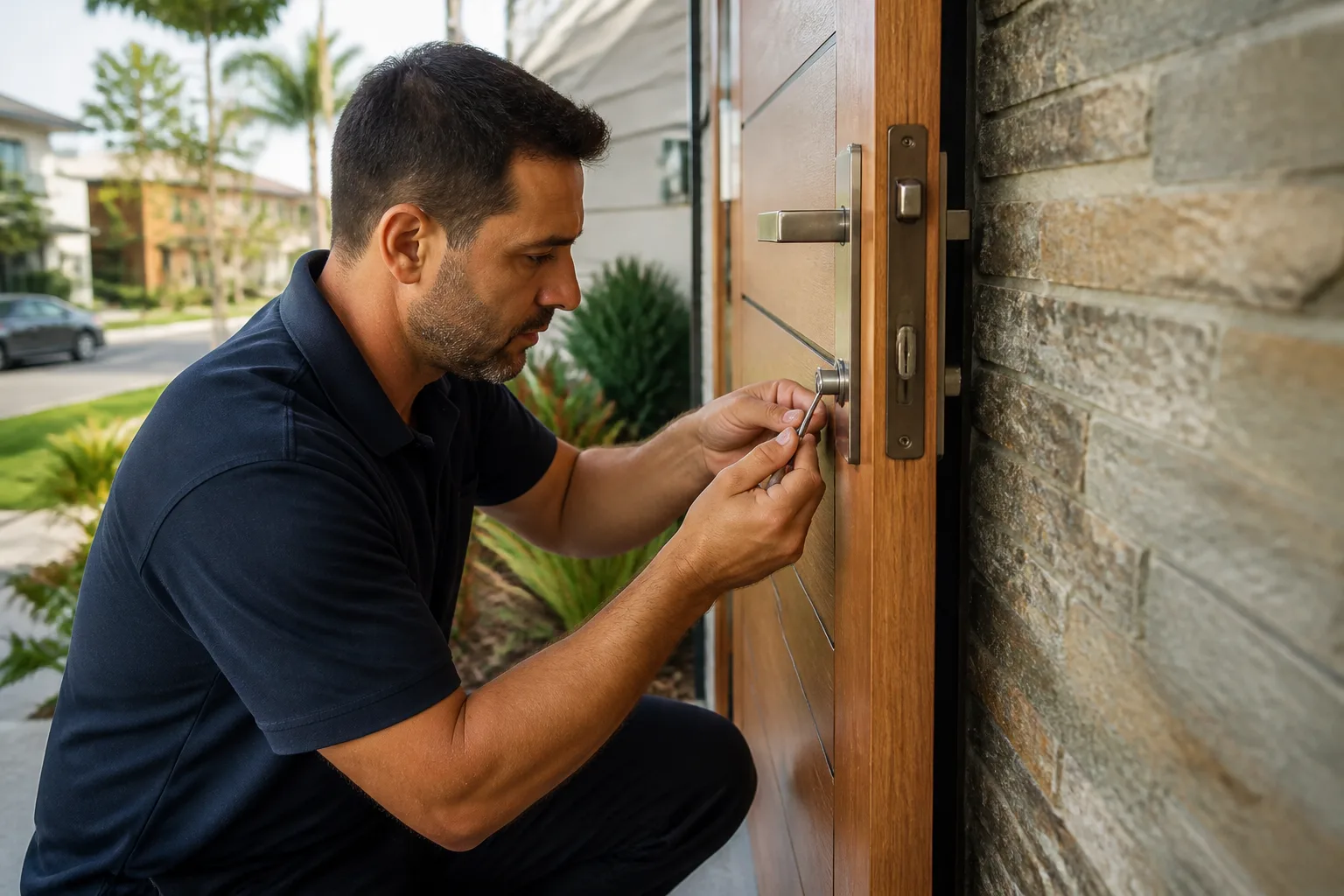
- Disassembly and disc reconfiguration. The cylinder comes out, the disc pack is opened, and the discs are rearranged or replaced to match the new key code. This is the step that requires Abloy-specific tooling and trained hands. The tolerances inside a disc-detainer cylinder are unforgiving. A ham-fisted disassembly can ruin a cylinder that cost you hundreds.
- Reassembly, lubrication, and testing. The cylinder goes back together, gets a proper lubricant meant for disc mechanisms (not the graphite some techs reach for out of habit), and gets tested with old and new keys. The old key should fail. The new key should turn smooth.
- New key cutting. This is where Abloy differs most from everyday hardware. The new key can’t be cut at a hardware store. It has to come through the authorized supply chain with the correct key card.
That’s the process we follow on an Abloy rekey in Los Angeles. Time on site is usually 45 to 90 minutes for a single cylinder, depending on the line and how cooperative the door is. And before you commit to anything, you get a written price. At Ridley Locksmith & Security home and every Garrison Partners location, that’s non-negotiable. No price is “subject to change once we get the cylinder open.”
Abloy Key Control: Why New Keys Aren’t Cut at the Hardware Store
Try taking an Abloy Protec2 key to a hardware store in Los Angeles and watch what happens. The counter tech will look at it, turn it over, check their key blank board, and tell you they can’t make a copy. That’s not them being difficult. That’s the key-control system working as designed.
Abloy restricts key blanks by region and by locksmith account. A blank for a Protec2 cylinder in Los Angeles isn’t available to every corner store with a key machine. It’s distributed through authorized dealers who track which blanks go to which account, which keys correspond to which key cards, and which customer owns which system. That’s a feature, not a bug. It means a stranger can’t walk into a shop with a borrowed key, get a duplicate cut, and come back later.
For homeowners, this has one practical consequence: rekeying an Abloy lock means the new keys have to come through that same authorized channel. You can’t tell a locksmith “just cut a few copies once you’re done” unless that locksmith has the Abloy account and the blanks in stock. We do. We’re certified on Abloy hardware, which is not the same as being “familiar with it.” It means our techs go through the training Abloy requires for key handling, tooling use, and documentation.
Why You Shouldn’t Accept a Substitute Cylinder
Here’s a scenario we’ve seen play out more times than we should have in Los Angeles: a homeowner calls a locksmith who doesn’t carry Abloy tooling. Rather than admit it, the tech suggests “upgrading” to something they can rekey in the van. The pitch usually sounds reasonable. “Honestly, this Abloy is old. We can swap in a nice Schlage or maybe a Mul-T-Lock that we can rekey today.”
What’s happening is not an upgrade. It’s a workaround. The tech can’t service the lock you already paid for, so they’re steering you toward hardware that’s convenient for their toolkit. You lose the disc-detainer mechanism, the Abloy key control, and the pick resistance you originally paid for. In exchange, you get a cylinder that was never chosen for your door, your security needs, or your neighborhood’s risk profile.
There are times when replacing a cylinder makes sense. If the Abloy is 25 years old, worn, and no longer holding key alignment, putting new discs in a dying cylinder is throwing money away. A good locksmith will tell you that directly. But substituting a different brand just to make the rekey easier? That’s a technician problem being sold to you as a hardware solution.
In Los Angeles, where a lot of homeowners chose Abloy and high-security lines like Mul-T-Lock and Sargent for a reason (door kick-in attempts, mail theft, rental turnover, Airbnb operations), a downgraded cylinder is a real loss. If you’re going to replace, replace with the right tool for the same job. If rekeying the existing lock is viable, rekey it.
Questions to Ask Before Anyone Touches Your Abloy Lock
Before you hire anyone to rekey an Abloy lock in Los Angeles, ask these four questions. There are no wrong answers, just checkboxes.
- “Do you carry Abloy tooling, or do you need to order it?” This will eliminate most of the market. Abloy tooling is expensive for a locksmith to carry just in case. If the answer is “we don’t see many Abloy locks,” keep dialing.
- “What’s the rekey price for the Abloy line I have?” Expect $35 to $65 per cylinder for the labor, depending on the line. If someone quotes $15, they’re planning to re-pin a disc-detainer cylinder with pin-tumbler logic. That’s how locks get damaged.
- “Are new keys included, and do they come through the authorized Abloy channel?” The answer should be yes. If keys are an afterthought, you’re paying to rekey a cylinder you can’t get new keys for.
- “Can you put the price in writing before you start?” This one applies to every locksmith job, not just Abloy. The answer should be yes. At Ridley, every job gets a written price before any work begins, not a verbal range that hardens once the door is open.
These questions will take you two minutes on the phone. They’ll save you a $300 cylinder in the wrong hands. A damaged Abloy is not a repair. It’s a replacement.
When to Call a Pro (Instead of Attempting This Yourself)
If you’ve watched a few videos and you’re thinking about opening up your Abloy cylinder with a spanner and a pick, let us save you the trouble. Do not. Disc-detainer cylinders are not beginner-level DIY work. Spring tension in a pin tumbler is forgiving; disc alignment in an Abloy is not. Drop a disc, lose a spacer, put the stack back in the wrong order, and the cylinder will either not turn at all or turn for a key it was never supposed to accept. Either way, you’re calling a locksmith anyway, and the fix costs more than the original job would have.
The right time to call a professional is before the cylinder comes out of the door. A trained Abloy tech has the proprietary tooling, the disc inventory, and the patience to preserve the tolerances that make your lock worth what you paid. We rekey Abloy, Mul-T-Lock, Sargent, Medeco, and everyday hardware like Schlage, Kwikset, Yale, and Baldwin. Nothing gets treated as a one-size-fits-all job. Each lock gets the process it actually needs.
Related services in Los Angeles: if you’re already having an Abloy rekeyed and want the rest of the property keyed alike, that’s commercial locksmith work on a residential scale, and we handle it the same way: written price up front, one visit, done right. For standard door hardware and deadbolts, see our residential locksmith services for Los Angeles homes.
The Bottom Line
Abloy locks work on a disc-detainer mechanism, not pins. Rekeying them requires proprietary tooling, authorized key blanks, and a technician who knows the difference between an Abloy Classic and a Protec2. Don’t let anyone convince you to swap the cylinder just because their kit doesn’t fit. Ask the four questions. Get the price in writing. And if the cylinder is too worn to justify rekeying, have an honest conversation about replacement.
If you’re in Los Angeles and need an Abloy rekey, Ridley Locksmith & Security offers free estimates and a written price before any work starts. Call (956) 275-7388 and a live person will answer. You’ll know the price before we dispatch anyone, and the repair is covered for one full year under the 365-Day Done Right Promise. If it fails inside that window, we come back at no charge. That’s the Ridley Locksmith & Security home standard, and it’s been the standard since 2007.
Frequently Asked Questions
No. Abloy locks use a disc-detainer mechanism, not the pin-tumbler system most rekey kits are built around. Rekeying them requires proprietary Abloy tooling and access to the authorized key-control channel. Look for a locksmith who can confirm both before booking.
Expect $35 to $65 per cylinder for the rekey labor, plus the cost of new keys through the authorized Abloy channel. The total depends on the specific Abloy line and how many cylinders you’re doing. Call (956) 275-7388 for an exact quote; estimates are free and the price is delivered in writing before work begins.
Abloy controls key blank distribution through authorized locksmith accounts. Most hardware stores can’t order the blanks, which is deliberate. It’s the key-control system keeping unauthorized duplicates out of circulation. New keys after a rekey must come through the same authorized channel.
Ask why. If the cylinder is genuinely worn, replacement may be the right call. If the tech just doesn’t have Abloy tooling, that’s a workaround, not an upgrade. You’ll lose the disc-detainer mechanism and the key control you paid for. Get a second opinion from a locksmith who services Abloy directly.
Written by Drew Kowalski, Owner at Ridley Locksmith & Security, serving Los Angeles since 2007.
Need Locksmith Help?
Call Ridley Locksmith & Security - licensed & insured, here with fast after-hours help in Los Angeles.
(956) 275-7388