
Sargent Rekey Locks in Los Angeles: A Homeowner’s Guide
Sargent lock rekeying in Los Angeles typically costs $25 to $45 per cylinder when the original key is available, and $45 to $95 per cylinder when an entry must be made and the cylinder decoded without keys. Not every locksmith in Los Angeles keeps Sargent key blanks on the truck, which is why we tell homeowners to ask one question before booking: “Do you stock Sargent originals, or are you going to try a universal blank?” If you’d rather not sort this out yourself, call (956) 275-7388 and we’ll tell you exactly what’s on your door and what it costs to rekey it.
Why Sargent Locks Show Up on Los Angeles Homes
Sargent is a Connecticut-based hardware manufacturer that has been producing commercial locks since the 1860s. The company is a sibling of Sargent & Greenleaf, the safe lock maker, and both share a design philosophy: build hardware that outlasts the building. In Los Angeles, you’ll find Sargent cylinders on residential doors for three reasons. First, older apartment buildings and converted duplexes in neighborhoods like Koreatown, Westlake, and Echo Park were often specced with commercial hardware when they were built, because the same hardware went on the building’s common areas and fire exits. Second, mid-century single-family homes that had professional security upgrades in the 1970s through the 1990s were sometimes fitted with Sargent mortise locks by locksmiths who favored commercial lines. Third, some condominium associations in buildings constructed before 2000 still require Sargent hardware on unit doors because the master key system was built around it.
What this means for a homeowner is straightforward: the lock on your door may look like a heavier-than-average deadbolt, but the internal cylinder is built to a commercial spec. Sargent cylinders use tighter machining tolerances, heavier springs, and pinned components made from materials designed for high-cycle duty. That’s good for security and longevity, and it’s also why a generic rekey from a locksmith who doesn’t stock Sargent parts can leave you with a cylinder that binds, a key that sticks, or hardware that gets damaged during service.
How to Identify Your Sargent Keyway Before You Call Anyone
The Sargent keyway system is not a single profile. Sargent has produced multiple original keyway families over the decades: the popular LA, LB, LC, and L series, along with restricted keyways like the SG, and newer restricted profiles that require you to be an authorized Sargent dealer to obtain blanks. The keyway determines whether anyone can cut you a duplicate at the hardware store down the street, or whether only a locksmith with a Sargent account can supply the blanks at all.
The easiest way to identify what you have is to read the face of the cylinder. Most Sargent cylinders are stamped with a letter code near the keyhole, such as “LA” or “LB.” If the stamp is worn smooth, a technician can identify the keyway by the profile of the key itself: Sargent keys have a distinct shoulder and a narrower blade than a standard Schlage or Kwikset key, and the milling runs the full length of the blade. On some restricted Sargent profiles, the key will carry an embossed “Do Not Duplicate” notation and a multi-digit code etched along the bow.
Parts availability follows the keyway. The LA and LB lines are common enough that any well-stocked Los Angeles locksmith should carry the pins and blanks. Restricted Sargent keyways are a different story: the blanks are controlled at the distributor level, and you may need to go through a locksmith who can prove authorization before replacement keys can even be ordered. If you call a locksmith and they can’t tell you which Sargent keyway you have after looking at a photo, or they say “we’ll figure it out when we get there,” call someone else. You want a locksmith who knows their Sargent profiles the way a mechanic knows Ford versus Chevy.
Sargent LFIC vs. Standard Cylinder: Why It Changes the Rekey Job
Some Sargent locks in Los Angeles are built with a large format interchangeable core, abbreviated LFIC. This is a figure-eight-shaped core, about the size of a standard cylinder but noticeably wider, that slides out of the lock body when the control key is inserted. On commercial buildings, LFIC exists so a facility manager can swap cores between doors in seconds without dismantling the lock. On a residential door, it usually means the building once had a master key system, or a previous owner upgraded from a standard configuration.
Here’s the practical difference for a homeowner. A standard Sargent cylinder has to be removed from the lock, taken apart, and re-pinned on a bench. An LFIC core, once the control key is available, can be swapped or rekeyed in under a minute, because the core comes out whole and the pinning is done in a dedicated fixture. If you have Sargent LFIC hardware on your door and you’ve lost the control key along with the operating key, the job shifts: the technician has to pick the core to a control shear line, remove it, and then either rekey it or replace it with a new core. This takes longer, but a technician trained on Sargent hardware can do it without drilling the lock.
The cost difference is real. Rekeying a standard Sargent cylinder in Los Angeles runs about $25 to $35 per cylinder with the key in hand. Rekeying an LFIC core runs $35 to $45, and if no keys exist at all, the range moves to $65 to $95 per door because of the added labor to gain entry, remove the core, and establish new keys. A Ridley technician can usually identify the cylinder type from a phone photo before anyone gets in a van.
What to Do When You’ve Moved In and There Are No Keys
This is the situation we hear about most often from homeowners who buy older Los Angeles properties. The previous owner handed over a single copy of a worn key, or the keys were lost somewhere between escrow and move-in day, and now the Sargent lock on the front door is deadbolted shut with no working key anywhere.
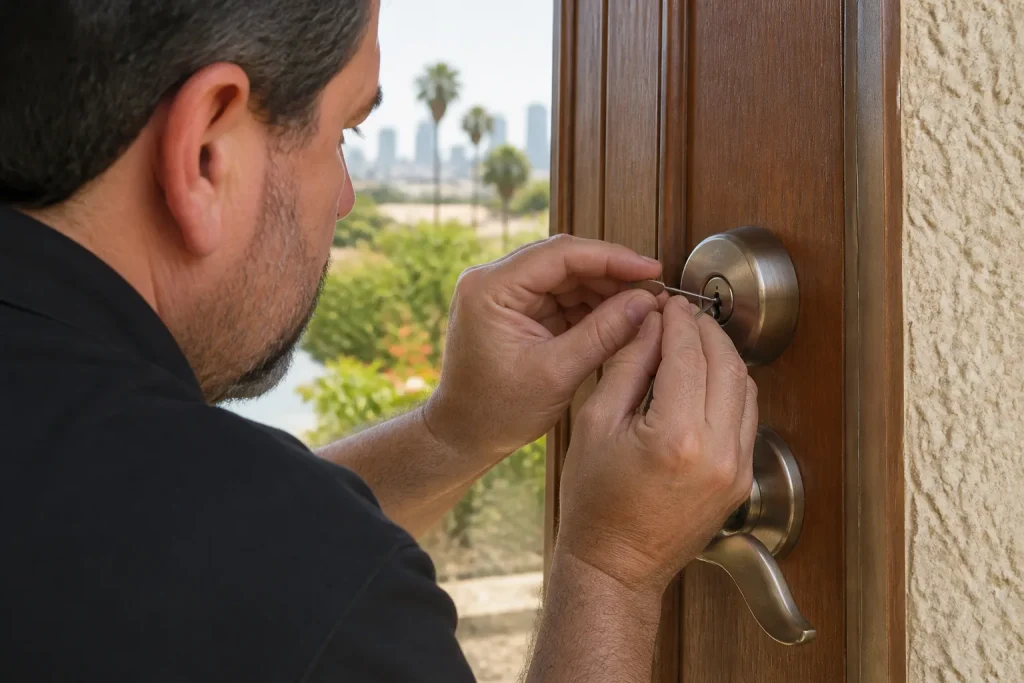
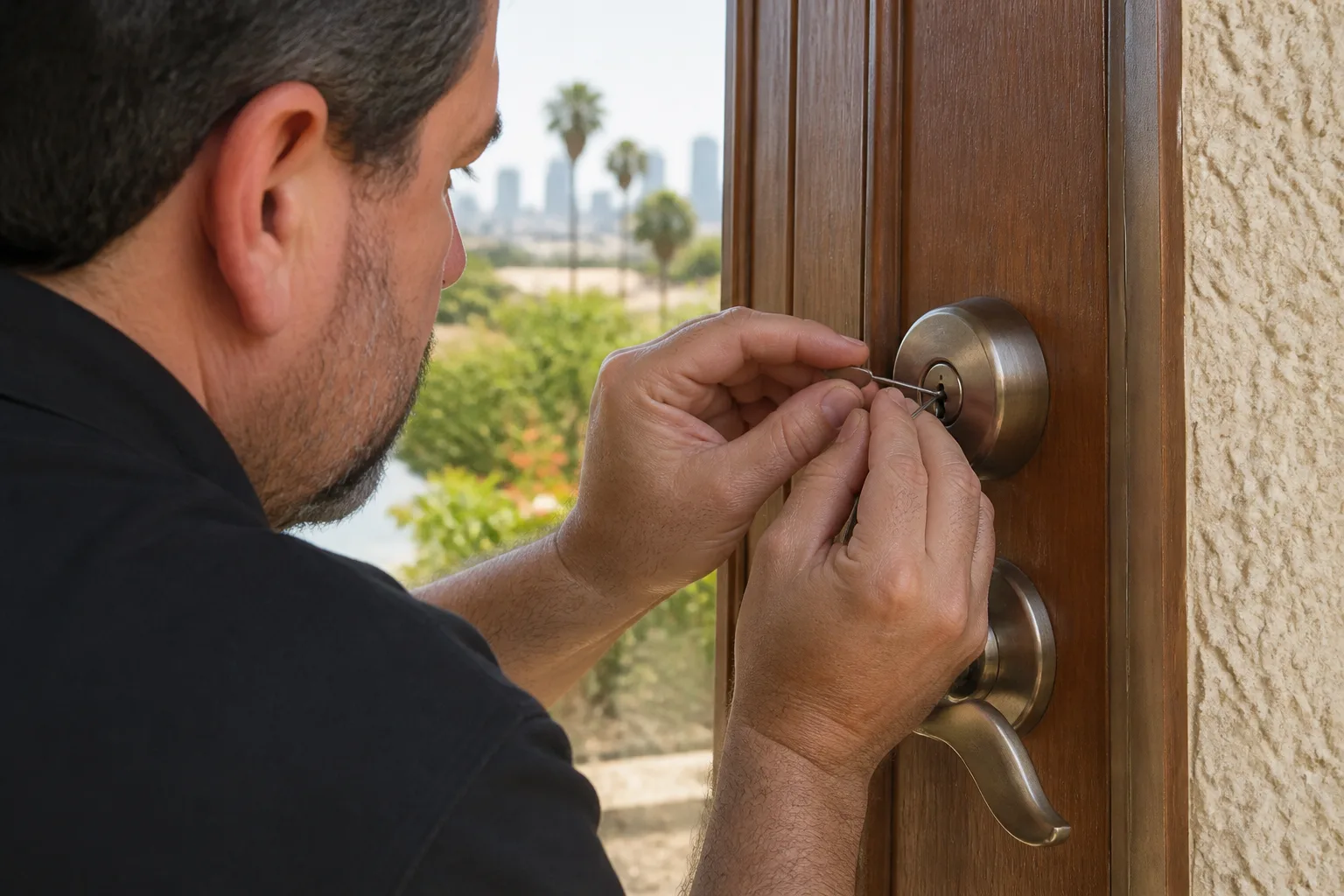
The process is straightforward but not instant. First, a locksmith gains entry without keys, which on a Sargent cylinder means picking the lock rather than drilling it. Sargent cylinders are well-made, and a technician with the right picks and tension tools can open them without damage. Second, once the door is open, the cylinder is removed and decoded. Decoding means reading the individual pin heights inside the cylinder so the technician can cut a working key on the spot. On Sargent commercial cylinders, this takes longer than on a residential Kwikset because Sargent uses tighter tolerances and the pick-and-decode process requires more precision. Third, the cylinder is rekeyed to a fresh set of keys so any old copies floating around Los Angeles become worthless.
One note on emergency entry: a Sargent lock is not the lock you want a well-meaning neighbor trying to drill out. The cylinder is hardened, and the lock body on mortise versions is built into the edge of the door, not the surface. A botched drilling job can ruin the door and the hardware, and a replacement Sargent mortise lock costs far more than a service call. When a door with Sargent hardware has no keys, call a locksmith who carries Sargent picks, Sargent blanks, and Sargent pins on the truck. For more on getting locks rekeyed after a move, see our Rekey Locks in Los Angeles page.
Sargent vs. Residential High-Security: When to Keep It, When to Replace It
Some Los Angeles homeowners ask whether they should rip out Sargent hardware and install shiny new residential locks. The answer depends on the hardware’s condition and the keyway it uses. If the existing Sargent lock operates smoothly, the keyway is one of the common profiles, and the finish matches the door hardware, keeping it is often the smarter move. A properly rekeyed Sargent cylinder is a better-built lock than most residential replacements, and a homeowner who replaces functioning Sargent hardware with a budget deadbolt is trading down in security.
There are two good reasons to replace Sargent hardware instead. The first is restricted keyway logistics. If the cylinder uses a restricted Sargent profile and the locksmith can’t get blanks, every future key copy becomes a project. A homeowner who wants to hand keys to a dog walker, a house cleaner, or a guest should not have to deal with a controlled key system that was never designed for that use. The second is when the lock body itself is worn out, which happens on exterior doors in Los Angeles neighborhoods close to the coast, where salt air accelerates corrosion on metal components. Rust, a thumbturn that sticks, or a deadbolt that has to be jiggled before it throws are signs the hardware has earned retirement, not another rekey.
For homeowners who want an upgrade, we generally recommend residential locksmith in Los Angeles work that pairs a quality lock body with a high-security cylinder from a line like Mul-T-Lock or Abloy. These cylinders offer the same commercial-grade durability as Sargent, with the added benefit of key control that’s actually manageable for a homeowner. Baldwin hardware is a solid choice when the priority is a lockset that matches the architectural style of an older Los Angeles home. See our commercial locksmith in Los Angeles page if the property is mixed-use or the Sargent hardware sits on a business door as well.
What a Proper Sargent Rekey in Los Angeles Should Cost
Pricing transparency matters, especially in locksmithing, where the bait-and-switch is a known problem in the Los Angeles market. Here’s what a Sargent rekey should cost, based on the work involved:
- Rekey a standard Sargent cylinder, key in hand: $25 to $35 per cylinder
- Rekey a Sargent LFIC core, key in hand: $35 to $45 per core
- Rekey a Sargent cylinder with no keys, entry needed: $65 to $95 per cylinder
- Cut new Sargent keys from an existing key: $5 to $8 per key for standard profiles
- Supply and install a new high-security residential cylinder: $80 to $160 per lock, depending on the brand
These are the ranges we work within at Ridley. The price we quote over the phone is the price on the invoice, and we put it in writing before any work begins. That’s a Garrison Standard practice, applied to every job, on every door. If a Sargent rekey quote in Los Angeles comes in under $20, ask what’s included. A technician who undercuts the market that aggressively usually plans to make the money back on a “broken part” or a pressure upsell at the door.
The Bottom Line
Sargent hardware on a Los Angeles home is a high-quality commercial lock that many homeowners inherit without knowing what they have. The key to servicing it correctly is finding a locksmith who stocks Sargent parts, knows the keyway system, and can handle LFIC cores without damaging the door. If the lock operates well and the keyway is common, rekey it and keep it. If the keyway is restricted or the hardware is failing, replace it with a modern high-security residential cylinder. If you’re in Los Angeles and you’d like a free estimate on a Sargent rekey, call Ridley Locksmith & Security at (956) 275-7388. We’ll tell you what’s on your door, what it costs, and when we can be there.
Frequently Asked Questions
No. Many locksmiths in Los Angeles don’t stock Sargent key blanks, pins, or control keys, especially for restricted keyways or LFIC cores. Ask before booking: “Do you stock Sargent originals for this keyway?” If the answer is vague, call someone else. Every Ridley technician carries Sargent parts as part of the standard truck inventory.
Most Sargent rekeys run $25 to $45 per cylinder with a working key, and $65 to $95 per cylinder when entry is required and no keys exist. The exact number depends on the keyway, whether the lock uses a standard cylinder or LFIC core, and how many doors you need done. We quote the full price on the phone before anyone is dispatched. Call (956) 275-7388 for a firm number on your specific hardware.
In most cases, yes. Sargent cylinders are built to a commercial durability spec with tighter tolerances and heavier components than typical residential hardware. However, that quality is only useful if the keyway is serviceable and the lock body is in good condition. A worn Sargent lock with a restricted keyway can be more trouble than it’s worth, and a fresh high-security residential cylinder may be the better long-term call.
Yes. A trained technician can pick the Sargent cylinder, remove it, decode the existing pinning, and cut new keys without drilling the lock. Drilling is a last resort and should rarely be necessary on Sargent hardware. Call (956) 275-7388 and we’ll explain the exact process for your door before getting started.
Written by Drew Kowalski, Owner at Ridley Locksmith & Security, serving Los Angeles since 2007.
Need Locksmith Help?
Call Ridley Locksmith & Security - licensed & insured, here with fast after-hours help in Los Angeles.
(956) 275-7388