
Last updated October 9, 2026
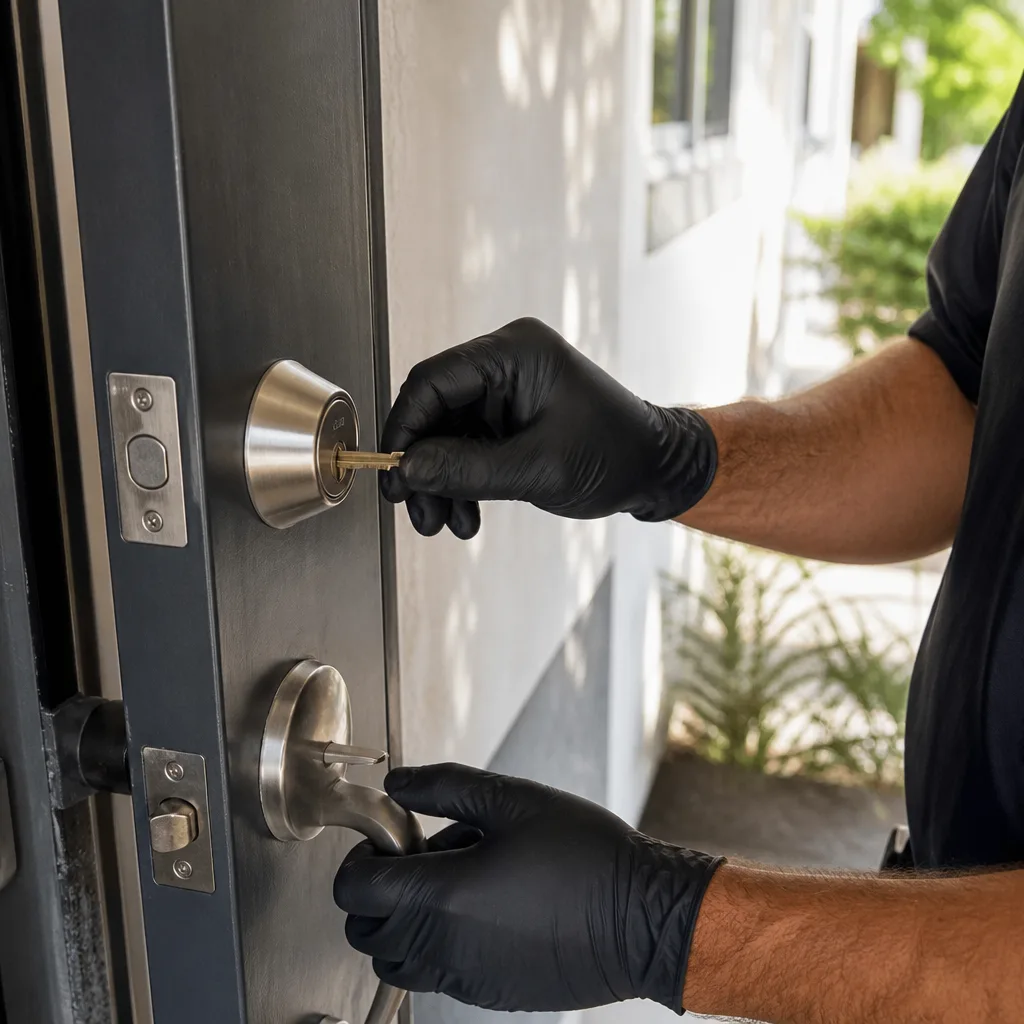
Non-destructive entry first, always - and we re-key Schlage, Kwikset, and Baldwin locks on the spot while you watch
You get a price before we start. It does not change when we arrive. No surprises.
 Before
 After
AfterResidential Locksmith Maintenance Schedule: What to Do and When
A Grade 1 ANSI deadbolt is engineered to survive 250,000 cycles. That works out to roughly 80 years of normal residential use, turning the key twice a day, every day. But in Los Angeles, we routinely replace deadbolts that are 12 years old and functionally dead. The culprit is rarely the lock itself. It’s almost always a maintenance issue that began small, a decade earlier, with the wrong lubricant sprayed into the keyway in year two. This guide lays out the exact checks and intervals that keep door hardware working at its rated level, most of which take under 30 minutes a year.
Quick Answer
A residential locksmith maintenance schedule comes down to six specific tasks: lubricate lock cylinders and hinges annually with the correct product, check strike plate screw torque and deadbolt throw depth twice a year, inspect weatherstripping and door sweeps each fall, examine cylinder faces for scoring or cracking, and address any event-triggered damage from repainting, seismic activity, or moisture exposure immediately. Expect to spend about 30 minutes per door each year. Two or three findings on this list, like a cracked plug face or a bolt that won’t fully extend, require a professional locksmith rather than a DIY fix.
Table of Contents
- Annual Tasks: The Core Four
- Bi-Annual Tasks: What to Check Every Six Months
- Event-Triggered Maintenance: Paint, Quakes, and Water
- Los Angeles-Specific Factors: Marine Layer, Santa Anas, and Frame Shift
- DIY vs. Professional: Where the Line Is
- The Lubricant Guide: What Actually Goes in a Lock
- Common Mistakes to Avoid
- When to Call a Professional
- Frequently Asked Questions
- The Bottom Line
Annual Tasks: The Core Four
Four checks once a year cover the vast majority of residential hardware failures. None require special tools beyond a screwdriver and the right lubricant. Together they take under half an hour.
1. Lubricate the Lock Cylinder and Deadbolt Mechanism
Use a dry graphite powder or a PTFE-based dry lubricant on the keyway and the deadbolt’s internal mechanism. Squeeze a small amount into the keyway, insert the key, and work it slowly in and out five to six times. Wipe the key clean. Never use WD-40, household oil, or any wet lubricant. Wet lubricants trap particulate and turn into a grinding paste inside the cylinder. In Los Angeles, that particulate load is higher than most cities because of what the Santa Anas carry, which we’ll get to below.
2. Check Strike Plate Screw Torque
Remove the two or three screws holding the strike plate to the door frame. Inspect each screw. If the threads show signs of stripping or the screw spins without tightening, replace it with a longer screw, ideally 3 inches, that bites into the framing stud behind the jamb. Re-drive all screws firmly. A loose strike plate is the single most common cause of what homeowners report as a “failing” deadbolt.
3. Inspect the Door Sweep and Weatherstrip
Run your hand along the bottom edge of the door and down the strike side. The sweep should contact the threshold evenly. The weatherstrip should compress slightly when the door closes but not bind. Gaps here don’t just leak air. They let the door settle out of alignment, which changes where the deadbolt hits the strike plate, which is how a lock that worked in January is binding by July.
4. Cycle Every Key You Actually Use
This is the step most guides miss. Take every key you carry daily, one at a time, and insert it into every lock it should operate. Turn slowly. Pay attention to resistance, grinding, or the key sticking on withdrawal. A key that’s wearing down or a cylinder picking up debris will show itself here first. If a key feels rough in one lock but fine in another, the lock is the problem, not the key.
Bi-Annual Tasks: What to Check Every Six Months
Twice a year, ideally in spring and fall, four additional checks catch problems while they’re still adjustment issues rather than outright failures.
1. Deadbolt Throw Depth
Throw the deadbolt and look at the gap between the bolt and the strike plate opening. The bolt should extend to its full 1-inch travel and seat completely into the strike opening without contacting the edges. If the bolt compresses against the side of the strike plate before it reaches full extension, the door or frame has shifted. A deadbolt that only travels 3/4 of an inch is doing half its job.
2. Hinge Pin Tightness
Open the door partway and lift the handle. The door should not lift on its hinges more than a millimeter or two. If it does, hinge pins are worn or hinge screws are loose. Tighten all hinge screws, including the frame-side and door-side. A door that sags on its hinges shifts the entire lock geometry.
3. Cylinder Face Inspection
Look at the face of every lock cylinder, the round metal part surrounding the keyhole. Scratches that prevent smooth key insertion, a plug face that sits proud of the cylinder body, or any cracking around the keyway opening are findings that need attention. Hairline cracks in the plug face are how a cylinder fails entirely, often at the worst possible moment. For a full overview of what to watch for, see our guide on Residential Locksmith Warning Signs Every Homeowner Should Know.
4. Keyway Debris Check
Shine a flashlight into each keyway. You’re looking for felt, paint chips, visible grit, or any obstruction that doesn’t belong. Do not blow into the keyway, that pushes debris deeper and adds moisture from your breath. A can of compressed air at low pressure, or the brush end of a lock pick set, clears what you can see. Debris you can’t reach calls for a professional cleaning.
Event-Triggered Maintenance: Paint, Quakes, and Water
Some maintenance isn’t on a calendar. Specific events require immediate inspection regardless of when the last scheduled check happened.
After Painting or Refinishing a Door
Paint in a keyway is the most common paint-related failure. Even careful painters produce overspray that drifts into the cylinder. Within a week of painting, insert the key and check for binding. If the key sticks, have the cylinder cleaned before the paint cures fully. Cured paint inside a cylinder requires professional extraction, and in many cases, the cylinder has to be removed and serviced on a bench.
After Seismic Activity
Los Angeles sits on active fault lines, and even a 3.5 magnitude quake shifts door frames enough to change lock alignment. After any quake you felt, check deadbolt throw depth and strike plate alignment on every exterior door. What you’re looking for is the bolt contacting the strike plate edge rather than seating cleanly. This is a five-minute check that catches frame shift before it becomes a lockout.
After Flooding or Moisture Intrusion
Water in a cylinder causes corrosion. It may not show up for weeks or months. If you experience flooding, a leaking door, or sustained heavy rain driven against the door by Santa Ana winds, inspect the cylinder face for a white powdery residue, that’s corrosion beginning. Dried-out lubricant follows corrosion. A locksmith can clean and re-lubricate the cylinder before the internal pins start sticking.
After a Forced Entry Attempt
If someone tried to kick in your door, pry the jamb, or drill the cylinder, even unsuccessfully, you need a professional assessment. The hardware may look functional. The internal pins, springs, and shear line may be compromised in ways that are invisible from the outside. A deadbolt that survived one kick may fail on the next because it was damaged internally. See our Residential Locksmith Troubleshooting: Common Problems and How to Fix Them for related issues.
Los Angeles-Specific Factors: Marine Layer, Santa Anas, and Frame Shift
Los Angeles has a maintenance profile that differs from inland cities in three specific ways, and each one changes what a homeowner should watch for.
Marine Layer Moisture in Coastal Neighborhoods
In neighborhoods like Santa Monica, Venice, Playa del Rey, and Pacific Palisades, the nightly marine layer pushes moisture against exterior door hardware. That moisture condenses on cylinder faces and seeps into keyways. Over years, it accelerates internal corrosion, particularly in brass cylinders without protective plating. Coastal homeowners should inspect cylinder faces twice as often as the standard schedule, and consider upgrading to cylinders with corrosion-resistant finishes or high-security hardware built for marine environments like Abloy or Mul-T-Lock lines.
Santa Ana Wind Particulate
The Santa Ana winds pick up fine dust and grit from the inland valleys and drive it westward through Los Angeles. That particulate ends up in keyways, hinge mechanisms, and door track hardware. In canyon neighborhoods like Studio City, Sherman Oaks, and the Hollywood Hills, where winds concentrate, we see keyways loaded with fine grit that acts as an abrasive every time a key turns. Annual lubrication matters more here because the grit displaces lubricant faster. A dry graphite application in October, before wind season, is a reasonable adjustment to the standard annual schedule.
Frame Shift in Older Construction
A large portion of Los Angeles housing stock dates from the 1920s through the 1960s. These homes settle. Doors that were square in 1960 are not square now, and the lock hardware originally installed on them may have been retrofitted multiple times. In older homes, bi-annual hinge checks become more important because the foundation moves seasonally with wet and dry soil cycles. Door frames that shift with the clay soil in neighborhoods like Hancock Park or Mid-City will change deadbolt alignment within a single year.
DIY vs. Professional: Where the Line Is
Most items on this maintenance schedule are genuinely DIY. A homeowner can lubricate a cylinder, tighten hinge screws, and check deadbolt throw depth without training. But two or three specific findings require professional assessment, and knowing that line is what prevents a small problem from becoming a lockout or a security failure.
What You Can Do Yourself
- Lubricate keyways and deadbolt mechanisms with dry graphite or PTFE lubricant.
- Tighten strike plate and hinge screws.
- Inspect and replace door sweeps and weatherstripping.
- Check deadbolt throw depth and visually inspect cylinder faces.
- Clean visible debris from keyways with compressed air.
What Requires a Professional
- A cracked plug face or visible cylinder damage. This is structural, not cosmetic.
- A key that sticks, binds, or requires force to turn after cleaning and lubrication. This indicates an internal compromise at the shear line, the point where the pins align and allow the plug to turn.
- A deadbolt that will not fully extend even after strike plate adjustment. This often means the cylinder or tailpiece is failing.
- Any sign of tampering after a break-in attempt. Compromised hardware doesn’t always look damaged.
- A key that snaps off in the lock. Do not try to extract it; doing so with improvised tools pushes the broken piece deeper and damages the pins.
For the professional findings, our team at Ridley Locksmith & Security handles residential lock assessment across Los Angeles daily. The line between a fixable adjustment and a failed component is not always obvious from the outside, and we would rather tell you a lock is salvageable than sell you a replacement you don’t need.
The Lubricant Guide: What Actually Goes in a Lock
Locks fail early for one reason more than any other: the wrong lubricant. The wrong product does more damage than no product at all. Here is the plain breakdown.
What to Use
- Dry graphite powder: The standard for traditional pin tumbler cylinders. It coats the pins and the plug without attracting debris. Apply through the keyway, then cycle the key.
- PTFE-based dry lubricant: A more modern alternative that performs similarly to graphite. It is less messy and works well on both cylinders and deadbolt mechanisms.
- Dry silicone spray (exterior use only): Useful on hinges, door track hardware, and exterior sliding door mechanisms, but not inside lock cylinders.
What Never Goes in a Lock
- WD-40: It is a water displacement product, not a lubricant. It leaves an oily residue that attracts and holds particulate. Over time, that residue becomes a varnish that gums the pins.
- Household oil, including 3-in-1: Same problem. Oil migrates, collects dust, and thickens in cold or dry conditions.
- Grease of any kind: Grease is too heavy for cylinder mechanisms and will cause the pins to drag against the plug.
- Vegetable oil, motor oil, or any improvised product: These varnish and harden. If a lock has been treated with any of these, the fix is a professional teardown and cleaning.
Common Mistakes to Avoid
- Spraying the wrong chemical into the keyway. WD-40 is the most common misapplication we see. It works for about two weeks, then the cylinder is in worse shape than before. Use dry graphite or PTFE only.
- Ignoring a sticky key. A key that requires a jiggle or a slight pull to turn is telling you something. Waiting until the key won’t turn at all turns a $20 maintenance visit into a $200 repair, or a lockout.
- Tightening a strike plate into stripped holes. Re-driving the same short screws into the same worn holes does nothing. Replace with longer screws that reach the stud.
- Fixing the lock instead of the door. A sagging door misaligns every piece of hardware on it. If the door won’t close square, no amount of lock adjustment will fix the problem.
- Replacing hardware instead of rekeying. If a lock still functions but key control is the concern, rekeying is the cost-effective solution. Rekeying in Los Angeles changes the internal pins so old keys stop working without replacing the hardware itself.
- Waiting until the lockout. Locks don’t fail by surprise. Every lockout we respond to had warning signs, a sticky key, a loose handle, a bolt that dragged, for weeks or months beforehand. This schedule exists so the lockout doesn’t.
When to Call a Professional
A cracked plug face means the keyway opening itself is compromised and the cylinder will fail. A deadbolt that won’t fully extend even after strike plate adjustment means something inside the cylinder or tailpiece is broken. A key that turns with grinding, or only turns when lifted at an angle, means the shear line is compromised. Any sign of tool marks around the cylinder face after a break-in attempt means the hardware needs assessment. These are not DIY findings. Ridley Locksmith & Security offers free estimates across Los Angeles, and every job starts with a written price before any work begins. Call (956) 275-7388.
Frequently Asked Questions
Lubricate lock cylinders and deadbolt mechanisms once a year with dry graphite or PTFE-based dry lubricant. In Los Angeles canyon and coastal neighborhoods where particulate or marine layer moisture is heavier, a second application in the fall is reasonable. Annual lubrication takes about five minutes per lock.
The best lubricant for a residential pin tumbler cylinder is dry graphite powder or a PTFE-based dry lubricant. Both coat internal surfaces without attracting debris. Avoid WD-40 and household oils, which leave residue that collects dust and eventually thickens into a varnish that causes the exact sticking they were applied to fix.
A deadbolt that sticks seasonally usually means the door or frame is expanding with temperature change. In Los Angeles, this is common in homes with wooden doors exposed to direct afternoon sun. Check deadbolt throw depth and strike plate alignment during the sticking season. If the bolt contacts the strike plate edge, adjusting or replacing the strike plate screws with longer ones that reach the stud often resolves the issue. If the key itself binds in the cylinder, the cylinder needs cleaning and lubrication rather than frame adjustment.
Rekeying requires removing the cylinder, replacing the internal pins, and reassembling the mechanism correctly. It is possible with a rekeying kit and the right hardware, but it carries real risks. Getting pin depths wrong can leave the lock failing within weeks. Getting reassembly wrong can lock you out. Rekeying is one of the most cost-effective professional services available. A 15-minute house call from a locksmith rekeys every lock in a home for less than the cost of a single replacement hardware set, and it is done with a written price and a written one-year guarantee.
Basic annual lubrication and hardware checks are free if done by the homeowner, costing under $20 for a tube of dry graphite and a screwdriver. Professional maintenance visits in Los Angeles typically run $75 to $150 depending on the number of doors and locks. Rekeying a single cylinder runs $20 to $40 per lock depending on hardware type. Full cylinder replacement with standard hardware runs $75 to $150 installed. High-security cylinders from lines like Mul-T-Lock or Abloy run higher. Our written price covers the full job before any work starts, and the price on the invoice is the price you were quoted. Call (956) 275-7388 for an exact number.
Yes. Brass keys wear with use, and a heavily worn key starts to damage the cylinder pins it operates. If your key shows visible wear, flattened teeth, or rounded edges, have a fresh key cut from the original or from a code before it fails. A worn key that breaks off in a cylinder is a preventable problem. If your key feels rough in one lock but smooth in others, the lock is wearing, not the key, and the cylinder needs attention.
The Bottom Line
A residential locksmith maintenance schedule is not about calling a locksmith annually. It is about six specific checks, most taking a few minutes each, that keep door hardware functional and security-grade locks performing at their rated level. For more guides & resources on keeping your home secure, explore our blog. Lubricate annually with the right product. Check strike plates, hinges, and deadbolt throw depth twice a year. Respond to paint, quakes, water, and forced entry as they happen. In Los Angeles, add marine layer and Santa Ana considerations to the standard schedule. When you find a cracked plug face, a bolt that won’t extend, or a key that binds after cleaning, your hardware has moved past maintenance into repair territory. Knowing the difference is what keeps a functioning lock from becoming a lockout.
If anything on this schedule turns up a problem that needs professional attention, Ridley Locksmith & Security offers free estimates in Los Angeles with a written price before any work starts. Call (956) 275-7388 to schedule a visit.
Written by Drew Kowalski, Owner at Ridley Locksmith & Security, serving Los Angeles since 2007.